Disposable Syringes for West African Distributors: Sizing the ECOWAS Demand Bloc
A distributor in Lagos placed a container order for syringes in March, expecting six weeks to clearance. It landed in late May, after a Suez reroute added freight cost and a currency slide ate the margin he'd quoted a state primary healthcare board. He wasn't wrong about demand — Nigeria's immunization calendar doesn't pause for shipping delays. He was wrong about treating one country's order as the whole picture, when Ghana, Ivory Coast and Senegal buyers down the coast were placing near-identical orders through the same ports, on the same shipping lanes, against the same supply base.
Sharmil Mangukiya (Founder & MD) 8 min read September 18, 2026
Key Summary & AI Takeaways
Nigeria alone needs tens of millions of AD syringes a year just for routine immunization, and none of it is made locally. A distributor sizing the ECOWAS bloc needs volume math, not another compliance checklist.
West Africa does not manufacture disposable syringes at any meaningful commercial scale. Outside of Kenya's Revital Healthcare, which the World Health Organization prequalified in 2023 as the first African-based auto-disable syringe maker, the continent's syringe supply runs almost entirely through India and China. For ECOWAS distributors, that single fact does more to explain pricing, lead times, and stockout risk than any regulator's compliance checklist.
Why size ECOWAS as one demand bloc, not four countries
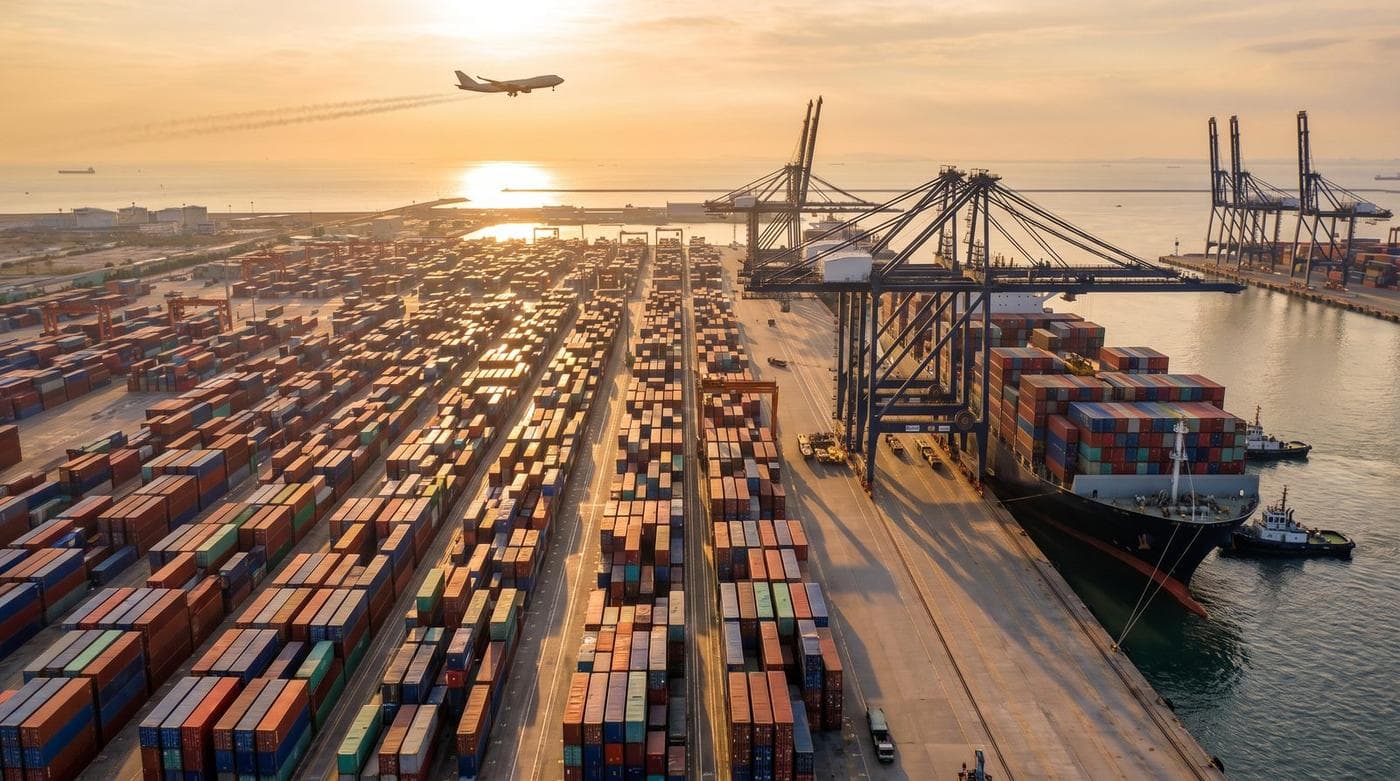
Nigeria, Ghana, Ivory Coast and Senegal share three things that matter more to a distributor's planning than borders do: they route the bulk of their import volume through a handful of ports (Lagos/Apapa, Tema, Abidjan, Dakar), they draw from the same India/China supplier pool, and they face the same annual immunization-calendar demand floor that doesn't compress or stretch with shipping delays. Treating each country's tender or clinic order in isolation is how a distributor under-forecasts a regional container consolidation or overpays for a rush air shipment that a coordinated bloc-level order would have avoided.
The scale of the underlying need is the part most sourcing guides skip. UNICEF's own figures put sub-Saharan Africa's routine immunization syringe requirement at roughly 500 million units a year, before counting outbreak response, curative injections, or private clinic demand. Nigeria carries the largest single share of that load: with close to 7.5 million births annually (UNICEF/World Bank data), its birth cohort alone drives a recurring baseline demand for auto-disable (AD) syringes that has nothing to do with GDP growth or hospital construction — it's a fixed annual obligation tied to the immunization schedule.
The import-dependency math distributors should actually use
During the 2021 syringe crunch, UNICEF projected a global auto-disable syringe shortfall approaching 2.2 billion units, driven by COVID-19 vaccination competing with routine immunization for the same production lines. The World Health Organization and Gavi have been explicit since: more than 80% of the AD syringes used in low- and middle-income countries are produced in India or China, and West Africa has none of the regional manufacturing buffer that East Africa now has through Revital's roughly 300-million-unit annual capacity (which Africa CDC has said covers only about half of the continent's routine immunization needs). That leaves the ECOWAS bloc's remaining demand — including nearly all of Nigeria's, Ghana's, Ivory Coast's and Senegal's — sourced from outside the continent.
Practically, that means every week of Red Sea rerouting or port congestion at Lagos or Tema translates directly into stock-days lost, not a rounding error. A distributor holding four to six weeks of cover against a 500-million-unit regional demand pool is holding a much thinner buffer than the same weeks of cover would represent for a slower-moving product line.
Metric
Figure
Source basis
Sub-Saharan Africa routine immunization syringe need
~500 million units/year
UNICEF/Gavi reporting
Nigeria annual births (baseline AD syringe demand driver)
~7.5 million/year
UNICEF/World Bank data
Ghana annual births
~890,000/year
UN population data
Senegal annual births
~540,000/year
UN population data
Share of LMIC AD syringes made in India/China
80%+
Gavi/WHO, Gates Foundation reporting
Africa-based AD syringe manufacturing capacity (Revital, Kenya)
~300 million units/year, covers ~50% of continental routine need
Gavi, Africa CDC statements
Primary ECOWAS entry ports for syringe cargo
Lagos/Apapa, Tema, Abidjan, Dakar
Trade/logistics reporting
What actually drives the ECOWAS order pattern
Two buyer segments move volume differently across the bloc. Immunization-program buyers — state and federal primary healthcare boards, UNICEF country offices, Gavi-funded campaigns — order against a fixed calendar and a WHO-PQS or ISO 7886-1 specification, with little price negotiation once the spec is locked. Private distributors serving hospitals, clinics and pharmacy chains order against rolling stock cycles and are far more price- and lead-time-sensitive, which is where sourcing decisions actually move margin.
Nigeria's private and public demand together dwarfs the other three markets combined, roughly consistent with its share of ECOWAS population and healthcare spend, but Ghana, Ivory Coast and Senegal aggregated together represent a comparable order size to a mid-sized single-country Nigerian tender — which is exactly why a distributor serving more than one of these markets gains real leverage by consolidating container bookings rather than ordering per-country.
Configuration
Typical FOB India price band (per unit, indicative)
Best fit
2ml disposable syringe, Luer slip, bulk pack
$0.02 – $0.035
Routine curative use, private clinics
2ml disposable syringe, Luer lock
$0.025 – $0.04
IV/therapeutic use, hospital tenders
0.5ml AD (auto-disable) syringe with fixed needle
$0.028 – $0.045
Immunization programs, Gavi/UNICEF spec
5ml/10ml disposable syringe
$0.03 – $0.05
General ward and injection use
Sizing your own order against the bloc
If you distribute across more than one ECOWAS market, don't price a Nigeria-only container the same way you'd price a consolidated Nigeria+Ghana+Ivory Coast+Senegal booking — the freight and MOQ math changes. Talk through actual volumes on our disposable syringes page, see the wider range in the catalog, or request a quote sized to your bloc-level order.
India, China, and the regional-manufacturing wildcard
China still ships the largest raw volume of low-cost syringes into West Africa, but Indian manufacturers have gained share on WHO-PQS-listed AD syringes and ISO 7886-1 compliant lines, partly because of the export restrictions China and India both imposed during the pandemic, which taught every ECOWAS buyer the same lesson: a single-country supply base is a risk, not a cost saving. A distributor sourcing exclusively from one factory in one country is replicating the exact vulnerability that caused the 2021 shortfall, just at smaller scale.
Supply source
Strength
Watch for
India (established exporters)
WHO-PQS listed lines, ISO 13485 plants, English-language documentation
MOQ and lead-time vary widely by factory size
China (large-volume factories)
Lowest unit price at high volume
Greater QC variance; export policy risk shown in 2020-21
Kenya (Revital, regional)
Shortest transit time to Africa, WHO PQ for early-activation AD syringes
Output largely allocated to donor-funded programs; limited open-market volume
A distributor who only re-orders when the shelf runs low is pricing against yesterday's freight rate and last year's exchange rate. Bloc-level buyers who watch birth-cohort demand and port congestion together are the ones who lock in a container before the rate moves against them.
What this means for your next order
Model demand against birth-cohort and immunization-calendar data for each country you serve, not just last year's reorder pattern.
Ask any supplier for WHO-PQS or ISO 7886-1 documentation before locking a spec for immunization-program tenders — public buyers will ask for it later if you don't.
Qualify at least two supply sources (typically India plus one alternate) so a single country's export restriction or factory shutdown doesn't stall your whole pipeline.
Where you serve more than one ECOWAS market, price container consolidation against per-country orders before you commit to either.
Build in port-congestion buffer time for Lagos, Tema, Abidjan and Dakar separately — they don't clear cargo at the same pace.
None of this replaces the country-specific registration work — NAFDAC in Nigeria, FDA in Ghana, AIRP in Ivory Coast, DPML in Senegal all still apply, and we've covered those separately. But registration compliance tells you whether you can sell; demand sizing tells you how much to buy, and ECOWAS distributors who only track the former are consistently caught short on the latter.
Frequently asked questions
How much of West Africa's disposable syringe supply is actually imported?
Effectively all of it. Outside Kenya's Revital Healthcare, which covers roughly half of sub-Saharan Africa's routine immunization AD syringe needs, there is no significant commercial-scale syringe manufacturing in West Africa. Nigeria, Ghana, Ivory Coast and Senegal source almost entirely from India and China.
Why does Nigeria dominate ECOWAS syringe demand?
Population and birth-cohort size. With roughly 7.5 million births a year and the largest population in the bloc, Nigeria's routine immunization and general clinical syringe demand alone exceeds that of Ghana, Ivory Coast and Senegal combined.
Should a distributor consolidate orders across multiple ECOWAS countries?
If you already serve more than one of these markets, yes — consolidating a container booking across countries served by the same India-origin supply chain usually improves freight economics versus ordering per-country, provided customs and registration timing align.
What syringe specification do immunization-program buyers require?
Most public immunization tenders specify auto-disable (AD) syringes meeting WHO Performance, Quality and Safety (PQS) prequalification or ISO 7886-1/7886-3 standards, particularly for UNICEF- or Gavi-funded programs.
Is China or India a more reliable syringe source for West African distributors?
Both carry risk if used exclusively — both countries restricted medical exports during the 2020-21 shortage. Most experienced ECOWAS distributors qualify at least two supply sources rather than depending on a single factory or country.
How much lead time should distributors budget for syringe shipments into ECOWAS ports?
Sea freight from India typically runs four to eight weeks depending on routing, with additional buffer needed for congestion at Lagos/Apapa, Tema, Abidjan or Dakar. Rerouting around the Red Sea has added further variability since 2023.
Does bloc-level demand sizing change registration requirements?
No — NAFDAC, FDA (Ghana), AIRP (Ivory Coast) and DPML (Senegal) registration remains country-specific and mandatory regardless of order volume. Demand sizing informs how much to buy and when; it doesn't substitute for per-country regulatory clearance.
Manshav Impex
Manshav Impex is a global exporter of medical devices, surgical consumables and healthcare solutions, serving importers, distributors, hospitals and governments in 48+ countries.