Surgical Blades Quality Standards: Carbon Steel vs. Stainless Steel (BS 2982 & ISO 7740)
Carbon steel sharpness vs. Stainless steel rust protection — how to select the right surgical blades for African medical distributors.

Minimally invasive surgery (MIS) continues to expand across private hospital consortia and public health centers worldwide. As surgical departments phase out reusable metal trocars due to internal valve wear, gas leakage, and sterilization validation difficulties, demand for disposable bladeless and optical trocars has surged. Sourcing single-use laparoscopic access ports from India gives surgical distributors an optimal combination of mechanical precision, seal stability, and competitive pricing.
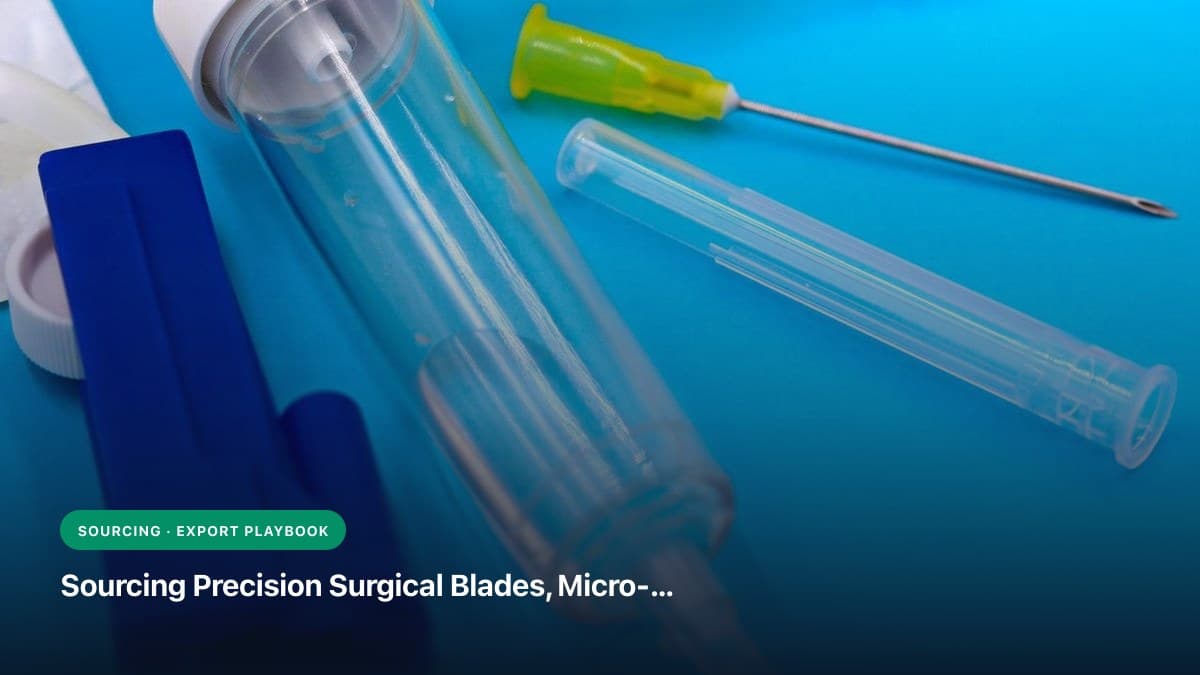
Engineering and procurement analysis for minimally invasive surgery distributors sourcing disposable bladeless trocars, optical access ports, and high-flow insufflation lines.
Loss of pneumoperitoneum during laparoscopic surgery extends anesthesia time and clouds camera optics. Our trocars utilize self-lubricating double-membrane valve seals holding abdominal pressure under rapid instrument exchanges. [Explore our surgical consumables line](/products/category/surgical-consumables) or [request clinical evaluation samples](/contact).
Modern laparoscopic access centers on two primary designs: Bladeless Dilating Trocars and Optical Clear-Tip Trocars. Bladeless designs separate muscle and fascial fibers along natural anatomical lines rather than incising them, cutting port-site herniation and fascial closure requirements. Optical trocars feature clear conical tips that accept a 0° laparoscope, allowing surgeons to visually navigate tissue layers down to the peritoneum with zero blind entry risk.
Available sizes cover 5 mm, 10 mm, 12 mm, and 15 mm diameters across standard 100 mm and bariatric 150 mm cannula lengths. Threaded retention sleeves ensure abdominal wall grip, preventing the port from backing out during vigorous instrument manipulation.
| Specification | Manshav Impex Engineering-Grade Trocar | Unbranded Commodity Trocar | Reusable Metal Trocar |
|---|---|---|---|
| Tip Technology | Bladeless tissue-separating or optical clear cone | Sharp flat blade cutting tissue fascia | Pyramidal metal point requiring high force |
| Valve Seal Mechanism | Dual self-adjusting universal seal (5mm–12mm) | Single basic silicone flap prone to tearing | Mechanical trumpet valve prone to micro-leaks |
| Abdominal Wall Fixation | High-retention threaded exterior cannula sleeve | Smooth surface slipping under traction | Separate cumbersome screw retention collar |
| Cross-Contamination Risk | Zero (100% single-use sterile peel pack) | Zero (single-use) | High risk (difficult internal lumen decontamination) |
When a trocar backs out during a bariatric laparoscopy, the loss of pneumoperitoneum and camera fogging disrupts the surgical rhythm. Secure cannula fixation is a clinical necessity.
Standard export configurations include 5 mm, 10 mm, and 12 mm trocars in 100 mm lengths, as well as 150 mm bariatric lengths.
Yes, our CO2 insufflation tubing integrates high-efficiency dual-direction 0.1 µm hydrophobic PTFE filters to block viral and bacterial particles.
Yes, the integrated flexible seal accommodates instruments from 5 mm to 12 mm without requiring external reducer caps.
Each trocar with cannula is sealed inside a rigid sterile blister pack, packed 5 or 10 units per dispenser box.
Every production batch undergoes 100% pressure-decay helium leak testing at 15–20 mmHg to verify valve integrity under clinical pressure.
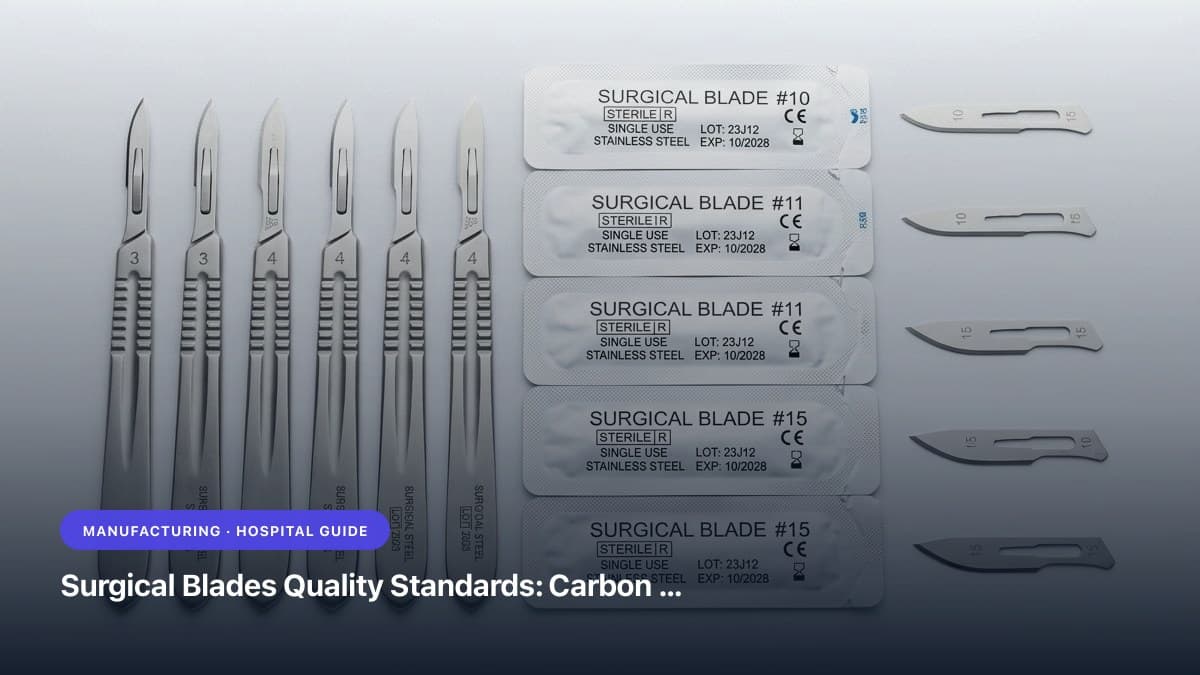
Carbon steel sharpness vs. Stainless steel rust protection — how to select the right surgical blades for African medical distributors.
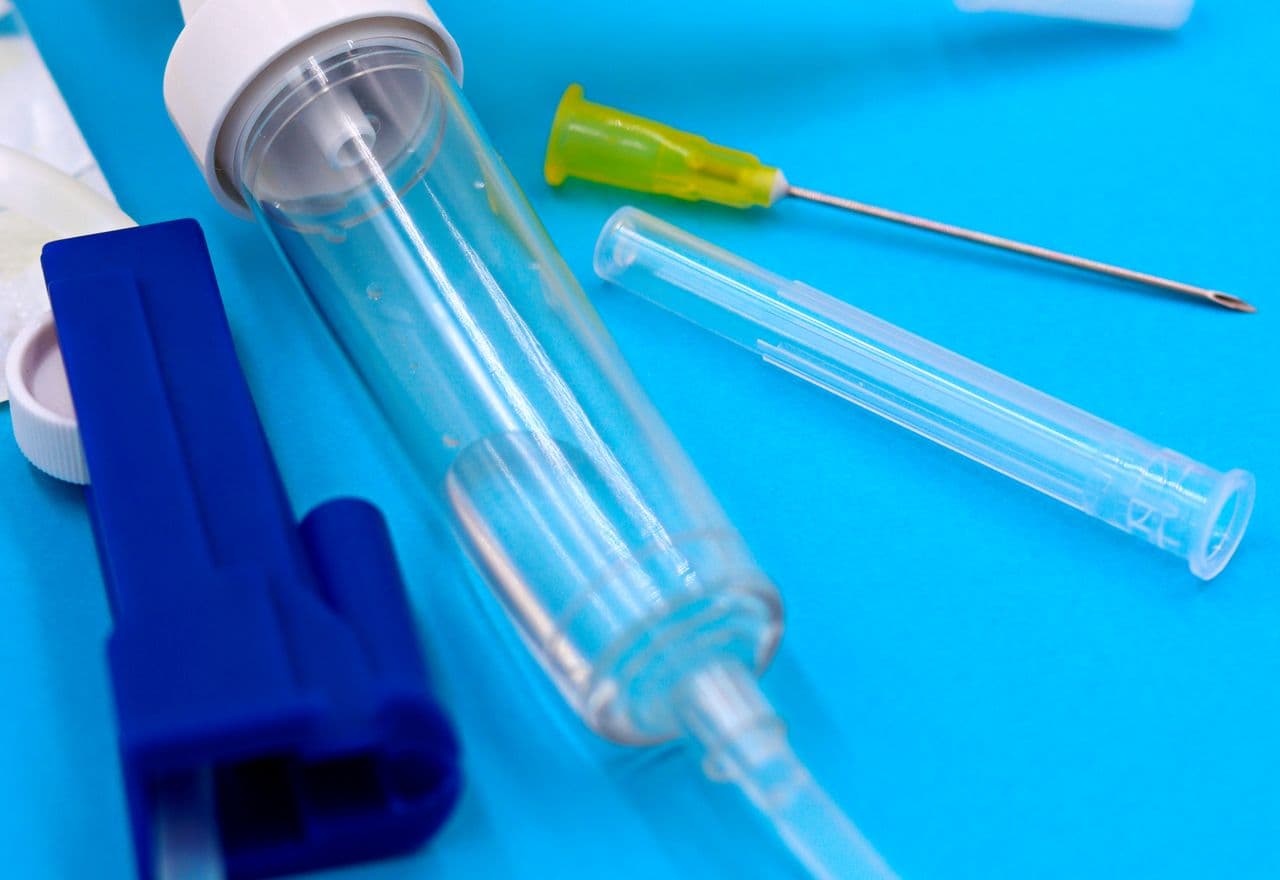
An inside look at how hospital procurement committees audit technical dossiers, biocompatibility reports, and cleanroom data for Indian medical consumables.
A complete step-by-step procurement blueprint for international buyers importing surgical gloves, blades, syringes, and hospital disposables from Indian factories.