Hospital Tender Technical Dossier Audit: How Committees Evaluate Indian Medical Plants
An inside look at how hospital procurement committees audit technical dossiers, biocompatibility reports, and cleanroom data for Indian medical consumables.

Discovering defective seals, pinhole punctures, or labeling errors once a 40ft container arrives at your destination port is a commercial disaster. Freight cannot be refunded, customs duties are already assessed, and hospital supply contracts face immediate default. Establishing clear pre-shipment inspection (PSI) protocols with agencies like SGS, Bureau Veritas, or Intertek at the manufacturing facility in India guarantees batch compliance before balance payments are released.
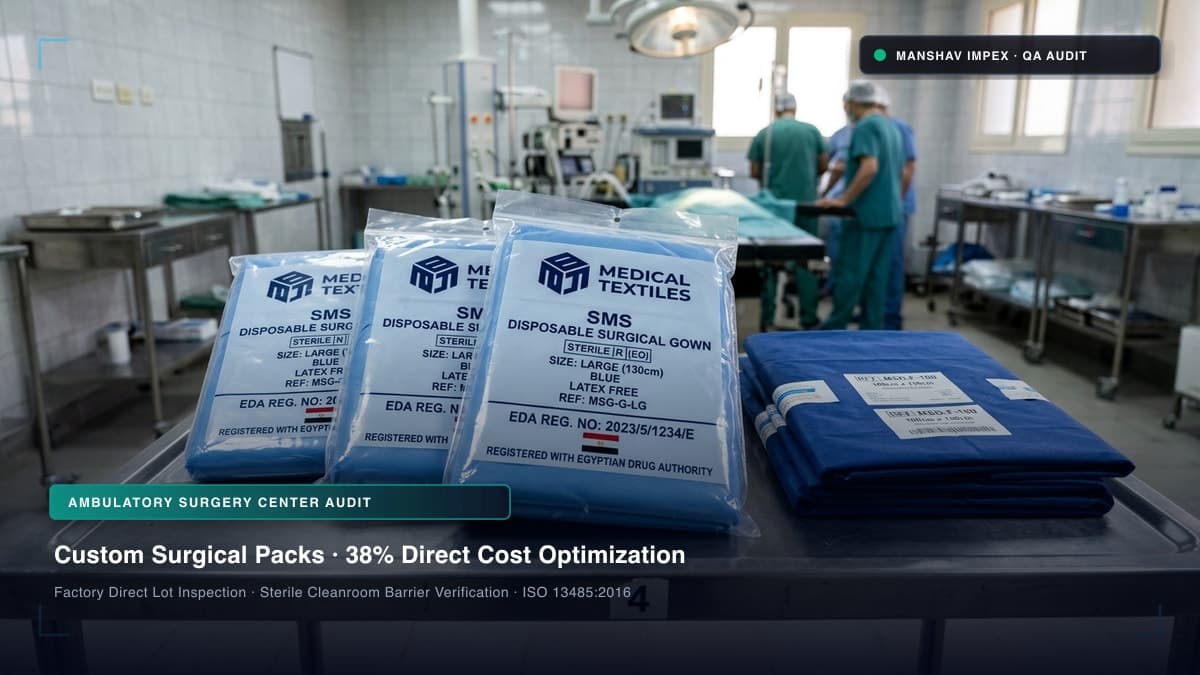
Comprehensive technical protocol for international medical device importers commissioning third-party factory acceptance tests and pre-shipment inspections (PSI) at Indian manufacturing facilities.
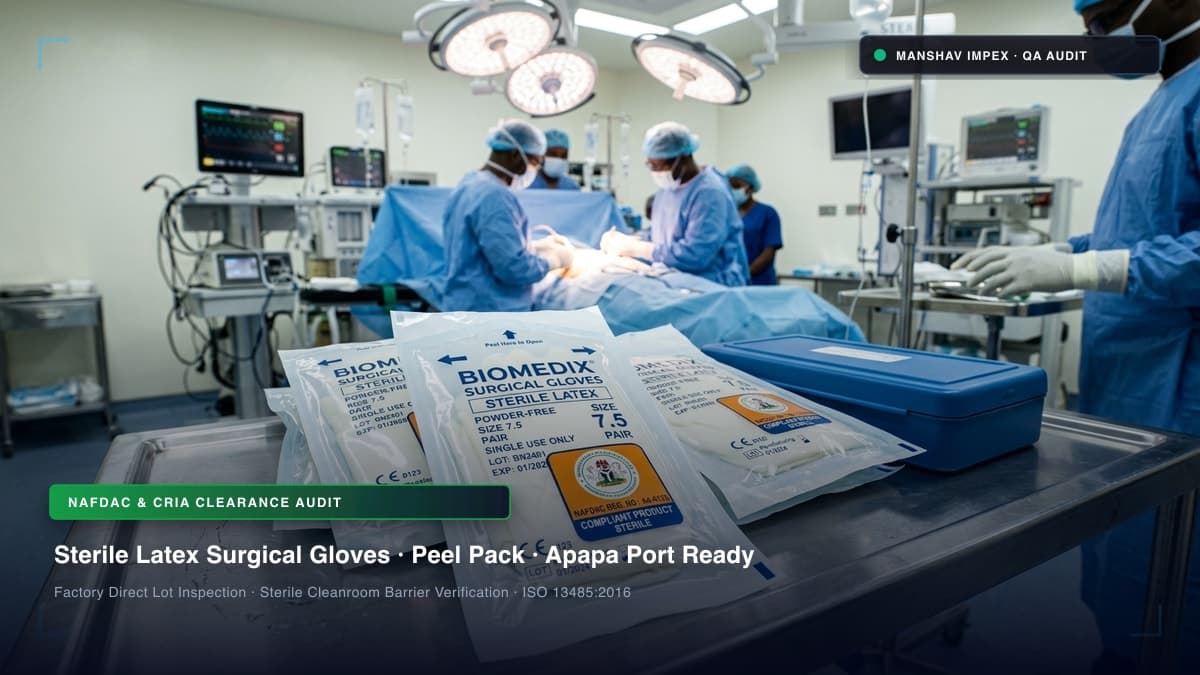
Medical disposables follow ISO 2859-1 (ANSI/ASQ Z1.4) General Inspection Level II sampling. Standards mandate: Critical Defects: 0.0 (Zero Tolerance); Major Defects (e.g., seal failure, contamination): AQL 1.0; Minor Defects: AQL 2.5 to 4.0. [Review our Quality Certifications](/certifications) or [coordinate a cleanroom audit](/contact).
A comprehensive pre-shipment inspection covers four distinct testing phases: First, sterile barrier testing via ASTM F1929 dye penetration and ASTM F88 peel force testing to ensure pouch hermeticity. Second, functional testing such as 1,000 ml water filling leak tests on surgical gloves per EN 455-1 and plunger glide force testing on syringes per ISO 7886-1. Third, master carton burst testing and 10-point ISTA 1A drop testing. Fourth, Container Loading Supervision (CLS) to verify proper desiccant placement and ISO 17712 bolt sealing.
| Inspection Area | Commodity Supplier Response | Manshav Impex Audit-Ready Facility |
|---|---|---|
| Auditor Cleanroom Access | Restricted or delayed access for third-party inspectors | Fully open cleanroom access with calibrated on-site testing equipment |
| Sterile Seal Testing | Visual check only; micro-channel leaks overlooked | Standard ASTM F1929 methylene blue dye leak & peel force verification |
| Carton Stacking Durability | Lightweight 3-ply corrugated boxes prone to crushing | Heavy-duty 7-ply virgin kraft cartons with high edge crush test (ECT) |
| Container Loading Supervision | Unsupervised hand loading without moisture protection | Monitored pallet strapping, dry-pole placement, and photograph reporting |
A pre-shipment inspection is not an act of distrust; it is a standard commercial governance protocol that professional exporters welcome because it validates their manufacturing precision before the balance payment is released.
The buyer contracts and pays the inspection agency (SGS, Intertek, etc.) directly to maintain complete independence.
Standard protocol requires 3 to 5 business days' notice once goods are 100% produced and at least 80% packed.
The manufacturer must quarantine the lot, re-sort or re-manufacture the affected units at its own cost, and submit the goods for re-inspection.
CLS ensures carton counts match the packing list, monitors container cleanliness, and logs the official ISO 17712 container bolt seal.
Yes, every consignment includes an internal Certificate of Analysis (CoA) and sterilization batch release documentation.

An inside look at how hospital procurement committees audit technical dossiers, biocompatibility reports, and cleanroom data for Indian medical consumables.

A step-by-step mathematical landed-cost calculation framework for CFOs, buyers, and import directors purchasing medical consumables from India.
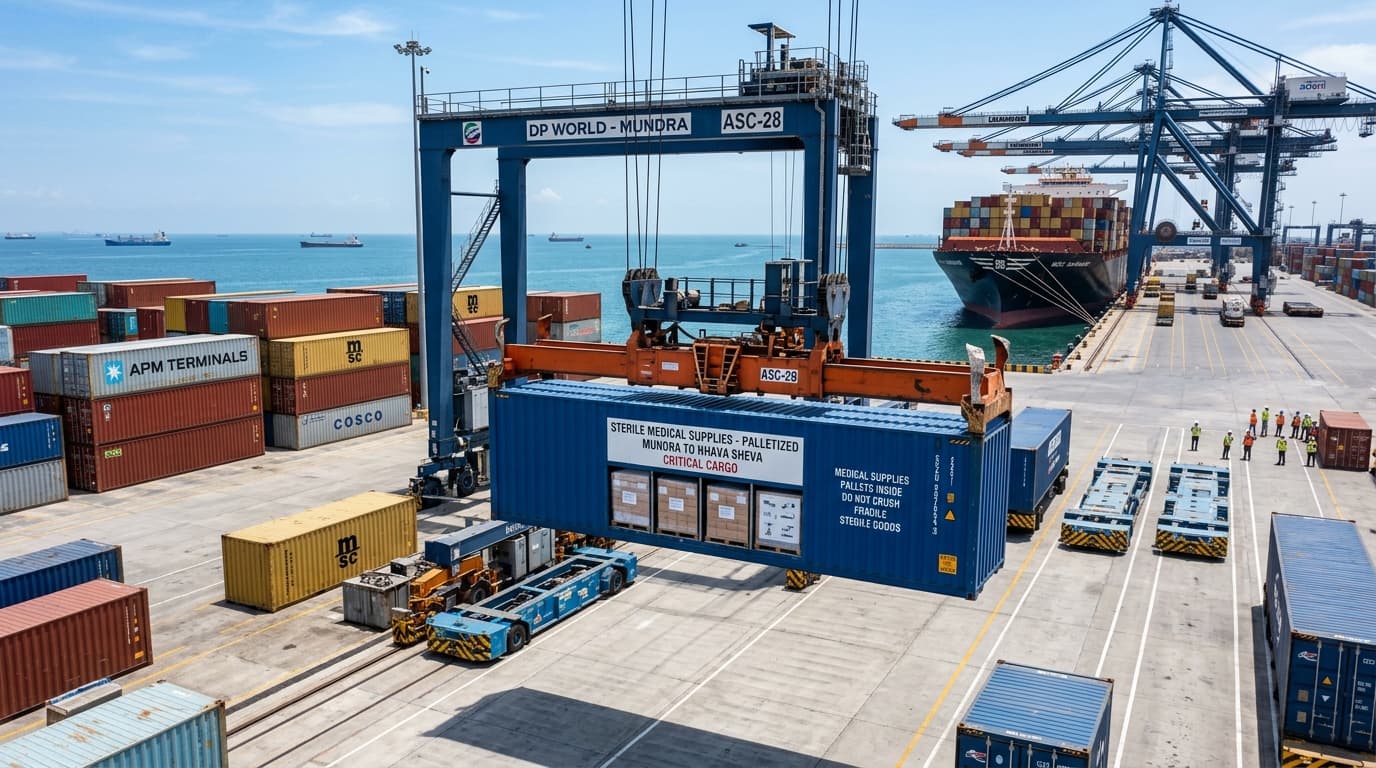
A complete step-by-step procurement blueprint for international buyers importing surgical gloves, blades, syringes, and hospital disposables from Indian factories.