Sourcing

Westergren ESR Pipettes & Sedimentation Tube Racks: Sourcing Guide for Ghanaian Diagnostic Labs (FDA & G-FIRMS)

The Erythrocyte Sedimentation Rate (ESR) remains one of the most widely requested, cost-effective screening tests across Ghana for evaluating acute phase systemic inflammation, tuberculosis (TB), autoimmune conditions, and infectious diseases. From major teaching hospital hematology departments to rural clinics supported by the Christian Health Association of Ghana (CHAG), reliable ESR testing is a routine daily requirement. Sourcing disposable Westergren ESR pipettes, pre-filled sodium citrate dilution vials, and graduated leveling racks from certified Indian manufacturers gives Ghanaian laboratory distributors high margins and dependable stock replenishment while adhering strictly to FDA Ghana regulations.

Westergren ESR Pipettes & Sedimentation Tube Racks: Sourcing Guide for Ghanaian Diagnostic Labs (FDA & G-FIRMS)
Key Summary & AI Takeaways

The Erythrocyte Sedimentation Rate remains one of the most widely requested screening tests across Ghana for evaluating acute phase systemic inflammation.

Quick Answer: Open Manual vs Closed-System ESR Pipette Architecture

The classical open Westergren method involves manually drawing anticoagulated blood into an open-bore glass pipette, which poses severe biohazard and needle-stick contamination risks. Modern laboratory safety standards in Ghana mandate closed-system Westergren pipettes. These systems consist of a shatter-proof polystyrene pipette with an integrated piston filter plug and a matching 12×75 mm pre-filled collection tube containing 0.2 ml of 3.8% buffered sodium citrate. The laboratory technician simply presses the pipette down through the pierced tube cap; the internal piston draws blood up to the calibrated '0' mm mark automatically, completely eliminating mouth pipetting and biological fluid exposure.

Technical Specifications & Dimensional Standards

ComponentStandard SpecificationsMaterial GradeLaboratory Advantage
Westergren PipetteLength 230 mm; 0 to 200 mm graduation scaleCrystal Polystyrene (PS)High optical clarity; precise millimeter markings
Bore Internal Diameter2.55 mm ± 0.15 mm internal borePrecision-extruded polymerStandardized settling velocity conforming to ICSH
Filter PlugHydrophobic fiber piston plugSelf-sealing fibrous polymerAutomatically stops blood column precisely at '0' mark
Dilution Vial12×75 mm pre-filled tube (1.28 ml blood capacity)Polypropylene (PP) / GlassPre-filled with 0.32 ml 3.8% sodium citrate (1:4 ratio)
Sedimentation Rack10-place or 20-place with leveling bubbleHeavy acrylic or stainless steelBuilt-in spirit level and adjustable leveling screws

Buyer Insight: Bore Uniformity & Meniscus Creeping

In ESR testing, the settling velocity of erythrocytes is governed by Poiseuille's law of fluid dynamics. If an extruded plastic pipette has internal bore diameter variations exceeding 0.1 mm, sedimentation rates will be falsely elevated or depressed, triggering inaccurate clinical diagnoses.

When auditing an Indian laboratory consumable exporter, Ghanaian buyers must request optical comparator inspection reports certifying uniform internal bore diameter along the full 200 mm graduation scale. Furthermore, the hydrophobic piston plug must create an airtight seal: if air bypasses the filter, the blood meniscus will creep downward over the 60-minute test period, ruining test accuracy.

Procuring Diagnostic Hardware for West Africa? Review our automated extrusion lines, pre-filled vacuum tubes, and tender documentation.
View Diagnostic Products

FDA Ghana (G-FIRMS) Registration & Maritime Freight to Port of Tema

Medical laboratory consumables imported into Ghana must be registered via the Food and Drugs Authority's online portal (G-FIRMS). Importers must submit the Indian manufacturer's ISO 13485 certification, Certificate of Free Sale, and proof of conformity with ICSH (International Council for Standardization in Haematology) reference guidelines. Maritime container shipments from Nhava Sheva or Mundra to the Port of Tema have an average transit time of 28 to 34 days. Pipettes and pre-filled tubes are packed in high-density export shippers (200 pipettes per dispenser box; 2,000 units per carton).

Frequently asked questions

Why is a 1:4 dilution ratio mandatory for the Westergren ESR test?

The standard ICSH Westergren method requires exactly 1 part 3.8% buffered sodium citrate anticoagulant to 4 parts whole blood (e.g., 0.32 ml citrate to 1.28 ml whole blood) to achieve standardized erythrocyte sedimentation dynamics.

Why is a leveling bubble essential on the ESR sedimentation rack?

Even a minor 3-degree tilt of the sedimentation tube from the true vertical can accelerate erythrocyte settling by up to 30%, as red blood cells slide down the tube wall rather than settling purely under gravity. The leveling bubble ensures 100% vertical orientation.

Can EDTA blood collection tubes be used for the Westergren test?

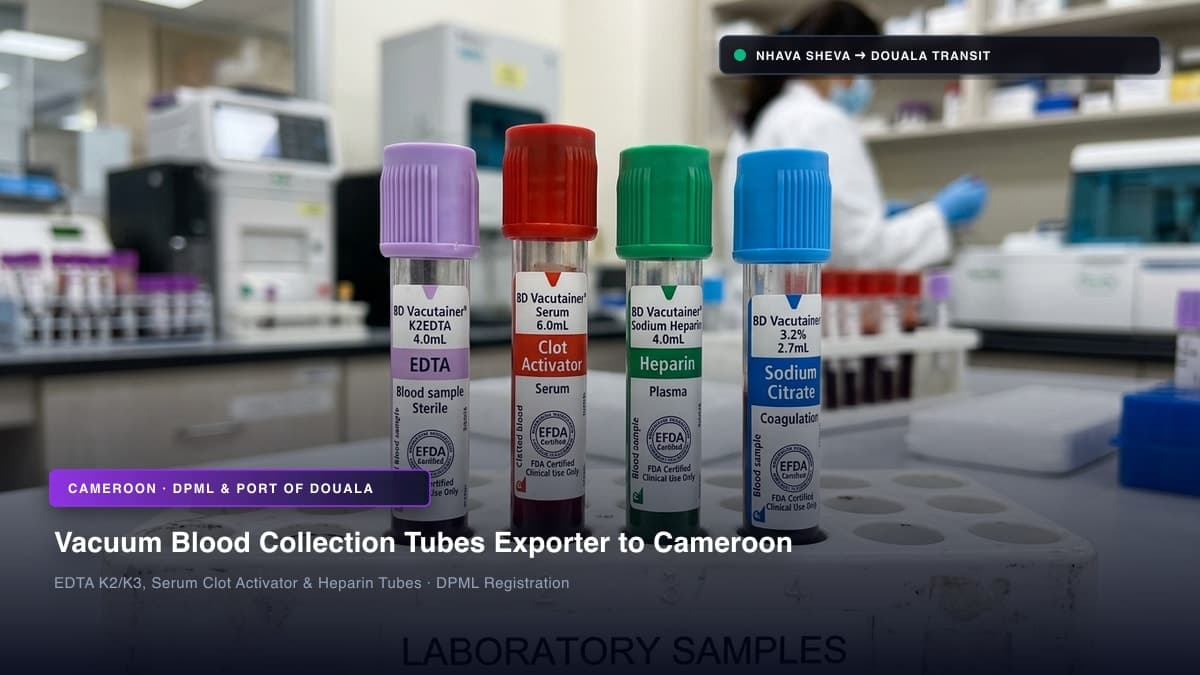
Yes. Technicians can transfer EDTA-anticoagulated blood into a secondary sodium citrate dilution vial, or utilize specialized closed-system ESR pipettes designed with direct EDTA tube adaptors.

What is the shelf life of pre-filled sodium citrate ESR tubes?

Pre-filled vacuum and non-vacuum tubes carry a validated 18-month to 24-month shelf life when stored between 4°C and 25°C away from direct sunlight.

What temperature controls are required during test execution?

The Westergren test should be conducted between 20°C and 25°C. Higher ambient temperatures in tropical West African clinics accelerate settling; laboratories must run tests in air-conditioned environments or utilize mathematical temperature correction tables.

Manshav Impex

Manshav Impex is a global exporter of medical devices, surgical consumables and healthcare solutions, serving importers, distributors, hospitals and governments in 48+ countries.

Chat with us