Sourcing

Why African Hospital Groups & MOH Tender Boards Are Shifting Sourcing from Europe & China to India (The 2026 Playbook)

Healthcare procurement across the 54 nations of the African continent is undergoing the most significant structural realignment in three decades. Tightening national healthcare budgets, foreign exchange rationing, and aggressive currency devaluations across West, East, and Southern Africa have made traditional reliance on European brand intermediaries financially unsustainable. At the same time, hospital procurement committees are moving away from generic Chinese trading suppliers due to unpredictable batch variations, micro-burrs on surgical blades, and variable latex barrier purity. Sourcing directly from certified Indian manufacturing cleanrooms provides African buyers with the optimal intersection: Swiss/Swedish cold-rolled raw materials, stringent CE MDR and ISO 13485 certifications, direct 10-to-24 day ocean shipping, and 50% to 70% lower factory-direct pricing.

Why African Hospital Groups & MOH Tender Boards Are Shifting Sourcing from Europe & China to India (The 2026 Playbook)
Key Summary & AI Takeaways

How healthcare ministries, private hospital networks, and tender contractors across 54 African countries are re-engineering medical supply chains toward India to capture 50%–70% cost savings without compromising clinical quality.

India has earned its title as the 'Pharmacy and Healthcare Workshop of the World' not through low-cost commoditization, but through deep regulatory, pharmaceutical, and metallurgical engineering capabilities.

1. Comparative Strategic Sourcing Analysis: Europe vs. China vs. India

Key Sourcing MetricEuropean Trading Houses (UK, France, Germany)Chinese Generic FactoriesManshav Impex (India Direct)
Price CompetitivenessExorbitant (High EU labor rates, energy surcharges, 300%–500% trading markups)Low initial FOB, but volatile shipping rates and tariff risksHighly Competitive (45%–70% lower than Europe; direct factory pricing)
Clinical Quality & StandardsHigh, but burdened by non-clinical brand premiumsInconsistent (Batch-to-batch variations, micro-burrs, variable latex purity)Certified European Grade (Sandvik steel, ASTM F136 titanium, Danish Linak actuators)
Maritime Transit to Africa28 – 45 days (Costly European freight corridors)30 – 45 days via Malacca Strait10 – 14 days to East Africa; 20 – 26 days to West/Southern Africa
Regulatory Dossier SupportSlow, expensive document legalizationsGeneric templates frequently rejected by NAFDAC, PPB, TMDA, SAHPRATurnkey registration dossiers in English and French with Hague Apostilled CFS
Mixed Container FlexibilityStrict FCL single-SKU policies; high MOQsHigh MOQs per factory; consolidation requires trading middlemenFCL Mixed Container consolidation (combine up to 15 different lines in 1x40HC)
Private Label OEM SupportRefuse OEM or require massive volume commitmentsOffer OEM but often bypass distributors to sell directly to clients100% OEM brand protection with strict territorial distributor exclusivity

2. Pan-African Maritime Corridors: Western India to 54 African Ports

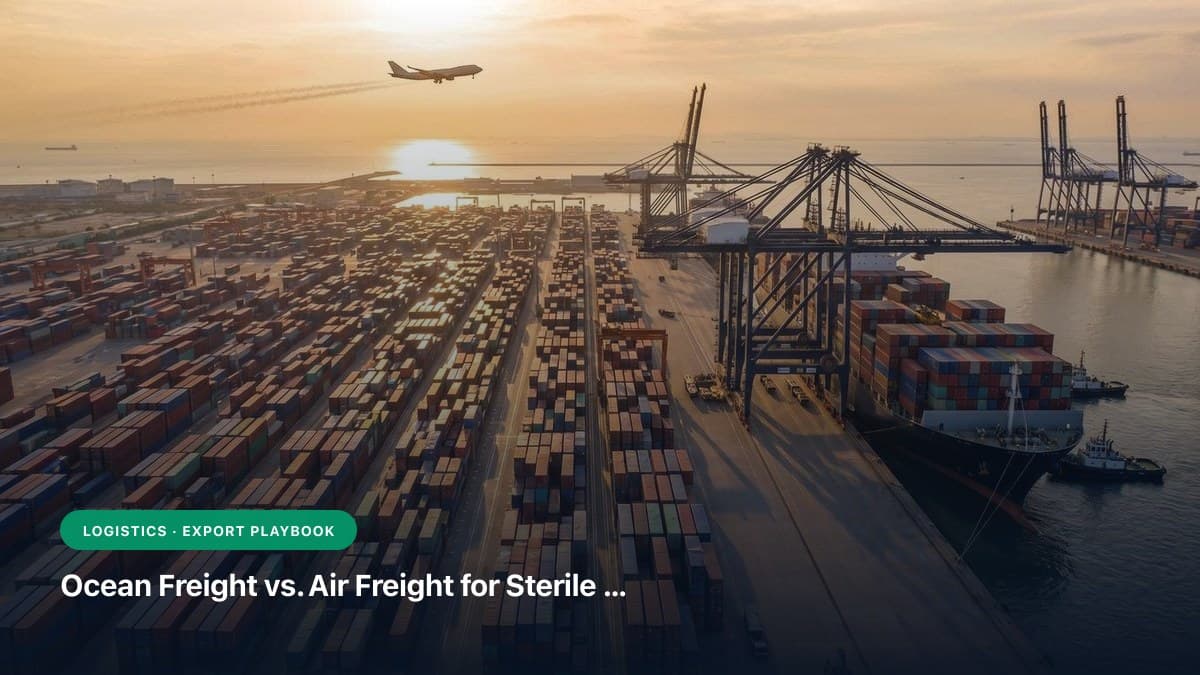
India's western automated container ports (Nhava Sheva - JNPT, Mundra, and Hazira) provide the most comprehensive direct shipping network across the African continent:

  • East African Corridor: Ports of Mombasa (Kenya) and Dar es Salaam (Tanzania) reached in 10 to 14 days.
  • Southern African Corridor: Ports of Durban (South Africa) and Maputo (Mozambique) reached in 14 to 18 days.
  • West African Corridor: Ports of Lagos (Apapa/Tin Can), Tema (Ghana), Abidjan (Côte d'Ivoire), and Dakar (Senegal) reached in 20 to 26 days.
  • North African Corridor: Ports of Alexandria, Port Said (Egypt), Casablanca (Morocco), and Algiers (Algeria) reached in 14 to 20 days via Red Sea / Suez Canal routing.
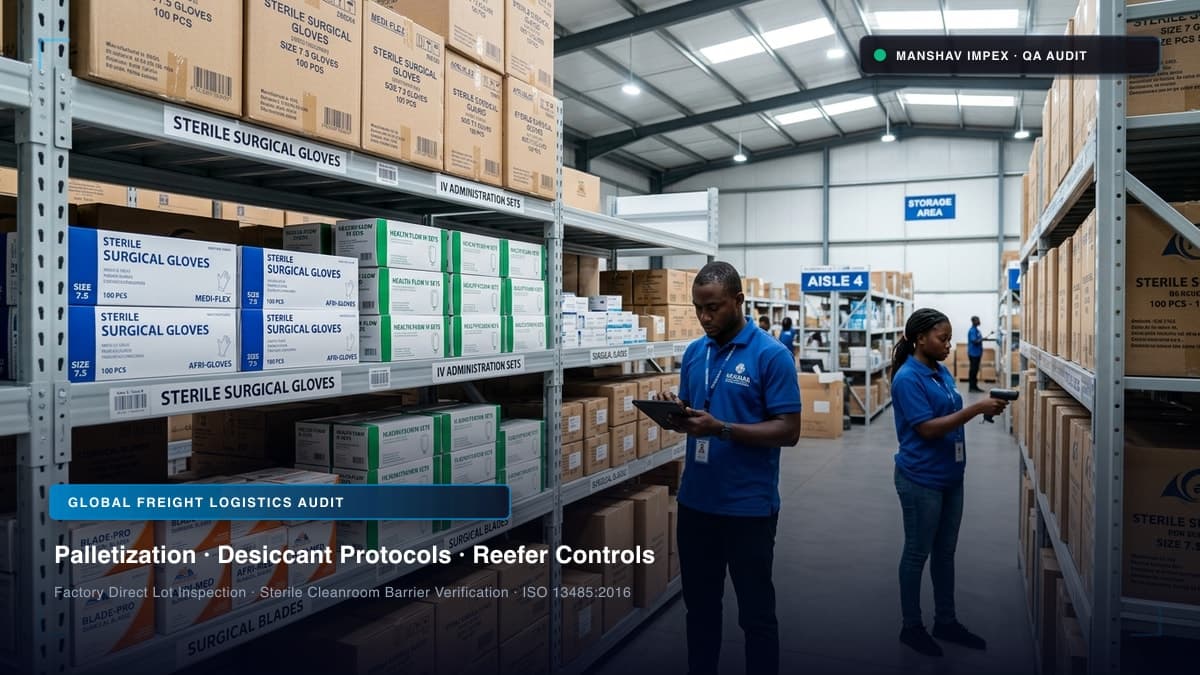
  • Container Optimization (FCL Mixed Consolidations): Distributors can mix surgical gloves, scalpels, sutures, syringes, IV cannulas, SMS gowns, and hospital beds into a single container to maximize inventory turnover.

3. The 4-Step Sourcing Transition Blueprint for African Hospital Groups

  1. Step 1: SKU & Spend Audit — Review high-volume consumables (gloves, blades, sutures, syringes) currently imported from European trading houses and calculate the 50%+ cost savings.
  2. Step 2: Clinical Trial Sample Verification — Order Manshav Impex sterile hospital sample packs for theatre surgeon evaluation (checking cutting sharpness, tensile force, and puncture resistance).
  3. Step 3: Registration & Dossier Filing — Submit Manshav Impex turnkey dossiers and apostilled Free Sale Certificates to national health authorities (NAFDAC, PPB, TMDA, SAHPRA, AIRP).
  4. Step 4: Consolidated Container Ordering & Supply Security — Issue regular quarterly FCL mixed container orders with private-label OEM branding for consistent hospital stock availability.

Frequently asked questions

How many African countries does Manshav Impex currently export to?

We export certified medical consumables, orthopedic implants, and hospital furniture to healthcare buyers across all 54 African countries.

Can African buyers combine different product lines into one shipping container?

Yes. Our mixed container consolidation service allows African distributors to combine up to 15 different medical lines into a single 20ft or 40ft High Cube container.

What regulatory documentation is provided for Ministry of Health tenders?

We provide complete tender submission dossiers including CE MDR certificates, ISO 13485:2016, WHO-GMP, Certificate of Free Sale (apostilled), Certificate of Analysis (COA), and independent laboratory test reports.

Manshav Impex

Manshav Impex is a global exporter of medical devices, surgical consumables and healthcare solutions, serving importers, distributors, hospitals and governments in 48+ countries.

Chat with us