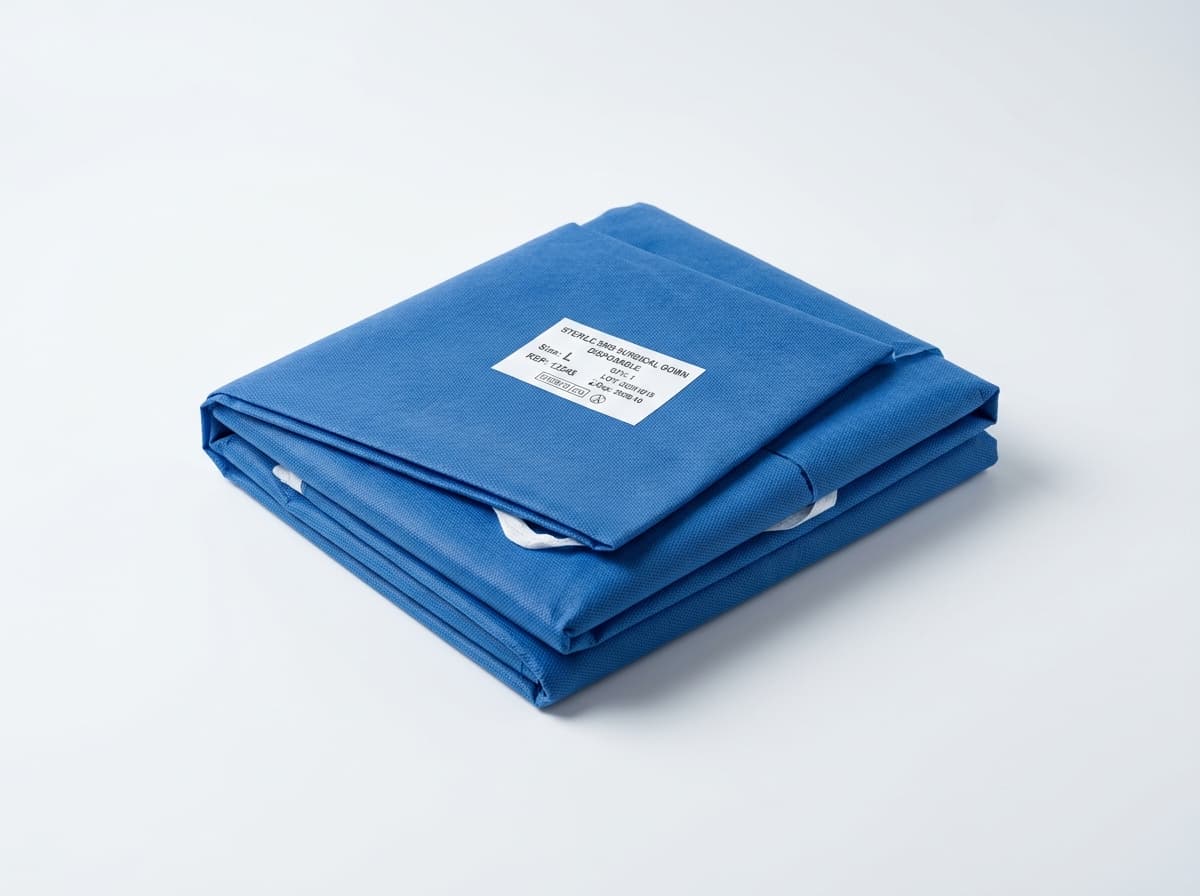
Disposable Surgical Gowns Exporter India — NAFDAC Import Guide for Nigerian Hospitals
Picture a procurement officer at a Lagos teaching hospital in late Q3. The tender for 50,000 surgical gowns closes in three weeks, the NAFDAC dossier is half-built, and the last shipment from a European supplier arrived two months late — with gowns that failed the wet-strike-through test at theatre. She needs a reliable disposable surgical gowns exporter from India who can ship to Apapa with the right CRIA certificate already in hand. This guide is written for her.
Sharmil Mangukiya (Founder & MD) 6 min read October 7, 2026
Key Summary & AI Takeaways
A practical guide for Nigerian hospital buyers and distributors importing disposable surgical gowns from India. Covers NAFDAC CRIA registration, AAMI barrier levels, FOB pricing, container math, and how to vet factory direct vs. trading agents.
Parameter
Detail
Product
Disposable non-woven SMS surgical gowns
Standards
AAMI PB70 Level 2 / Level 3; EN 13795-1
Certifications
CE, ISO 13485, WHO-GMP compliant manufacturing practices
HS Code (India export)
6210.10 / 6307.90
HS Code (Nigeria import)
6210.10.00
MOQ
2,000 pieces per size/style
FOB Price Range
USD 0.55–0.80 (Level 2); USD 0.85–1.10 (Level 3)
Port of Loading
JNPT (Mumbai)
Transit to Apapa
22–26 days
NAFDAC Route
CRIA registration (Class B medical device)
Lead Time
21–28 days production + transit
Why Nigerian Hospitals Are Shifting to Indian Suppliers
Nigerian public hospitals sourcing through government hospital procurement bodies and large private groups like Zenith Healthcare have quietly made the switch over the last 24 months. The math is straightforward: a European Level 3 gown lands in Lagos at USD 1.80–2.20; the same AAMI PB70 Level 3 spec from a certified Indian factory lands at USD 1.20–1.40. On a 50,000-gown tender, that's a USD 30,000–40,000 saving inside a single container.
Here's what most exporters won't tell you: the real risk in Nigerian procurement isn't the product — it's documentation. A gown that works flawlessly in theatre but arrives with an incomplete Technical File or a CE certificate that doesn't match the exact brand name on the carton will fail the NAFDAC inspection queue. We've seen this happen to distributors who bought via UAE trading agents — the factory's original docs got truncated in the chain, and the shipment sat at Apapa for 11 weeks.
Request factory-direct pricing on AAMI-compliant surgical gowns
The CRIA (Cosmetics, Raw Materials, Devices and Packaged Water) registration is the path for Class B medical devices — which includes surgical gowns — under NAFDAC's Medical Device Regulations 2021. Key requirements:
From the Indian exporter:
Certificate of Free Sale (CFS) from India's CDSCO, issued within 12 months
CE Technical File (AAMI PB70 / EN 13795-1 test reports included)
ISO 13485 certificate of the manufacturer
Product labelling compliant with NAFDAC labelling guidelines (English; "For Single Use Only"; lot number; expiry date; manufacturer name/address)
Material Safety Data Sheet (for the non-woven SMS fabric)
From the Nigerian importer:
Business registration + NAFDAC importer licence
Letter of appointment from the manufacturer (exclusive or non-exclusive — both work)
Completed NAFDAC medical device import application form (submitted via the NAPAMS portal at registration.nafdac.gov.ng)
Processing time for a well-packaged dossier: 60–90 working days (first registration). Renewal every 5 years.
Is it worth pre-stocking before registration clears? Only if you're importing under an already-registered sister product using the same manufacturer's CE scope. Otherwise, place a small first shipment order, run the CRIA simultaneously, and scale the second container once the registration number arrives.
AAMI Level 2 vs. Level 3 — Which Spec for Which Theatre?
Parameter
AAMI Level 2
AAMI Level 3
Liquid barrier (ASTM F1670)
Moderate
High
Viral penetration (ASTM F1671)
Not required
Required
Use case
Low-fluid elective surgery
High-fluid: ortho, obstetrics, trauma
Price premium
Base
+30–45%
Typical Nigerian theatre usage
OPD, minor procedures
Major theatres, C-sections
Most Nigerian teaching hospitals run a split spec: Level 2 for general surgery and Level 3 for orthopaedic and obstetric theatres. An Indian exporter who can supply both from the same facility under a single CRIA dossier simplifies procurement significantly.
Container Economics
A standard 20-ft FCL from JNPT to Apapa at current rates costs approximately USD 1,100–1,500 in ocean freight plus USD 280–350 in origin charges. What can you fit?
At a Nigerian distributor street price of USD 1.80–2.00 per unit, the gross margin is a comfortable 42–48% before warehousing. Does that make the paperwork worth doing? Consistently, yes.
Manshav Impex vs. Other Sourcing Options
Parameter
Manshav Impex (India)
UAE Trading Agent
European Brand
MOQ
2,000 pcs
5,000–10,000 pcs
10,000+ pcs
Lead time
21–28 days
35–45 days (re-shipped)
45–70 days
CFS available
Yes (CDSCO)
Sometimes (copy)
Yes (EU MDR / NB)
ISO 13485
Yes (manufacturer)
Agent only, not factory
Yes
NAFDAC dossier support
Full Tech File + CoA
Partial
Partial
FOB Level 3
USD 0.85–1.10
USD 1.20–1.50
USD 1.50–1.90
Private label
Yes (500+ pcs)
Rarely
No
European brand prices are street/distributor estimates from published NHS/EU hospital procurement records; Manshav's own prices are confirmed factory-direct FOB rates.
Next Step
If you're building a NAFDAC dossier or putting together a hospital tender for disposable surgical gowns, reach out now. We supply the full Technical File — CE, CFS, ISO 13485, test reports — as a standard part of every export package, not as an add-on. Nigerian distributors and hospital procurement teams can request a sample kit and pricing within 24 hours.
*Manshav Impex — ISO 13485, CE, and WHO-GMP compliant manufacturing practices. Exporting medical consumables from India to 50+ countries.*
Frequently asked questions
Can I register surgical gowns under NAFDAC without being a manufacturer?
Yes. Nigerian importers register as the responsible person under their own NAFDAC importer licence, supported by a Letter of Appointment from the Indian manufacturer. You don't need to own the factory — you need the documentation chain to be clean and traceable to the CE-certified plant.
What's the minimum order for a CRIA trial shipment?
NAFDAC doesn't set a minimum quantity for the registration shipment, but import economics make anything below 5,000 units impractical due to freight and clearing costs. Most distributors run a first order of 10,000–20,000 units to test the supply chain before scaling to FCL.
Does Manshav supply both Level 2 and Level 3 gowns from the same plant?
Yes. Both are manufactured at the same facility under the same ISO 13485 scope, which means a single manufacturer's Letter of Appointment covers both product lines in your NAFDAC dossier.
How long does NAFDAC CRIA registration take for surgical gowns?
A well-packaged dossier typically takes 60–90 working days for first registration. Registration is valid for 5 years before renewal. Using an Indian exporter who already has a CE Technical File and ISO 13485 certificate ready significantly speeds up dossier assembly.
What HS code should I use for surgical gowns importing into Nigeria?
The primary HS code for non-woven disposable surgical gowns importing into Nigeria is 6210.10.00. On the India export side, 6210.10 (primary) or 6307.90 (alternative for non-woven articles) are both used. Confirm with your clearing agent in Lagos as duty treatment can vary.
Manshav Impex
Manshav Impex is a global exporter of medical devices, surgical consumables and healthcare solutions, serving importers, distributors, hospitals and governments in 48+ countries.