Tropical Climate Zone IVb Stability: Preventing Medical Packaging Failure in Humid Ports
How to prevent medical packaging delamination, carton collapse, and sterile barrier breach in humid tropical import ports under Climatic Zone IVb conditions.

Learn how to audit foreign medical supplier technical dossiers. Verify ISO 13485 validity, Certificates of Free Sale, and ISO 10993 testing reports.
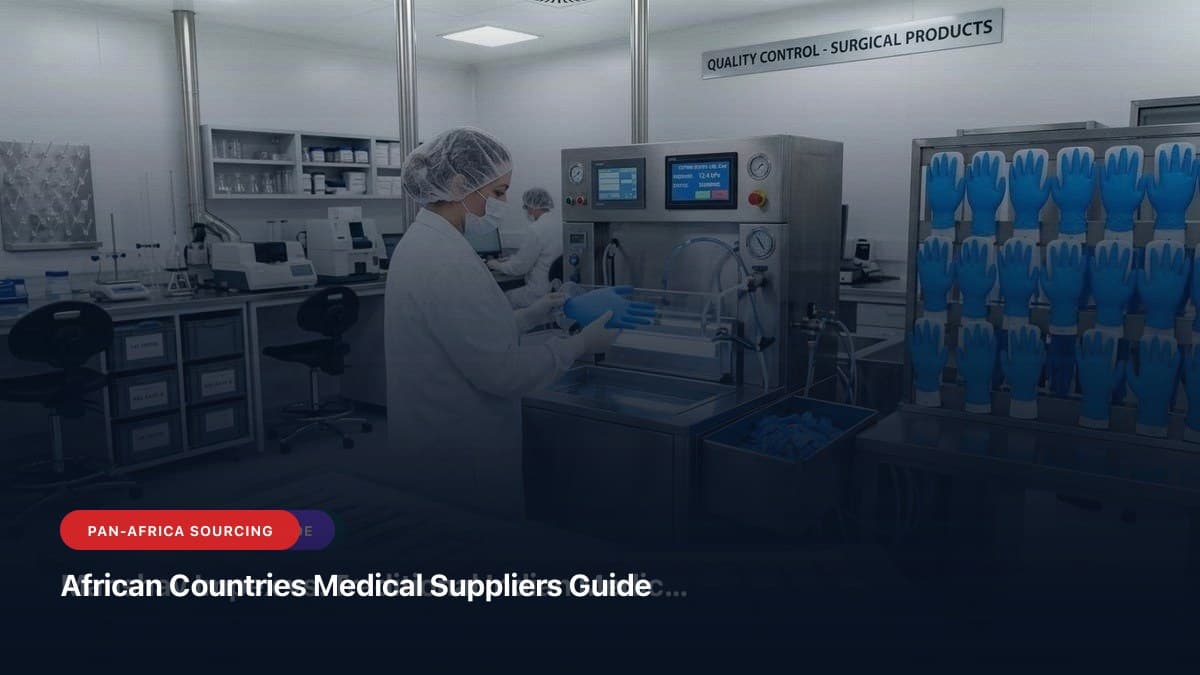
Learn how to audit foreign medical supplier technical dossiers. Verify ISO 13485 validity, Certificates of Free Sale, and ISO 10993 testing reports.
1. ISO 13485 Accreditation Body Verification: Never accept a PDF copy of an ISO certificate at face value. Verify that the issuing Notified Body or Certification Registrar is accredited under an international recognition framework (IAF MLA - International Accreditation Forum Multilateral Recognition Arrangement). Search the certificate's unique registration number directly in the IAF CertSearch global database (`iafcertsearch.org`). 2. Certificate of Free Sale (CFS) Legalization: Ensure the CFS is issued by the national licensing authority (e.g., India's CDSCO / State Licensing Authority) and bears an official apostille stamp or diplomatic legalization from the destination country's embassy. 3. Raw Laboratory Report Verification: Confirm that biocompatibility (ISO 10993) and sterilization validation (ISO 11135/11137) reports are issued by an independent, GLP-compliant, ISO/IEC 17025-accredited testing laboratory, rather than being self-certified internal factory memos.
| Regulatory Document | Authentic Verification Indicators | Common Warning Signs & Forgeries |
|---|---|---|
| ISO 13485:2016 Certificate | Verifiable on IAF CertSearch; explicitly names the audited factory address and specific product scope | Issuer is an unaccredited "diploma mill"; scope mentions general trading rather than sterile manufacturing |
| Certificate of Free Sale (CFS) | Issued by State Licensing Authority / CDSCO; contains official apostille ribbon or embassy stamp | Issued by a private trade association without statutory regulatory standing |
| ISO 10993 Biocompatibility | Full multi-page report from an accredited lab with raw animal/cell assay data and chromatograms | Single-page summary letter; lacks lab accreditation stamp; uses vague generic disclaimers |
| Sterilization Validation | Bioburden testing + EtO residual testing (ISO 10993-7) + EO cycle physical printouts | States "Product is sterile" with no supporting test data or cycle parameters |
| Factory License (Form 28 / MD-5) | Issued on state government letterhead with official register seal | Expired license with unverified handwritten renewal endorsements |
#### Step 1: Checking Scope Alignment A common supplier trick is using a valid ISO 13485 certificate awarded for one product line (such as non-sterile cotton gauze) to cover an unrelated Class II device (such as spinal needles or catheters). - Read the Scope Statement on the certificate carefully. - If the scope states: *"Manufacture and distribution of non-woven bandages"*, that certificate cannot be used to register sterile intravenous cannulas or endotracheal tubes.
#### Step 2: Verifying IAF CertSearch Records Legitimate certification registrars (such as DNV, TÜV, BSI, SGS, and Intertek) upload their active client registries to the IAF CertSearch database: 1. Request the registrar's name and certificate number from the supplier. 2. Enter the certificate number into `www.iafcertsearch.org`. 3. Confirm that the company name, physical factory address, active status, and scope match the supplier's commercial invoice.
#### Step 3: Verifying GLP Laboratory Test Reports Never accept a biocompatibility report without checking the laboratory's credentials. Legitimate ISO 10993 biological evaluations (cytotoxicity, sensitization, systemic toxicity) are expensive, complex studies conducted by specialized testing facilities. - Verify that the testing laboratory is accredited under ISO/IEC 17025 for medical device testing. - Email the laboratory’s quality assurance desk with the report number to confirm that the report is genuine and was issued for that specific manufacturer.
When preparing tender dossiers, always ask your supplier for their Letter of Authorization (LoA) on official company letterhead, apostilled alongside the CFS. National regulatory authorities will reject an import application if the relationship between the foreign manufacturer and the local distributor is not clearly authorized by law.
Manshav Impex maintains open regulatory transparency. We provide international distributor partners with complete technical construction files, accredited ISO 13485 certificates, CFS documents, and independent laboratory test data. Connect with our regulatory affairs desk to review compliance documentation.
---
"In medical procurement, trust is established through documentation: if a quality claim is not backed by an auditable certificate, it does not exist."
---
ISO 9001 is a general quality management standard applicable to any commercial business. **ISO 13485:2016** is a specialized medical standard that requires specific controls: cleanroom environmental monitoring, risk management (ISO 14971), batch traceability, sterile barrier validation, and adverse event reporting.
Under the 1961 Hague Apostille Convention, an Apostille verifies the authenticity of the signature and official seal of the issuing government official (such as a notary or licensing authority), confirming to destination customs that the document is legally authentic.
Biocompatibility reports remain valid as long as the product's raw material formulation, manufacturing process, supplier resin grade, and sterilization method remain unchanged. Any change in raw materials requires formal re-evaluation.
No. A Certificate of Free Sale must be issued by the statutory drug and medical device licensing authority in the country of manufacture (such as the CDSCO or State Licensing Authority in India).
Ethylene oxide residual testing measures how much EtO and ethylene chlorohydrin (ECH) remain on the device after gas sterilization. For patient-contact devices, allowable limits are strictly defined based on contact duration (temporary, prolonged, or permanent). ---
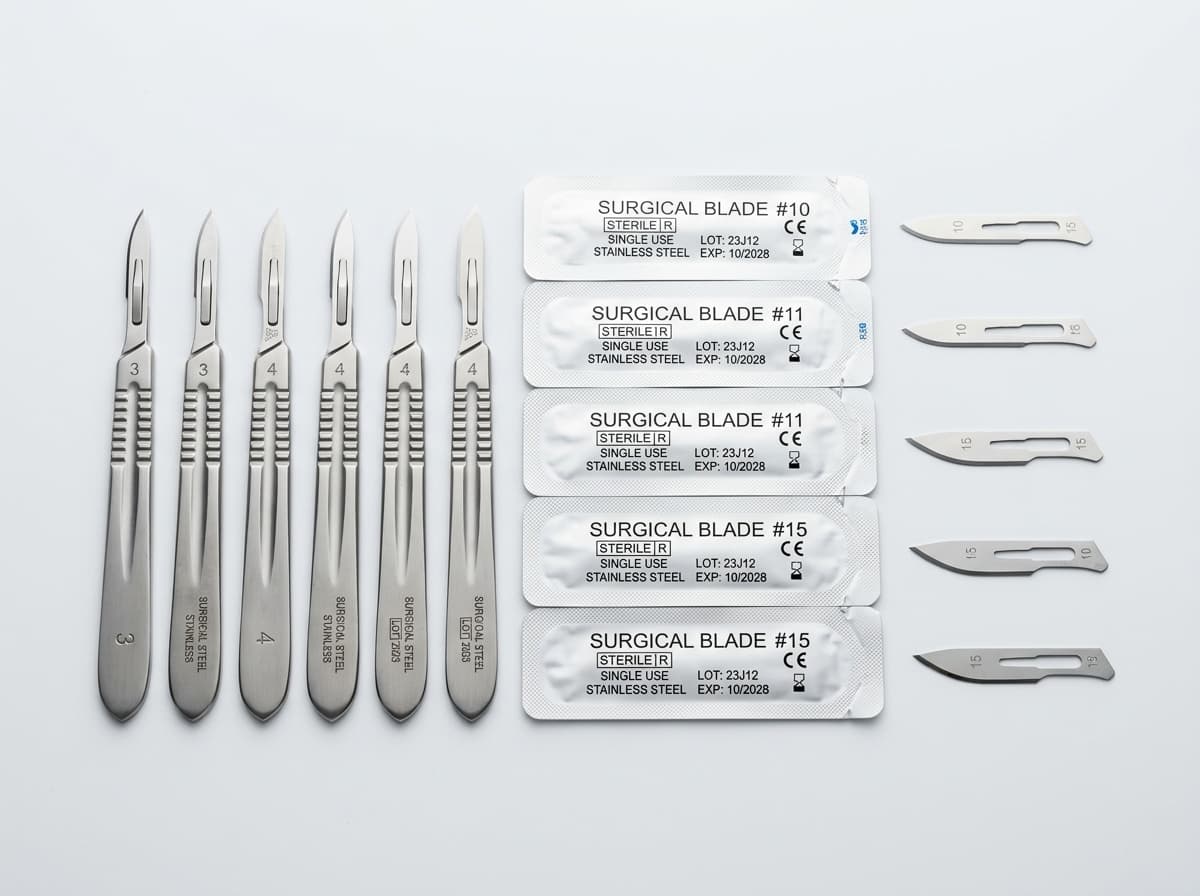
How to prevent medical packaging delamination, carton collapse, and sterile barrier breach in humid tropical import ports under Climatic Zone IVb conditions.
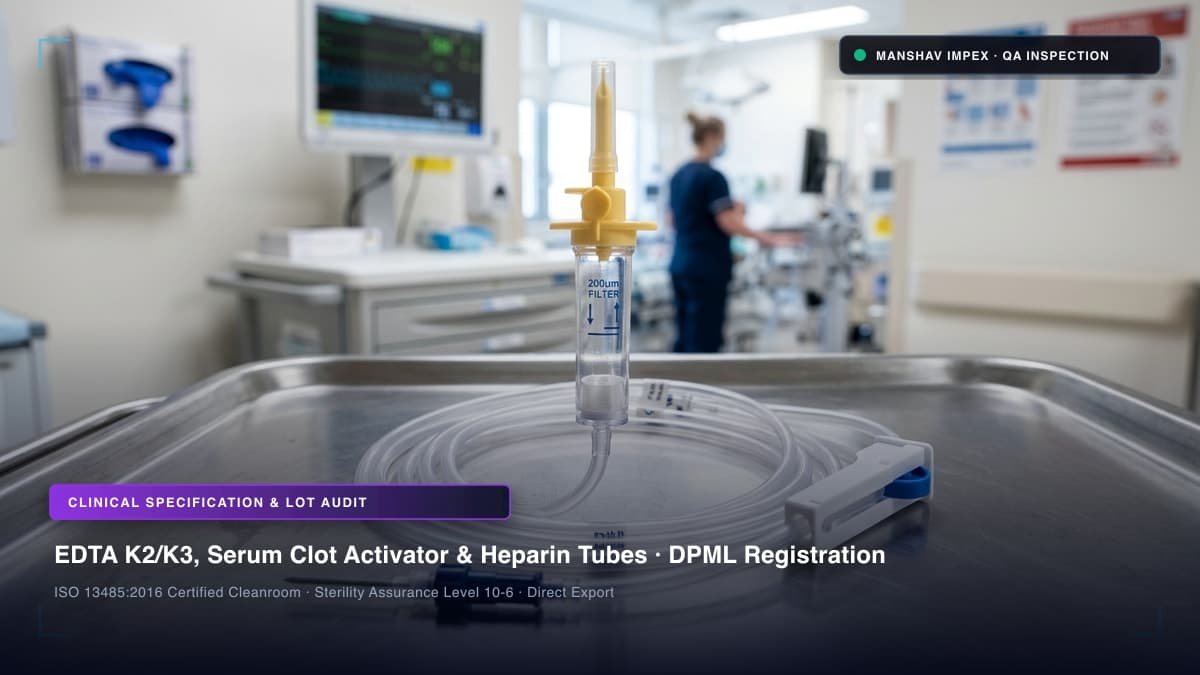
Guide to private-label medical consumables OEM sourcing in India. GS1 barcoding, UDI compliance, packaging artwork, and regulatory file creation.
Mathematical framework for medical device distributors managing the strict 80% remaining shelf-life rule, port customs dwell times, and ASTM F1980 accelerated stability testing.