A supplies coordinator at a county referral hospital in Kisumu was holding a quotation from her Nairobi distributor: KES 320 per surgical gown, delivered. A colleague in procurement at Kenyatta National Hospital had sourced the same AAMI Level 3 specification directly from an Indian factory at CIF Mombasa equivalent to KES 195. The difference wasn't quality — it was supply chain length. If your surgical gown budget is being consumed by intermediary margins, you're not underfunded — you're over-mediated. This guide walks through what it actually takes to import surgical gowns into Kenya under PPB rules, and why Indian manufacturers have become the default source for cost-conscious Kenyan buyers.
Sharmil Mangukiya (Founder & MD) 6 min read October 26, 2026
Key Summary & AI Takeaways
Kenyan hospitals buying AAMI Level 2/3 surgical gowns through regional distributors pay 35–55% more than the direct factory price from India — with the same CE marking, PPB-compliant documentation stack, and 4–6 week delivery to Mombasa.
Surgical Gowns in Kenya — Who Buys, What They Need, and Where They Source
Kenya's hospital sector runs on a split between public facilities (county referral hospitals, KNH, Moi Teaching and Referral) and a growing private cluster (Aga Khan, Nairobi Hospital, MP Shah, Gertrude's, and regional chains). Both segments consume surgical gowns in volume — public facilities through KEMSA tenders and county-level procurement, private hospitals through direct import or Nairobi-based medical distributors. The product spec that dominates Kenyan theatre purchasing is AAMI PB70 Level 2 (low-to-moderate fluid barrier, general surgery) and Level 3 (high fluid barrier, orthopaedic and OB/GYN). AAMI Level 4 (impervious barrier) is used selectively in laparoscopic and high-splash procedures, typically at the better-equipped private centres.
The sourcing landscape has historically been European brands via Nairobi distributors (Cardinal Health, Mölnlycke, Medline), Chinese commodity gowns without consistent barrier certification, and increasingly, direct import from India. India has emerged as the dominant source for import surgical gowns in Kenya for a straightforward reason: AAMI-certified SMS nonwoven gowns from Gujarat and Maharashtra price at USD 0.85–1.40 CIF Mombasa for Level 3, versus USD 2.20–3.20 from European distributors for equivalent specification — and the PPB registration pathway is well-trodden.
A Nairobi-based medical distributor that shifted its private-label surgical gown supply to a certified Indian factory reduced its per-unit procurement cost by 44% on a 120,000-gown annual volume — and improved its barrier test pass rate from 91% to 98.5% by selecting a single, audited manufacturer.
Request PPB-Ready Surgical Gown Pricing from Manshav Impex
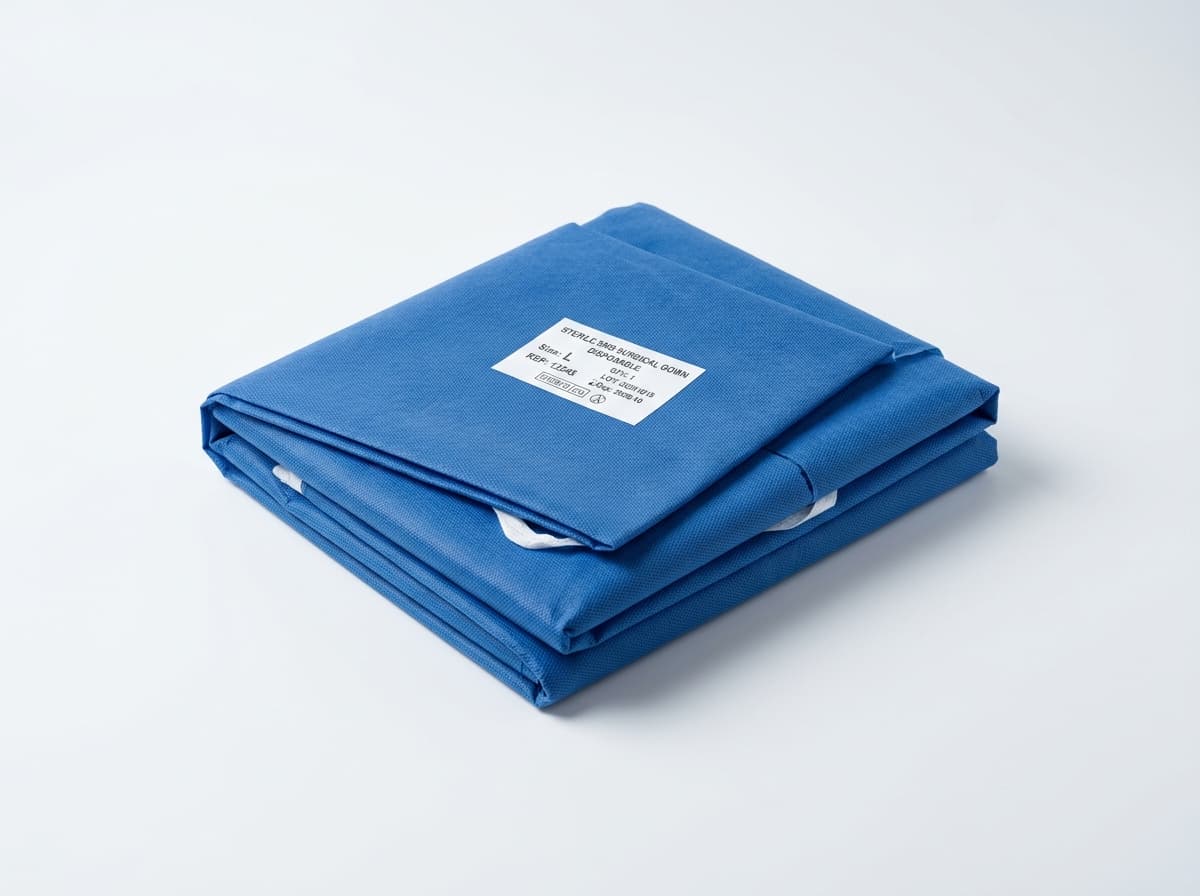
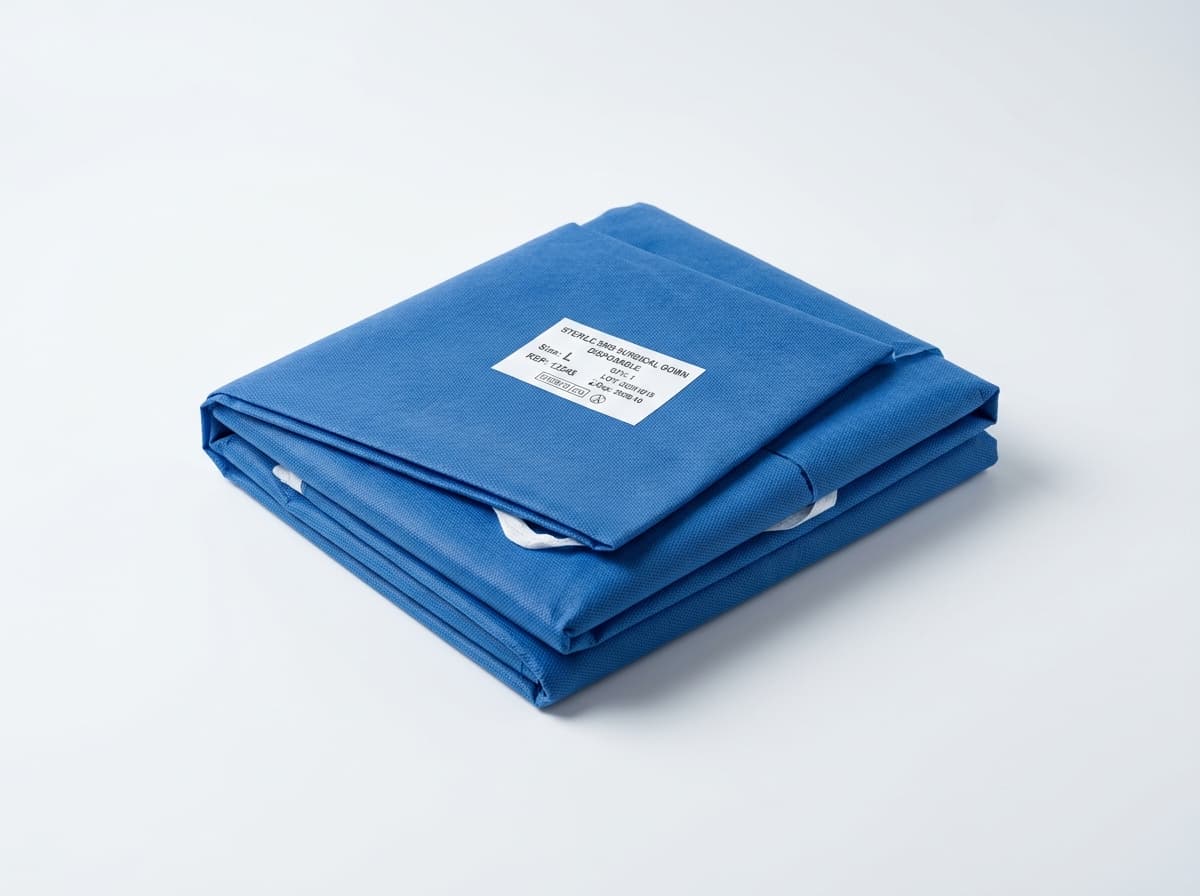
Disposable SMS surgical gowns — AAMI Level 2, Level 3, and Level 4; standard and reinforced (with impervious front/sleeve panels); sizes S–XXL; sterile and non-sterile pack options
Standards
AAMI PB70 (Liquid Barrier Performance), EN 13795-1/3 (Surgical gowns — performance requirements), ASTM F1671 (viral penetration resistance for Level 4)
Certifications
ISO 13485, CE marking, WHO-GMP compliant manufacturing practices
Sterilisation
Gamma irradiation (sterile gowns) at validated 25 kGy dose; EO sterilisation option available for procedure packs
HS Code (Kenya)
6210.10.90 (garments of felt or nonwovens) — confirm with KRA/customs broker; some consignments clear under 6210.10.10; PPB uses HS code in dossier submission
MOQ (export)
1×20ft FCL (~8,000–15,000 gowns depending on size and packaging); pilot orders from 2,000 gowns negotiable
Lead time
4–5 weeks FOB Nhava Sheva or Mundra; 6–7 weeks CIF Mombasa including sea transit
PPB dossier pack
CE DoC, ISO 13485 certificate, CDSCO CFS (attested), AAMI/EN 13795 test reports, CoA per lot, IFU in English
Incoterms
FOB / CIF / CFR Mombasa; DDP available for registered Kenyan importers
PPB Medical Device Registration for Surgical Gowns — What Kenyan Importers Actually Need
Kenya's Pharmacy and Poisons Board (PPB) regulates medical devices under the Pharmacy and Poisons Act and the Medical Devices Regulations. Surgical gowns are classified as Class B devices (moderate risk) in the Kenya Medical Device Regulations, 2012 framework — equivalent to Class I/IIa in EU classification. The Kenyan importer or their authorised local agent holds the import licence and device registration; the Indian manufacturer provides the technical dossier. PPB registration for a Class B device from a manufacturer with existing CE marking typically takes 3–6 months from dossier submission to approval, with the majority of delays attributable to missing or incorrectly formatted manufacturer documentation — not regulatory back-log.
What PPB requires from the Indian manufacturer: a valid CE Declaration of Conformity referencing EN 13795 or equivalent, an ISO 13485 certificate from an accredited certification body (UKAS, DAkkS, or equivalent — PPB is specific about CB accreditation), a Certificate of Free Sale (CFS) from the CDSCO issued in the name of the Kenyan importer or distributor, a current CoA showing AAMI or EN 13795 barrier test data, and product labelling showing sterility status, batch number, expiry date, and manufacturer address. The CDSCO CFS must be apostilled under the Hague Convention — Kenya is a signatory — and attested by the Kenyan High Commission in New Delhi. Manshav handles the apostille preparation and coordinates attestation as standard for any Kenyan buyer.
Is the PPB process worth it? For anyone importing more than 10,000 gowns per year, yes — unambiguously. Registered devices clear Mombasa port without the random-hold risk that unregistered consignments face, and the KEMSA and county tender frameworks increasingly require PPB registration from the principal manufacturer (not just a local distributor's word). The registration is a one-time cost; the supply relationship and tender access last for years.
AAMI Level 2 vs Level 3 vs Level 4 — Choosing the Right Spec for Kenyan Hospitals
The practical rule for Kenyan hospital procurement: if your theatre handles orthopaedic, obstetric, or laparoscopic cases, specify Level 3. Level 2 is adequate for general surgical wards and clean procedures where fluid-splash risk is low. Do not accept a gown labelled 'surgical' without an AAMI level stated — a significant proportion of commodity gowns in the Kenyan market carry no barrier test data and fail inspection the moment a PPB or hospital quality review requests it. Why do hospitals keep buying them? Because the price is 40% lower and the paperwork is invisible until it isn't.
Container Economics and Landed Cost to Mombasa
Spec
FOB India (USD/unit)
Units per 20ft FCL (approx)
CIF Mombasa (USD/unit approx)
AAMI Level 2 — SMS — size M/L
0.70–0.88
12,000–15,000
0.80–1.02
AAMI Level 3 — SMS reinforced — size M/L
0.95–1.30
8,000–12,000
1.10–1.50
AAMI Level 3 — sterile individual pack
1.20–1.60
6,000–9,000
1.38–1.84
AAMI Level 4 — impervious front/sleeve
1.65–2.40
5,000–7,000
1.90–2.75
Mixed FCL (Level 2 + Level 3 assorted)
Blended rate
10,000–13,000 combined
Blended CIF
Sea freight Nhava Sheva to Mombasa on a 20ft FCL runs USD 900–1,500 depending on season and carrier. Kenyan customs duty on HS 6210.10.90 is 25% CIF plus 16% VAT on the duty-paid value — making the all-in landed cost for an AAMI Level 3 SMS gown roughly USD 1.65–2.20 in a Nairobi warehouse. Compare that to the KES 280–400 (approximately USD 2.15–3.10 at current rates) that distributor-sourced European or Malaysian gowns cost at equivalent specification. The arithmetic on a 50,000-gown annual contract is a USD 25,000–45,000 saving. That is a real budget line — enough to fund an additional set of theatre instruments or six months of instrument sterilisation consumables.
Why Kenyan Buyers Choose Manshav Impex for Surgical Gowns
PPB dossier preparation as standard — CE DoC, ISO 13485 (UKAS/DAkkS-accredited CB), CDSCO CFS with apostille, AAMI/EN 13795 test reports, and CoA dispatched without extra fees or chasing
KEMSA tender-ready documentation — the complete manufacturer file for inclusion in KEMSA or county health department tender bids; PPB registration support for your specific product line
AAMI Level 2, 3, and 4 in one source — no need to split the gown contract across multiple suppliers; consistent batch CoA and documentation format across all levels
Private-label gowns from 5,000 units — own-brand box, inner sterile packaging, and custom AAMI labelling; full CE DoC and PPB dossier under your label
ISO 13485, CE marking, and WHO-GMP compliant manufacturing practices — the same regulatory floor as any European brand at 40–55% less CIF Mombasa
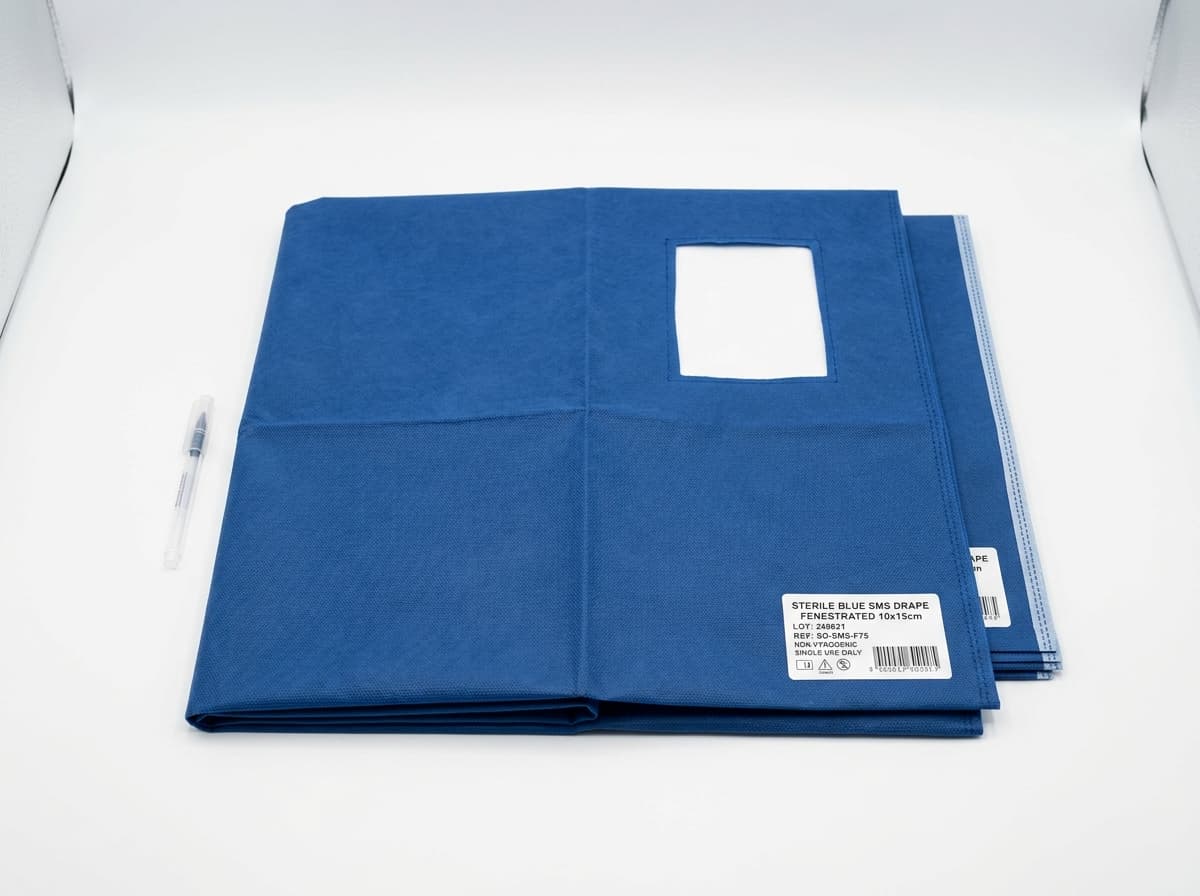
Mixed-container flexibility — combine surgical gowns with drapes, gloves, IV cannulas, or other disposables in one FCL to reduce freight cost per line item; minimum 2,000 units per gown size
Starting Your Kenya Import Programme for Surgical Gowns
The path to importing surgical gowns into Kenya from India is well-established. A Kenyan importer with a valid PPB importer licence can have a first pilot order of 2,000–5,000 gowns on the water within 4–5 weeks of confirming a proforma invoice, and a full PPB device registration completed within 4–6 months of dossier submission — at which point every subsequent container is a routine import clearance. The three things that derail first-time importers: sourcing from a manufacturer that cannot provide an apostilled CDSCO CFS quickly, receiving a CE DoC that doesn't explicitly name the AAMI level or EN 13795 test data, and missing the HS code declaration on the commercial invoice. None of these are complicated to get right — they just require a manufacturer whose documentation infrastructure is as disciplined as its manufacturing.
Frequently asked questions
What is the PPB registration process for importing surgical gowns into Kenya from India?
Surgical gowns are Class B medical devices under Kenya's PPB framework. The Kenyan importer holds the registration; the Indian manufacturer provides the technical dossier: CE DoC, ISO 13485 certificate (accredited CB), CDSCO Certificate of Free Sale (apostilled), AAMI/EN 13795 barrier test reports, CoA per lot, and English-language IFU. Processing time is typically 3–6 months from complete dossier submission. Manshav Impex prepares the full manufacturer-side dossier as standard for Kenyan buyers.
What AAMI level surgical gown do Kenyan hospitals typically require?
Most Kenyan referral hospitals and private surgical centres specify AAMI Level 3 for orthopaedic, obstetric, and laparoscopic procedures, and AAMI Level 2 for general surgical wards. KEMSA tenders typically reference AAMI PB70 Level 2 or Level 3 with EN 13795 test data required. Level 4 is used for high-splash or infectious-risk cases at larger centres.
What is the landed cost for surgical gowns imported from India to Kenya?
FOB India pricing for AAMI Level 3 SMS surgical gowns runs USD 0.95–1.30 per unit. Add sea freight to Mombasa (USD 900–1,500 per 20ft FCL), 25% import duty on CIF value, and 16% VAT to arrive at an all-in Nairobi warehouse cost of approximately USD 1.65–2.20 per gown — 40–55% below equivalent European-brand product through a Nairobi distributor.
Can Manshav Impex supply surgical gowns under a private label for Kenya?
Yes. Private-label AAMI Level 2, 3, and 4 surgical gowns are available from 5,000 units per size/level, with custom box design, inner sterile packaging, and AAMI barrier-level labelling. The CE DoC and PPB registration dossier are prepared under the private-label brand name. Minimum run is 5,000 units; mixed levels allowed across a single FCL order.
What is the minimum order quantity for surgical gowns from India to Kenya?
Pilot orders from 2,000 gowns per level/size are negotiable for first-time buyers and tender evaluation. Full container orders are 1×20ft FCL of approximately 8,000–15,000 gowns depending on AAMI level and packaging. Mixed-level and mixed-product FCLs are accommodated from 2,000 units per line item.
Manshav Impex
Manshav Impex is a global exporter of medical devices, surgical consumables and healthcare solutions, serving importers, distributors, hospitals and governments in 48+ countries.