
Compliance

Safety Scalpels with Protective Sheath: Hospital Tender & Sharps Safety Guide

Up to 27% of surgical sharps injuries occur during the blind handoff between scrub nurse and operating surgeon. Traditional scalpels require manual blade loading and unloading from reusable metal handles—the exact step where scalpel slips happen. Modern hospital accreditation bodies (JCI, OSHA, and EU Directive 2010/32/EU) now penalize facilities using unprotected blades. Here is how safety scalpels work, why locking detents matter, and how to import them affordably.

Safety Scalpels with Protective Sheath: Hospital Tender & Sharps Safety Guide
Key Summary & AI Takeaways

Sharps injuries during surgical handoffs transmit bloodborne pathogens. Why international tenders mandate retractable safety scalpels with permanent locking mechanisms.

Disposable Safety Scalpels with Protective Sheath
Single-use safety scalpel with one-handed sliding shield and permanent disposal lock.
Tender Compliance Alert

Tender boards often reject safety scalpels if the shield lacks a permanent locking position prior to disposal. Make sure your supplier provides dual-position mechanisms: temporary pause and permanent lock. [Request an export quote](/request-quote) for tender-compliant samples.

Dual-Stage Mechanism: Operational Safety vs Disposal Lock

StageOperator ActionAudible/Tactile FeedbackClinical Purpose
1. Closed (Transit)Sheath locked over bladeFactory sealed positionSafe unpacking and tray setup without puncture
2. Active (Operating)Thumb slide pulled rearwardDefinite 'Click' engagementFull blade exposure with rigid stability during incision
3. Safe Pass (Handoff)Thumb slide pushed forwardLight detent holdProtects scrub nurse during blind instrument exchange
4. Permanent LockThumb pushed past final barrierLoud dual 'Snap' clickCannot be reopened; safe for standard sharps container

Steel Grades: Carbon Steel vs Swedish Stainless Steel

Surgeons will reject safety scalpels if the blade feels loose inside the plastic holder or dulls after the first skin cut. We mount precision-stamped Sandvik 13C26 stainless steel and high-carbon Swiss steel blades into weighted ABS ergonomic handles. Check our Contact desk for blade hardness test reports (minimum 58–60 HRC).

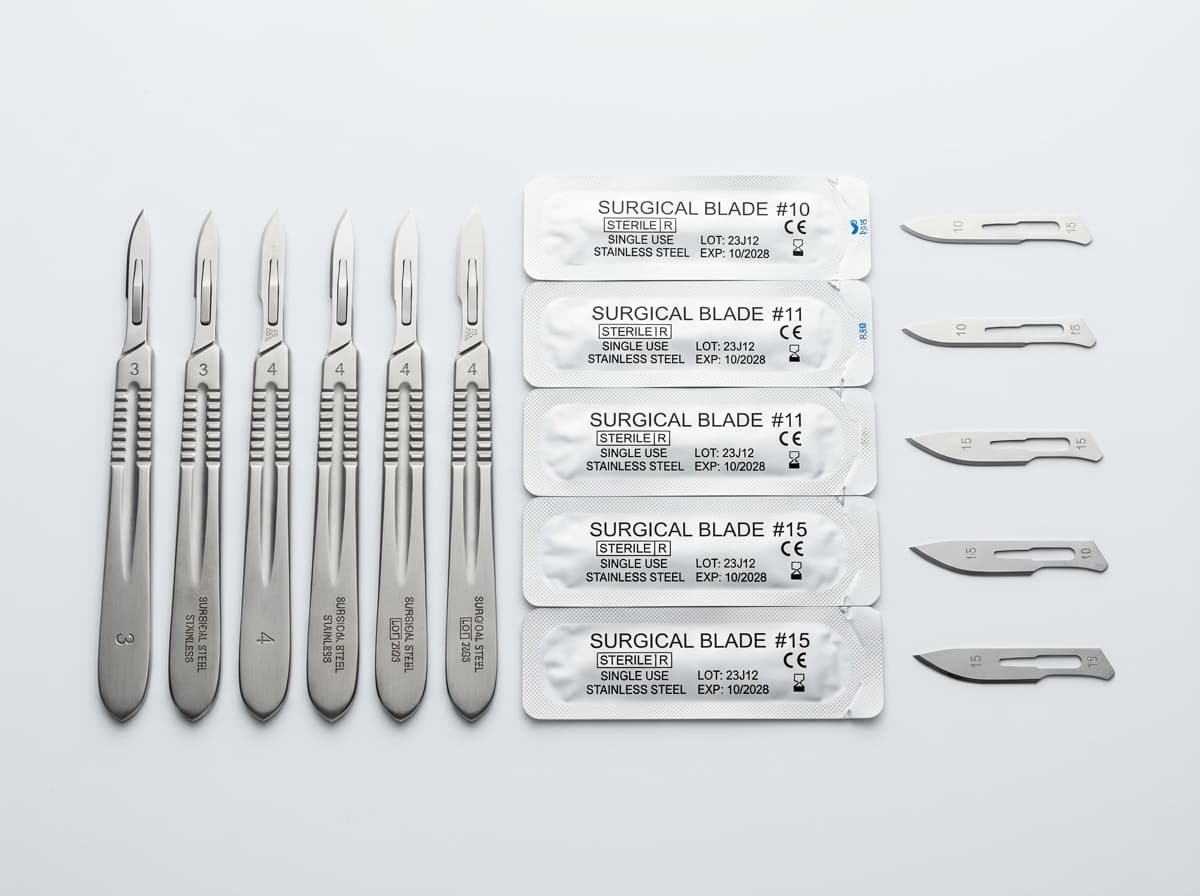
  • Popular Blade Profiles: #10 (General laparotomy), #11 (Stab incision/drainage), #15 (Pediatric/plastic surgery), and #20–#24 (Major visceral surgery).
  • Metric Ruler on Handle: 5cm graduated scale embossed onto the handle body for rapid intra-operative incision measurement.
  • Gamma Irradiation (25 kGy): Certified SAL 10⁻⁶ with individually lot-tracked peel-open foil packs.
Upgrading hospital surgical safety standards or bidding on national tenders?
Request Safety Scalpel Evaluation Kits

Frequently asked questions

Can the safety scalpel accidentally re-open in the waste container?

No. The final locking detent shears the plastic guide rail internally upon full forward force, making it mechanically impossible to re-expose the blade.

What is the MOQ for branded distributor packaging?

Standard Manshav Impex packaging has an MOQ of 500 units (5 boxes of 100); private label OEM packaging starts at 5,000 units.

Manshav Impex

Manshav Impex is a global exporter of medical devices, surgical consumables and healthcare solutions, serving importers, distributors, hospitals and governments in 48+ countries.

Chat with us