A procurement manager at a 250-bed surgical hospital in Cairo held up two invoices: one from his current German-brand distributor at USD 0.042 per blade, and a proforma from a Surat factory he'd found at USD 0.018 FOB. His hesitation wasn't quality — it was paperwork. Egypt's EDA medical device registration process is not complicated, but most Indian exporters hand it back to the buyer and walk away. That's the real gap a good surgical blades exporter from India closes.
Sharmil Mangukiya (Founder & MD) 6 min read October 23, 2026
Key Summary & AI Takeaways
Egyptian hospitals and surgery-centre chains pay European or Chinese distributor margins on surgical blades they could source directly from India at 30–50% less — with the same CE marking, full EDA dossier support, and FOB Nhava Sheva lead times of 3–4 weeks.
Surgical Blades in Egypt — Market Snapshot and Sourcing Reality
Egypt is the largest medical device market in North Africa, with an estimated 30,000-bed hospital sector split between the Ministry of Health (MOHP), the Teaching Hospitals and Institutes Authority (THIA), the Health Insurance Organisation (HIO), and a fast-growing private hospital cluster in Cairo, Alexandria, and the Delta cities. Surgical blades fall under Egypt's medical device law (Law 29/2010) administered by the Egyptian Drug Authority (EDA, formerly CAPA). Single-use surgical blades are Class IIa devices under EDA classification — comparable to EU Rule 8 Class IIa — meaning they require a formal product registration on the EDA MedDevice portal before any commercial import batch clears customs at Alexandria or Damietta.
In practice, the market runs on a mix of registered European brands (Swann-Morton UK, Feather Japan, Aesculap Germany) and unregistered Chinese commodity blades entering under informal channels that increasingly draw EDA scrutiny. The structural opportunity for a certified surgical blades exporter from India is real: Indian blades carry CE marking under EU MDR or MDD, are manufactured under ISO 13485, and price at 30–50% below European equivalents on an FOB basis — while matching them on the regulatory submission package that EDA requires.
An Egyptian private hospital group that switched from a German-brand blade distributor to a CE-marked Indian source at equivalent sharpness spec reduced its per-unit blade cost by 41% on a 3-million-blade annual contract — without changing its surgical preference card.
Request Surgical Blade Pricing & EDA Dossier Support from Manshav
Key Facts: Manshav Impex Surgical Blades for Egypt
Factor
Detail
Products
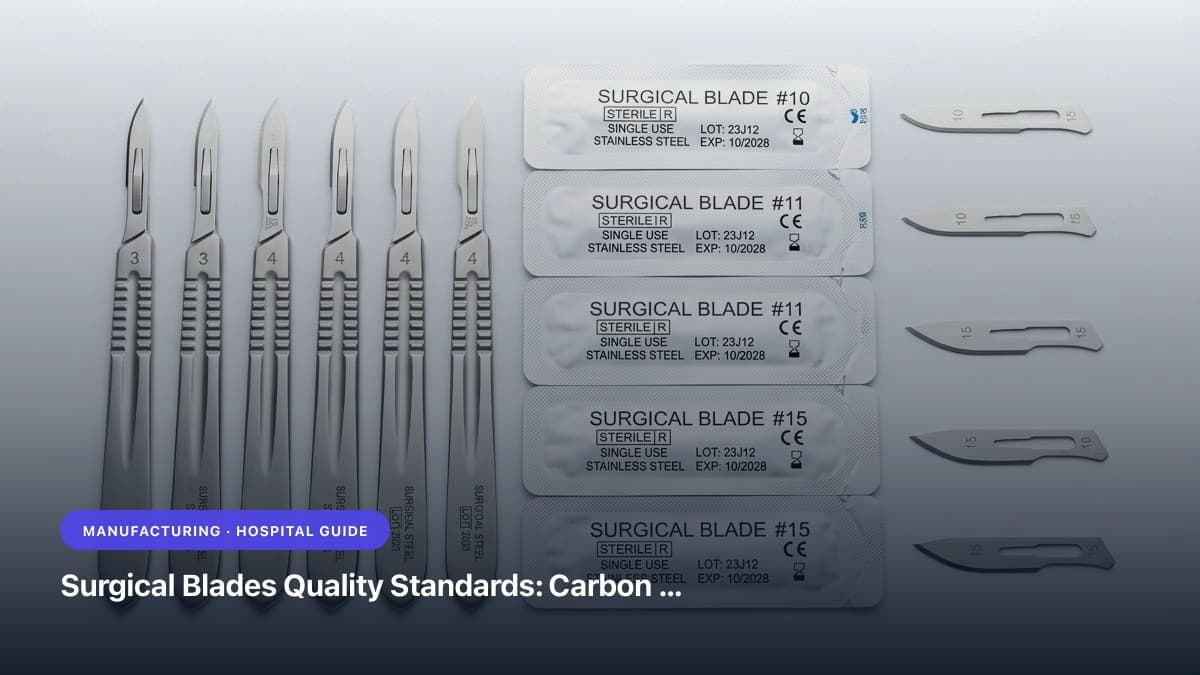
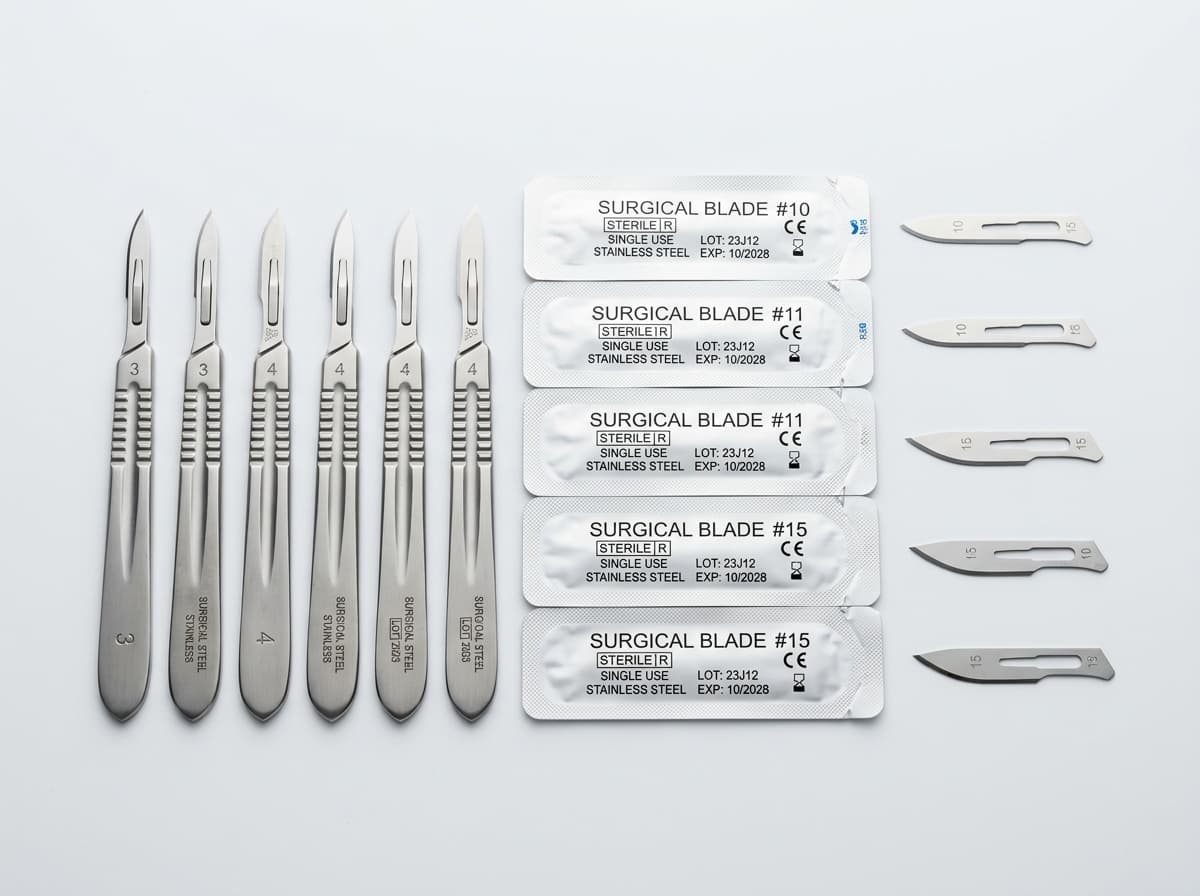
Carbon steel and stainless steel surgical blades — BP sizes 10, 11, 12, 15, 20, 21, 22, 23, 24; sterile foil-packed and non-sterile bulk
Standards
ISO 7740 (surgical instruments — scalpel blades), CE marked (EU MDD 93/42/EEC; EU MDR transition in progress)
Certifications
ISO 13485, CE marking, WHO-GMP compliant manufacturing practices
Sterilisation
Ethylene oxide (EO), validated per ISO 11135; sterility assurance level SAL 10⁻⁶
HS Code (Egypt)
9018.32.00 (needles, catheters, cannulae and the like); confirm with customs broker — some Egyptian tariff rulings file blades under 8211.92
MOQ (export)
1×20ft FCL (~4–6 million blades depending on size mix); smaller pilot orders negotiable
Lead time
3–4 weeks FOB Nhava Sheva or Mundra
EDA dossier pack
CE DoC, ISO 13485 certificate, CoA per lot, CFS from CDSCO, biocompatibility summary (ISO 10993-1), packaging declaration
Incoterms
FOB / CIF / CFR Alexandria or Damietta; DDP available for bonded importers
EDA Medical Device Registration for Surgical Blades — What Importers Actually Need
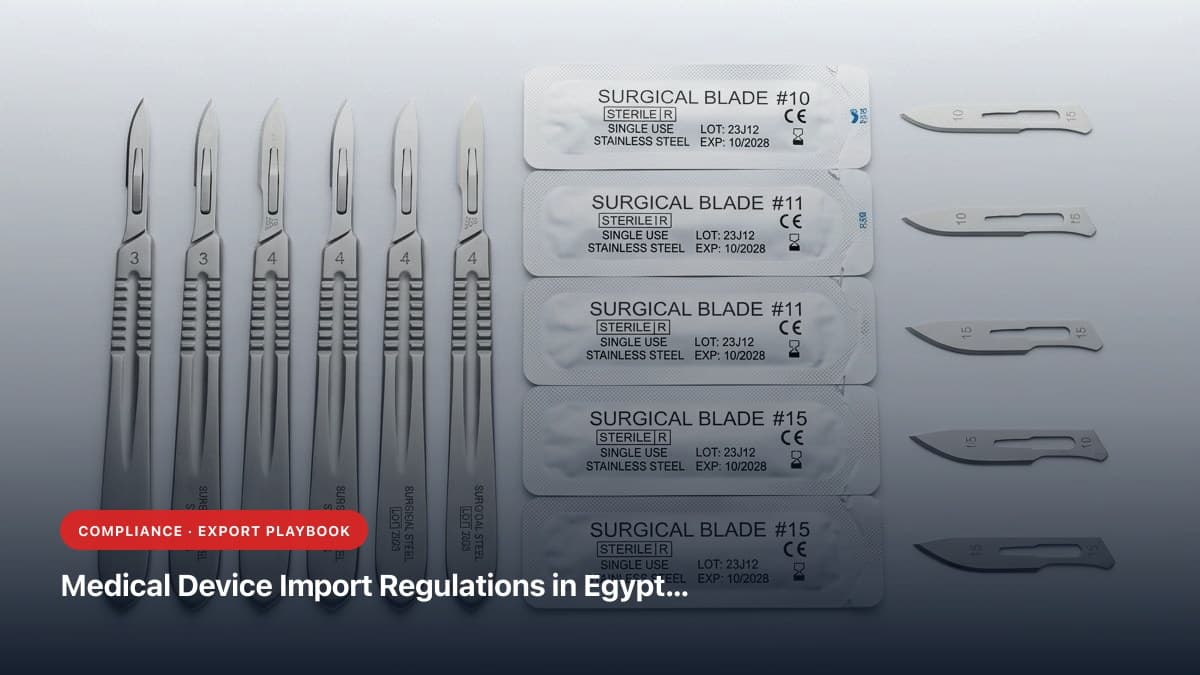
Egypt's EDA MedDevice registration for a Class IIa single-use surgical blade typically takes 3–6 months from dossier submission to licence issuance — shorter than most buyers expect, provided the dossier is complete on first submission. The Egyptian importer (a licensed medical device importer, not the Indian exporter) is the local registration holder, but the Indian manufacturer must provide the full technical file. What EDA requires from the manufacturer side: a CE certificate or Declaration of Conformity, ISO 13485 quality management certificate from a recognised accreditation body, a Certificate of Free Sale (CFS) issued by the Indian authority (CDSCO), a sample CoA showing lot-level sterility and dimensional test data, and product labelling in Arabic or bilingual Arabic/English.
The CDSCO CFS is the step most Indian exporters stumble on — it must name the specific product and be apostilled or attested by the Egyptian consulate in Mumbai or Delhi. Manshav prepares this documentation as standard for any Egyptian buyer, which cuts the importer's dossier assembly time from weeks to days.
Why does this matter? Because the EDA registration is a one-time process per product per manufacturer — once the blade is registered under the Egyptian importer's name, every subsequent container clears customs on the import licence with no re-inspection. The setup cost is real, but the ongoing per-container friction is negligible. Buyers who balk at registration and stick with grey-channel blades are accumulating regulatory risk, not saving money.
India vs Europe vs China for Surgical Blades — an Egyptian Buyer's Honest Comparison
Dimension
Manshav Impex (India)
European Brands (Swann-Morton, Aesculap)
Chinese Commodity Blades
CE marking
Yes — CE DoC issued
Yes — long-established CE
Mixed — many lack valid CE
ISO 13485
Yes
Yes
Variable
EDA dossier support
Full pack provided
Available via local distributors
Often incomplete; CDSCO CFS missing
FOB price per blade (stainless, BP10)
USD 0.016–0.022
USD 0.036–0.055
USD 0.010–0.015
Sharpness consistency
High — controlled grinding process
Very high — precision ground
Variable — inconsistent edge geometry
MOQ
FCL (~4–6M blades)
FCL or distributor stock
FCL; spot orders available
Lead time to Alexandria
5–7 weeks (3–4 weeks production + transit)
6–10 weeks via EU distributor
4–6 weeks; reliability variable
Arabic labelling
Supported on request
Available from distributors
Rarely offered
Consignment risk
Low — full documents, insured
Low — established channel
Higher — grey-channel documentation gaps
The honest read: European blades are the quality benchmark, and any surgical blade comparison should acknowledge that Swann-Morton and Aesculap set the global standard for edge geometry and consistency. The question for an Egyptian procurement team is not whether Indian blades match that on sharpness — well-made Indian stainless blades come close, and the CE test data is the same standard — but whether the 40–60% cost differential across 3–5 million annual units justifies a supplier change. For most high-volume MOHP or HIO tenders, it does.
Container Economics — What a 20ft FCL of Surgical Blades Actually Costs Egypt
A standard 20ft FCL of sterile, foil-packed, BP size 10 stainless steel surgical blades from Manshav Impex loads approximately 4.5–5 million units at a carton weight well under the 28-tonne FCL limit. At an FOB price of USD 0.019 per blade, the FOB value of the container is approximately USD 85,500–95,000. Add sea freight Nhava Sheva to Alexandria port (typical USD 1,200–1,800 for a 20ft, depending on season and carrier), marine insurance (0.5–0.8% of FOB), and Egyptian customs duty (the 2026 rate on HS 9018.32.00 is 5% CIF plus a 14% VAT applied to CIF+duty). Total landed cost in an Egyptian bonded warehouse works out to roughly USD 0.023–0.026 per blade — versus USD 0.045–0.060 for the equivalent European-brand unit through a Cairo distributor.
That differential on a 4-million-blade annual tender is USD 88,000–136,000 in cost savings — enough to fund a second product category shift in the same contract year.
Why Egyptian Buyers Choose Manshav Impex
Full EDA dossier pack as standard — CE DoC, ISO 13485, CDSCO CFS (attested), CoA per lot, Arabic/bilingual label artwork; no extra fees
ISO 13485 and CE-marked manufacturing — sterile blades EO-validated to SAL 10⁻⁶ per ISO 11135
Factory-direct pricing — no Indian trading agent or GCC re-exporter in the chain adding 12–18% margin
FOB Nhava Sheva or Mundra — both ports serve Alexandria with regular MSC/CMA CGM calls (21–26 day transit)
ISO 13485, CE, and WHO-GMP compliant manufacturing practices — dossier language matches EDA's submission template
Mixed container support — surgical blades can be co-loaded with syringes, IV cannulas, or surgical gowns in a single FCL to hit container minimums across product lines
Frequently Asked Questions
Frequently asked questions
Does Egypt require EDA registration before importing surgical blades from India?
Yes. Single-use surgical blades are Class IIa medical devices under Egyptian law (Law 29/2010, EDA). The Egyptian licensed importer must hold a valid EDA product registration before customs will release a commercial import batch. Manshav provides the full manufacturer-side dossier (CE DoC, ISO 13485, CDSCO CFS, CoA, labelling) to support the importer's registration application. Registration typically takes 3–6 months on first submission.
What is the HS code and customs duty for surgical blades entering Egypt?
Surgical blades most commonly enter under HS 9018.32.00 (needles, catheters, cannulae and similar instruments) at a 5% customs duty on CIF value, plus 14% VAT applied to the CIF+duty base. Some Egyptian customs offices classify blades under 8211.92 — confirm with your licensed Egyptian customs broker before shipment.
Can Manshav supply Arabic-labelled surgical blades for EDA submission?
Yes. Manshav supports Arabic or bilingual Arabic/English labelling artwork on sterile foil packs. Label artwork is provided for EDA pre-approval before printing. Minimum lead time for custom-labelled blades is 4–5 weeks from artwork sign-off.
Manshav Impex
Manshav Impex is a global exporter of medical devices, surgical consumables and healthcare solutions, serving importers, distributors, hospitals and governments in 48+ countries.