Surgical Blades Manufacturer India — Factory-Direct Export Guide
A theatre coordinator in Accra once told me her biggest procurement headache wasn't price. It was opening a carton of surgical blades mid-shift and finding substituted sizes. The invoice was right. The product was wrong. That's the difference between buying from a surgical blades manufacturer in India with a direct export track record, and buying from a middleman who sources across six suppliers.
Sharmil Mangukiya (Founder & MD) 5 min read October 11, 2026
Key Summary & AI Takeaways
Indian surgical blades manufacturers export sterile carbon and stainless steel scalpel blades (sizes 10–24, ISO 7153-1) at FOB USD 0.018–0.035 per blade. MOQ 20,000 per size, lead time 15–21 days ex-Surat, CE DoC and lot-specific COA as standard.
If you're a hospital group, tender manager, or medical distributor looking for a reliable Indian source for sterile surgical blades (sizes 10 through 24, carbon and stainless, ISO 7153-1 compliant), this guide covers specs, pricing, MOQ, shipping, and what to check before you commit.
In short:
Indian surgical blades manufacturers export sterile carbon and stainless steel scalpel blades (sizes 10–24, ISO 7153-1) at FOB USD 0.018–0.035 per blade. MOQ is 20,000 per size; lead time 15–21 days ex-Surat. CE DoC, ISO 13485 cert, CFS, COA, and lot-specific sterility report are standard per shipment.
Request factory-direct pricing for sterile surgical blades
CE, ISO 13485, WHO-GMP compliant manufacturing practices
Documents
CE DoC, CFS, COA, sterility report, packing list per lot
Why Buyers Source Surgical Blades from India
India is among the world's largest exporters of surgical instruments and blades, with a growing share of global hospital procurement in Africa, Southeast Asia, and the Gulf. Here's why procurement teams are consolidating Indian sources:
The price gap is real and durable. European and US branded surgical blades reach distributors at several multiples of Indian FOB pricing. An equivalent ISO 7153-1-compliant Indian blade ships FOB at USD 0.025–0.032. For a public hospital running 8,000 procedures a year at 2.5 blades per case, switching to factory-direct Indian sourcing delivers a substantial landed-cost saving on blades alone — without compromising sterility assurance.
Documentation has matured. Serious Indian manufacturers now maintain lot-specific COAs, real SAL reports from accredited ETO sterilization facilities, and country-specific CFS letters. Ask for these upfront; a supplier who balks is a trader, not a manufacturer. When your shipment hits PPB in Kenya or EDA in Egypt, a lot-specific COA clears inspection in 48 hours. A generic photocopy starts a USD 150/day demurrage clock.
What makes the difference between a 48-hour clearance and a two-week hold? In most cases, it's a single document: a lot-specific COA that matches the shipment number on your airway bill.
Carbon Steel vs. Stainless Steel — Which Grade to Order
This is the most common question we get, and the answer depends on your market's budget and sterilization infrastructure.
Parameter
Carbon Steel (DIN 1.1209)
Stainless Steel (DIN 1.4028)
Sharpness
Slightly sharper at tip, faster dulling
Consistent edge, longer cut retention
Corrosion
Not suitable for humid climates without sealed packs
Resistant; preferred for tropical storage
FOB Price
20–30% lower
Higher
Market fit
High-volume public hospital tenders (Africa, South Asia)
Private hospitals, humid-climate distributors, EU tenders
Shelf life (sealed, ETO)
5 years
5 years
Here's what most exporters won't tell you: a carbon steel blade in a torn blister pack exposed to Mombasa humidity for 60 days will arrive with micro-surface oxidation that is invisible but compromises sterility assurance. The fix isn't switching to stainless — it's specifying double-peel pouches with a 40-micron foil layer and a humidity indicator card inside each carton.
Sizes, SKUs, and Common Tender Specifications
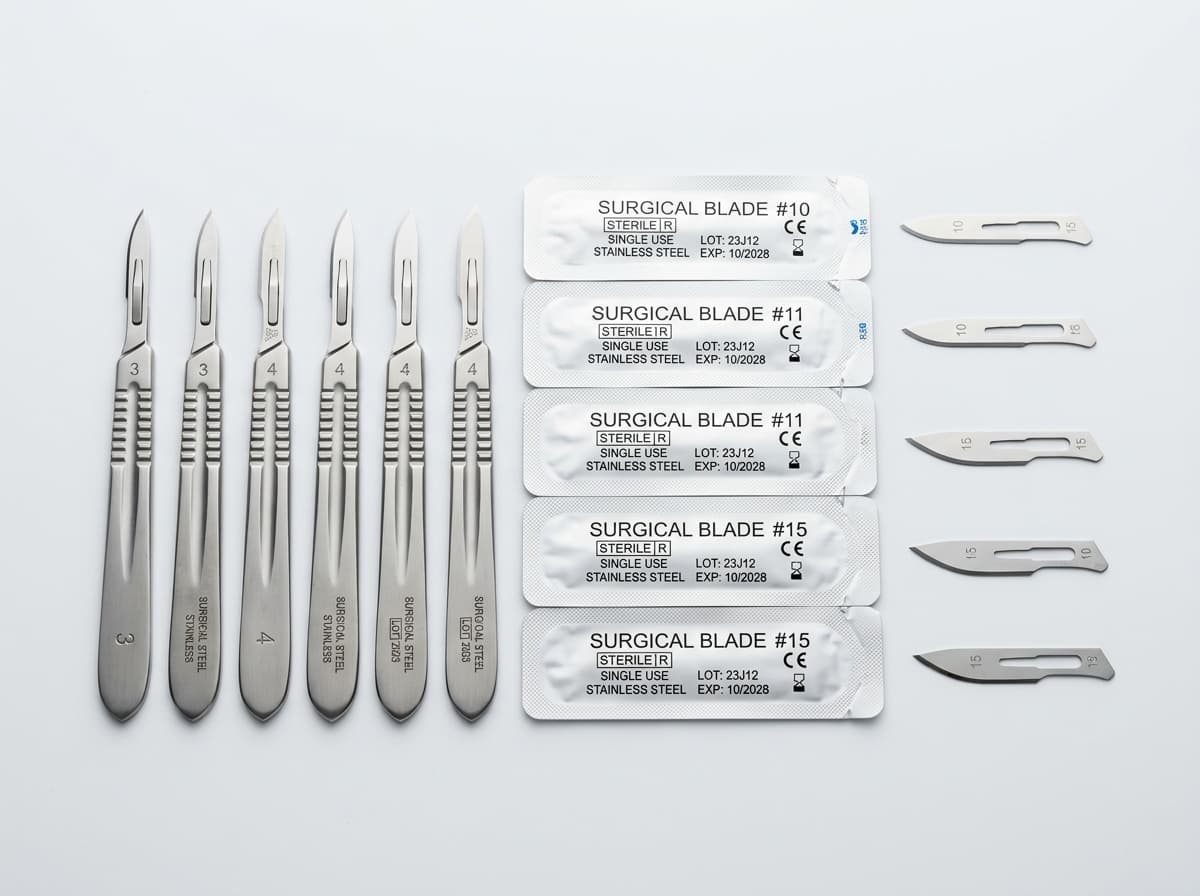
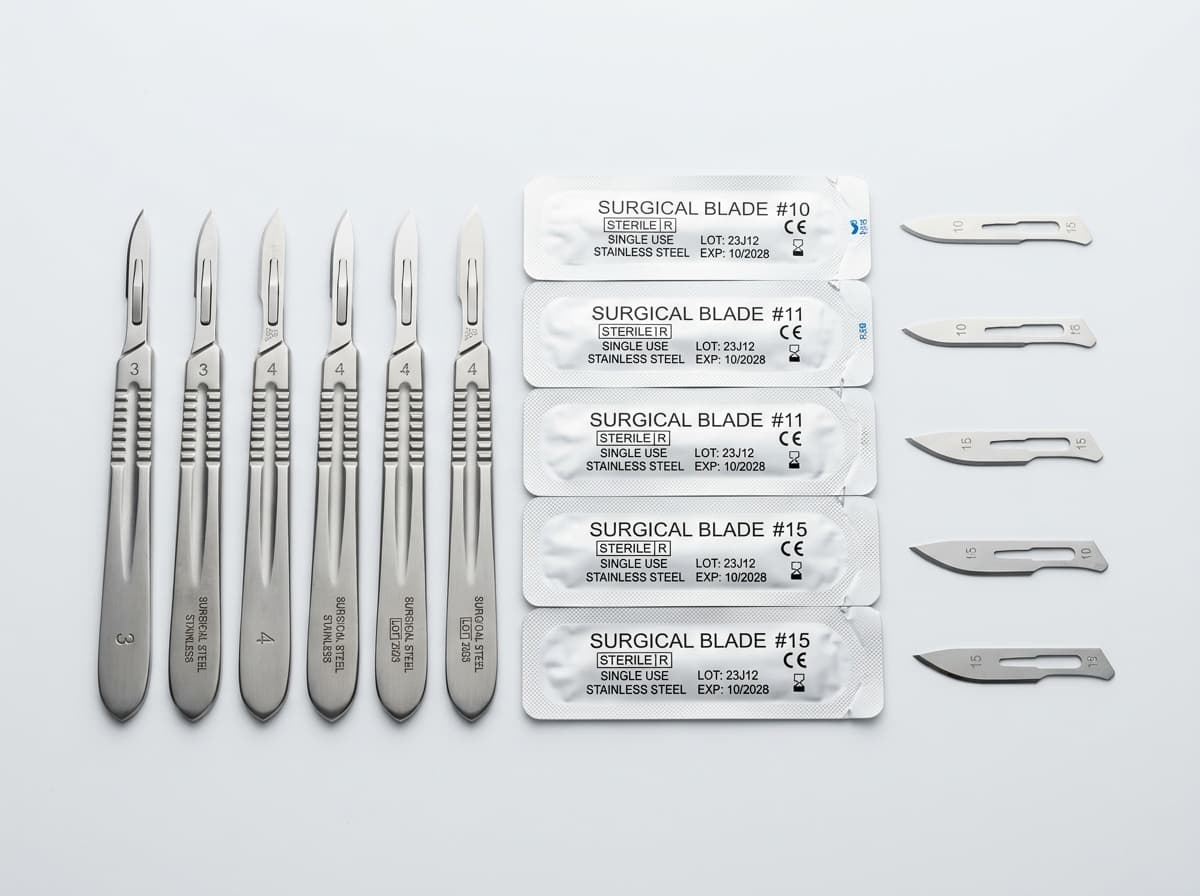
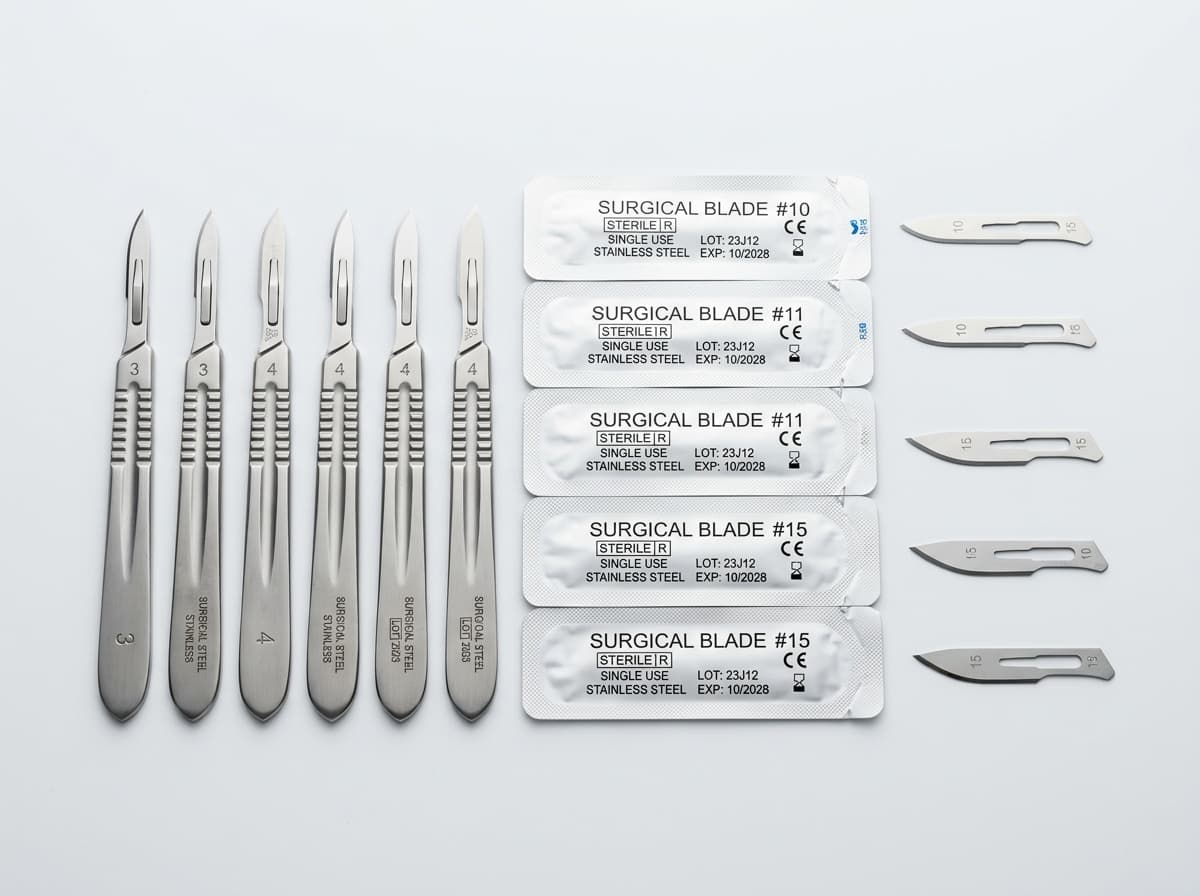
Manshav Impex stocks and exports the full standard range:
Sizes 10, 11, 12, 15 — general surgery, ophthalmology, ENT
Retractable safety variants (sizes 10 and 22) — OSHA/NHS passive-safety standard
Each size ships in individual foil/paper blister packs, 100–200 blades per inner box, 10 boxes per outer carton (~0.028 m³ CBM per 2,000 blades). A 20-foot container holds approximately 8–9 million blades, enough for many sub-Saharan ministries' annual requirement. Size 22 accounts for roughly 45% of African public hospital tender volume. If you're building a first order, anchor it there and sample sizes 11 and 15 in smaller quantities.
What to Check Before Placing an Order
ISO 13485 certificate, not just a logo. It must name the actual facility and list surgical blades in scope. A cert that only says medical devices is a trader's cert.
A real lot COA, not a template. SAL should read 10⁻⁶; ETO residuals should be within ISO 10993-7 limits, confirmed per lot COA. Ask for a previous shipment's COA; it shows what the real document looks like.
Carton marking per your destination. Nigeria NAFDAC requires the registration number on outer cartons. Kenya PPB requires lot number and expiry prominently marked. Egypt EDA requires Arabic labelling. Confirm before the production run.
Shipping and Landed Cost to Key Markets
Destination
Ocean Transit (days)
Est. Landed Cost per 1,000 blades
Mombasa, Kenya
20–24
USD 28–38
Lagos (Apapa/Tin Can), Nigeria
22–26
USD 30–42
Tema, Ghana
24–28
USD 32–45
Port Said, Egypt
12–16
USD 25–34
Jeddah, Saudi Arabia
10–14
USD 24–32
Dubai (Jebel Ali)
7–10
USD 22–30
*Import duty on HS 8211.93 varies: 0% in Kenya (EAC CET exempt with PPB registration), 5–10% in Nigeria, 5% in Egypt.*
Manshav Impex is a surgical blades manufacturer and exporter based in Surat, India, supplying sterile carbon and stainless steel blades (sizes 10–24) to hospitals, distributors, and government health procurement agencies across 40+ countries, under ISO 13485, CE, and WHO-GMP compliant manufacturing practices.
Frequently asked questions
What is the MOQ for surgical blades from India?
Standard MOQ is 20,000 blades per size. Mixed-size orders with a total minimum of 100,000 blades are accommodated. Trial orders of 5,000–10,000 units are possible at a slight per-unit premium.
Do Indian surgical blades meet CE and ISO 7153-1 standards?
Yes. Ask for the CE Declaration of Conformity and ISO 13485 scope document (not just the certificate front page) to confirm surgical blades are specifically covered in the accreditation scope.
How do I get surgical blades registered with my country's health authority?
You'll need a CE DoC, ISO 13485 certificate, CFS from India, product samples, and a local authorized representative. Manshav provides full dossier support (COA, test reports, and labelling compliance review), typically completed in 5–7 business days per market.
Manshav Impex
Manshav Impex is a global exporter of medical devices, surgical consumables and healthcare solutions, serving importers, distributors, hospitals and governments in 48+ countries.