Surgical Gowns Exporter India — Manshav vs Cardinal Health & Halyard
A theatre manager at a 400-bed private hospital in Nairobi pulled up last quarter's consumable spend and circled two lines: surgical gowns — 14,000 units per month — and the USD 2.40 per-unit price she was paying through a Kenyan distributor stocking a US brand. Her infection control committee had already validated AAMI Level 3. The only barrier between her and a 52% cost reduction was finding a surgical gowns exporter from India with the EN 13795 and AAMI 70-20 test package her PPB renewal required.
Sharmil Mangukiya (Founder & MD) 6 min read October 22, 2026
Key Summary & AI Takeaways
Cardinal Health and Halyard dominate US hospital formularies — but their distributor pricing lands 5–9× above a CE-marked, EN 13795-compliant Indian source. Manshav Impex exports AAMI Level 3 and Level 4 SMS surgical gowns at FOB USD 0.85–1.60 per gown with full AAMI 70-20 test reports, CE DoC, and lot traceability.
India's Surgical Gowns Export Market — What Buyers Are Actually Comparing
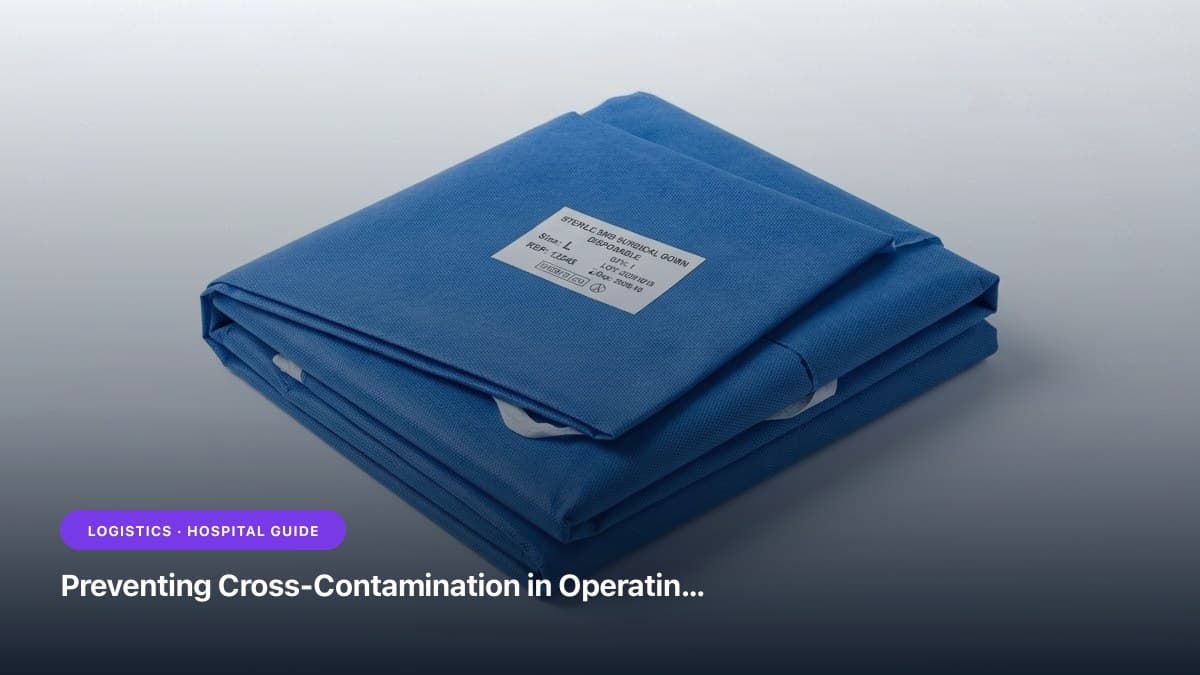
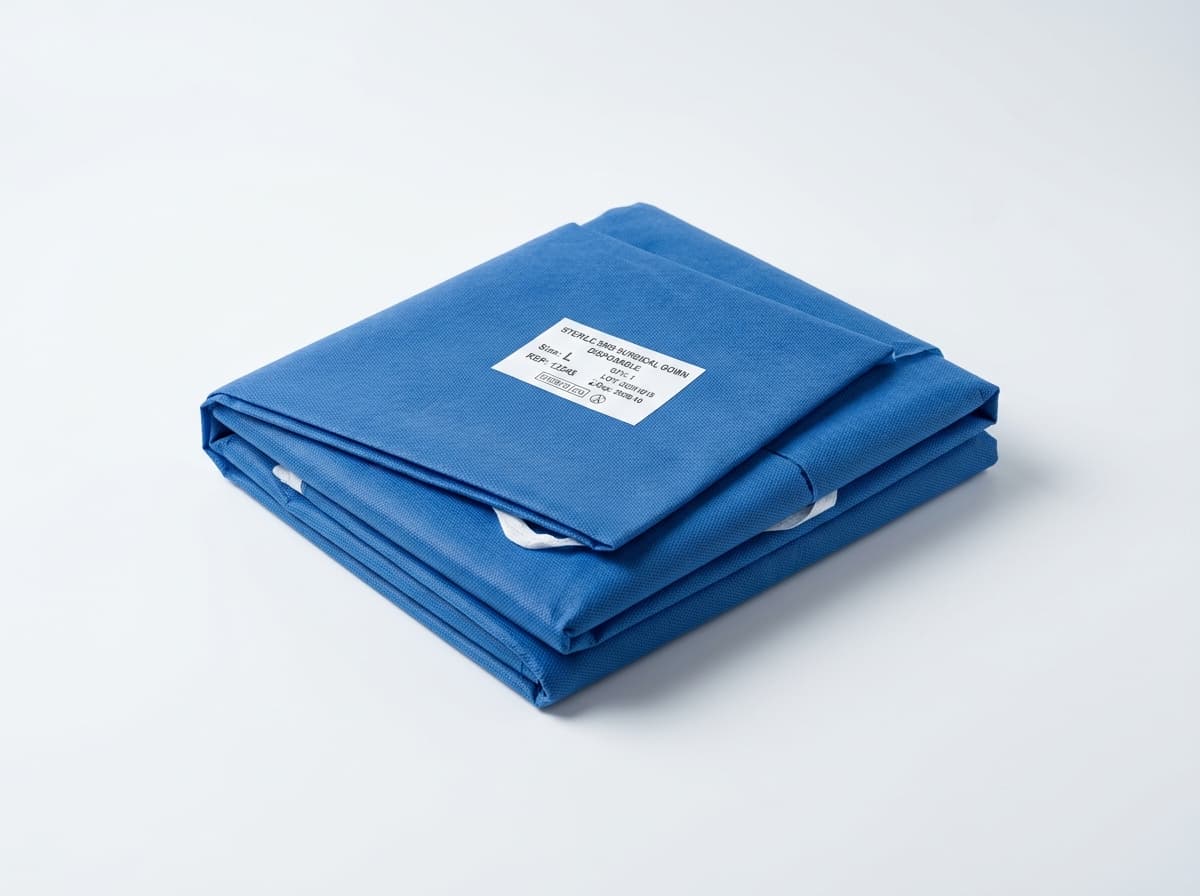
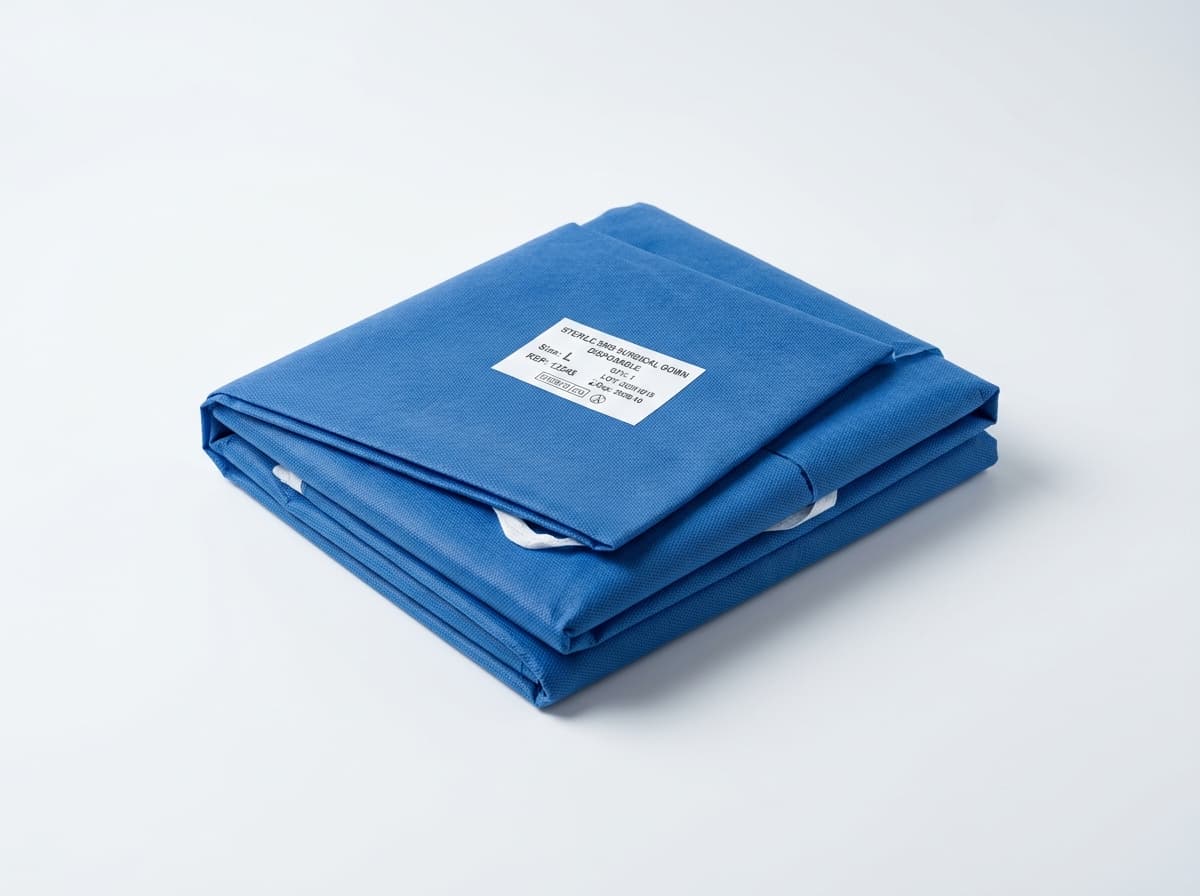
India manufactures disposable surgical gowns primarily in Gujarat, Tamil Nadu, and Haryana under Schedule M of the Drugs and Cosmetics Act. The product falls under HS code 6210.10 (disposable nonwoven gowns) or 6211.43 depending on construction. The export supply base breaks into two tiers: SMS (spunbond-meltblown-spunbond, 35–45 gsm) for AAMI Level 2 and Level 3, and reinforced SMS or SMMS for Level 4 — the standard for procedures with high splash risk.
What most procurement teams don't know is that AAMI Level 3 and EN 13795 Performance Class B are equivalent on the key fluid-resistance parameter — so a CE-marked gown from an Indian manufacturer clears exactly the same barrier spec as a US-branded product flying the AAMI label. The test is AAMI TIR11 / ISO 13795 fluid-penetration resistance, and an Indian plant with an accredited test report from an ISO 17025 lab is indistinguishable at the submission level from Cardinal Health or Halyard.
A hospital distributor switching from a US-brand surgical gown to a CE-marked Indian source at equivalent AAMI Level 3 spec cut per-unit cost by 54% on their first container — without a single theatre complaint.
1×20ft FCL (mixed sizes and levels negotiable for pilot orders)
Lead time
3–4 weeks FOB Nhava Sheva / Mundra
Dossier support
AAMI 70-20 test report, EN 13795 CE DoC, CoA per batch, sterilisation validation summary (EO for sterile variants), CFS
HS Code
6210.10 / 6211.43
Incoterms
FOB / CIF / CFR; DDP available for select corridors
Manshav vs Cardinal Health vs Halyard — How They Compare for Export Buyers
Cardinal Health (Dublin, Ohio) is the dominant US GPO-channel brand for surgical gowns. Its Convertors® and Presource® ranges cover AAMI Level 1 through Level 4 and are validated across hundreds of US hospital formularies. Quality is consistent and well-documented. The problem for any buyer outside the US hospital GPO network is price: Cardinal Health does not publish FOB export pricing, and distributor landed prices in Africa, Southeast Asia, and the Gulf routinely land at USD 2.10–2.80 per non-sterile Level 3 gown after shipping and margin. For a hospital running 14,000 units per month, that is USD 29,400–39,200 per month on gowns alone.
Halyard Health (now part of Owens & Minor under the Halyard brand) is the other dominant US reference. Its FLUIDSHIELD® Level 3 and Level 4 gowns are widely specified in Middle Eastern and Australian tenders that mirror US formulary language. Halyard's regulatory package is strong and the brand recognition can smooth a hospital formulary submission — but the premium is structural: European and GCC distributor pricing on Halyard sterile Level 4 gowns runs USD 3.50–5.00 per unit, compared to USD 1.35–1.65 FOB from a CE-marked Indian source with the same AAMI 70-20 test data.
Is there a performance gap? For standard SMS Level 3, the honest answer is: no detectable clinical difference where the test data matches. The gap that exists is in the regulatory submission experience — a US brand has an established paper trail that a new-to-market Indian manufacturer does not. That gap closes entirely with an Indian manufacturer that holds its own EN 13795 CE certificate and can produce the AAMI 70-20 report directly, without routing through a distributor.
Dimension
Manshav Impex
Cardinal Health
Halyard Health
Base
Surat, Gujarat, India
Dublin, Ohio, USA
Alpharetta, Georgia, USA (Owens & Minor)
AAMI Level 3 (non-sterile)
Yes — AAMI 70-20 test report
Yes — core product line
Yes — FLUIDSHIELD range
AAMI Level 4 / reinforced
Yes — SMMS reinforced-front
Yes — broadest US range
Yes — highest level in range
EN 13795 / CE mark
Yes — CE DoC, ISO 17025 lab test
CE mark via EU distributor
CE mark via EU distributor
ISO 13485
Yes — direct factory cert
Yes
Yes
WHO-GMP
Compliant manufacturing practices
US FDA 21 CFR 820 (equivalent)
US FDA 21 CFR 820 (equivalent)
MOQ (new export account)
1×20ft FCL; pilot qty negotiable
Via GPO/distributor — high minimums
Via distributor — high minimums
Dossier support (PPB/NAFDAC)
Direct factory — AAMI report, CE DoC, CFS
Distributor-managed — latency on queries
Distributor-managed — latency on queries
FOB Level 3 non-sterile (indicative)
USD 0.85 – 1.20 per gown
USD 1.80 – 2.40 (distributor, not FOB)
USD 2.00 – 2.80 (distributor, not FOB)
Private label / OEM
Yes — custom print, 6–8 wk tooling
No direct OEM for export
No direct OEM for export
*Cardinal Health and Halyard figures are distributor-level landed-price estimates from procurement feedback in East Africa, GCC, and Southeast Asia — not published list prices. FOB equivalents from those sources are not available; the comparison reflects realistic total acquisition cost for buyers outside the US GPO channel.*
Indicative FOB Pricing — Manshav Surgical Gown Range
Product
Construction
Indicative FOB per Unit
Units per 20ft FCL (approx.)
AAMI Level 2 surgical gown
SMS 35 gsm, non-sterile
USD 0.60 – 0.85
18,000 – 22,000
AAMI Level 3 surgical gown
SMS 40–45 gsm, non-sterile
USD 0.85 – 1.20
16,000 – 20,000
AAMI Level 3 surgical gown (sterile)
SMS 40–45 gsm, EO sterile
USD 1.10 – 1.45
14,000 – 18,000
AAMI Level 4 reinforced gown
SMMS / reinforced-front SMS, non-sterile
USD 1.25 – 1.60
14,000 – 17,000
AAMI Level 4 reinforced gown (sterile)
SMMS, EO sterile, individually packed
USD 1.55 – 2.00
11,000 – 14,000
What to Ask Before Locking a Surgical Gown Supplier
Which specific AAMI 70-20 tests have been completed on this product? The standard covers five critical zones and nine test parameters across fluid barrier, microbial barrier, and linting. A supplier citing 'AAMI compliant' without a test report number and issuing lab is citing a label, not a certification. Ask for the test report, not the claim.
The question most buyers forget to ask: is the CE DoC tied to the specific GSM and construction of the gown you're ordering, or is it a category certificate that covers a broader range? A reinforced Level 4 gown has a different EN 13795 performance class requirement than a Level 2 gown. The CE DoC should specify the product code, construction, and test standard version. If it is generic, push back.
What is the sterilisation validation status for EO-sterile variants? An ISO 11135-validated EO sterilisation cycle with biological indicator (Bacillus atrophaeus) data is the minimum for a hospital tender submission in most regulated markets. Ask for the sterilisation validation summary — not just the batch release certificate.
Can the supplier accommodate a mixed-level pilot? A buyer validating AAMI Level 3 and Level 4 for different procedure types does not want to commit two full containers before the theatre team signs off. A manufacturer set up for export will accept a paid mixed-SKU pilot on 2,000–5,000 units. A trading intermediary typically cannot.
In Short
Manshav Impex exports AAMI Level 3 and Level 4 disposable surgical gowns at FOB USD 0.85–1.60 per gown, with EN 13795 CE DoC, AAMI 70-20 test reports, and full lot traceability — the same documentation stack used to clear PPB, NAFDAC, EDA, and SFDA submissions. Cardinal Health and Halyard are the reference brands when your tender specification was written by a US-trained procurement team, but neither offers factory-direct export pricing or dossier access to distributors outside their GPO network. For a buyer running 10,000+ gowns per month, the math is simple: does your current supplier's brand premium cover their regulatory support, or are you paying 5× the price for a logo?
Frequently asked questions
What is the difference between AAMI Level 3 and Level 4 surgical gowns?
AAMI Level 3 (per AAMI 70-20) provides moderate barrier protection against fluid penetration — tested by the AATCC 42 impact penetration test and AATCC 127 hydrostatic pressure test. Level 4 adds resistance to bloodborne pathogens as tested by ASTM F1671 (simulated blood penetration) and is required for procedures with high splash risk: trauma surgery, orthopedic procedures with bone cement, cardiac bypass. EN 13795 Performance Class B broadly corresponds to Level 3; Performance Class A corresponds to Level 4.
Can Manshav supply AAMI Level 3 gowns with CE marking for EU or GCC tenders?
Yes. Manshav's AAMI Level 3 and Level 4 surgical gowns carry a CE mark under MDD 93/42/EEC with an EN 13795 Declaration of Conformity issued from the manufacturing plant. The EU MDR transition is ongoing; buyers requiring MDR (EU) 2017/745 registration for EU market entry should confirm current notified-body status at the time of order. For GCC, EDA (Egypt), PPB (Kenya), and NAFDAC (Nigeria) submissions, the MDD CE DoC plus ISO 13485 scope certificate and AAMI 70-20 test report cover the required technical file.
How does Manshav's pricing compare to Chinese surgical gown manufacturers?
Chinese non-woven gown manufacturers (primarily in Shandong, Jiangsu, and Guangdong) offer comparable AAMI Level 2/3 pricing — often USD 0.70–1.10 per unit FOB. The relevant comparisons for regulated-market buyers are: (a) CE mark legitimacy — Chinese CE certificates on PPE post-2021 are subject to higher regulator scrutiny following the pandemic-era quality incidents; Indian CE documentation through European notified bodies carries lower challenge risk; (b) lead time for Africa/GCC — an Indian plant at Nhava Sheva or Mundra is typically 4–7 days faster to East African ports than a Chinese port; (c) dossier support — a factory providing direct AAMI 70-20 reports and EN 13795 CE DoC eliminates the need for a third-party test agency in the buyer's country.
Does Manshav offer OEM or private-label surgical gowns?
Yes — Manshav's OEM programme covers custom outer-box and inner-pouch printing, custom sizing specifications, and mixed-level bundles under a single private label. Tooling for a new label design runs 6–8 weeks; MOQ for a private-label gown run is negotiable from 1×20ft FCL. The regulatory package (CE DoC, CoA, CFS) is issued in Manshav's name unless the buyer has their own notified-body arrangement, in which case Manshav can supply as a contract manufacturer.
What documentation does Manshav provide for PPB or NAFDAC registration of surgical gowns?
Manshav provides a complete registration dossier directly from the factory: ISO 13485 scope certificate, EN 13795 CE Declaration of Conformity, AAMI 70-20 test report (ISO 17025 accredited lab), batch CoA, EO sterilisation validation summary (for sterile variants), Free Sale Certificate, and product labelling in the required format. Kenya PPB and Nigeria NAFDAC both accept this technical file for medical device registration; typical PPB timeline is 4–8 months, NAFDAC 6–9 months from complete submission.
Manshav Impex
Manshav Impex is a global exporter of medical devices, surgical consumables and healthcare solutions, serving importers, distributors, hospitals and governments in 48+ countries.