Compliance

Radial Arterial Line Catheterization Kits: Procurement Guide for Peruvian Intensive Care & Anesthesia Tenders (DIGEMID)

Accurate, beat-to-beat hemodynamic monitoring and frequent arterial blood gas (ABG) sampling are essential for critically ill patients in surgical intensive care units and cardiac operating theatres across Peru—such as Instituto Nacional Cardiovascular (INCOR) and Hospital Nacional Guillermo Almenara in Lima. Traditional non-invasive oscillometric cuffs are inadequate in hemodynamically unstable patients receiving high-dose vasopressors. Radial arterial line catheterization kits provide the required continuous invasive blood pressure monitoring. For Peruvian medical supply distributors bidding on EsSalud and MINSA contracts, sourcing arterial line kits from Indian manufacturers delivers clinical performance matching US brands at a 35% to 50% discount on landed procurement costs.

Radial Arterial Line Catheterization Kits: Procurement Guide for Peruvian Intensive Care & Anesthesia Tenders (DIGEMID)
Key Summary & AI Takeaways

Accurate, beat-to-beat hemodynamic monitoring and frequent arterial blood gas sampling are essential for critically ill patients in surgical ICUs across Peru.

Quick Answer: Seldinger vs Over-the-Needle Arterial Line Systems

Arterial catheterization kits are manufactured in two primary configurations: Seldinger technique (guidewire-assisted) and integrated over-the-needle (catheter-over-needle with guide-wire feed). Seldinger kits utilize a separate 20G or 22G introducer needle, a straight or J-tip nitinol/stainless steel guidewire with a low-friction PTFE coating, and a radiopaque polyurethane catheter. Seldinger kits achieve higher first-pass cannulation success in patients with weak, non-palpable radial pulses or severe arteriosclerosis. Over-the-needle models feature an integrated guidewire actuation lever built into the needle hub, allowing rapid one-handed arterial cannulation during trauma resuscitation.

Technical Specifications & Sizing Matrix

Metric SizeCatheter GaugeUsable Catheter LengthGuidewire DiameterIntroducer Needle GaugePrimary Clinical Use Case
Pediatric Radial22 Gauge (0.9 mm OD)40 mm – 50 mm0.018 inch (0.46 mm)22G echogenic needleNeonates, pediatric ICU, fragile radial vessels
Standard Adult Radial20 Gauge (1.1 mm OD)45 mm – 50 mm0.021 inch (0.53 mm)20G / 21G thin-wall needleAdult radial arterial monitoring, ICU admissions
Long Radial / Brachial20 Gauge (1.1 mm OD)80 mm – 100 mm0.021 inch (0.53 mm)20G introducer needleDeep radial arteries, obese patients, brachial artery
Femoral Arterial18 Gauge (1.3 mm OD)120 mm – 160 mm0.025 inch (0.64 mm)18G introducer needleFemoral arterial cannulation, cardiogenic shock

Buyer Insight: Kink-Resistant Polyurethane & Flashback Visualization

A major failure in cheap arterial lines is catheter hub kinking when the patient flexes their wrist. A kinked catheter dampens the arterial pressure waveform, generating false low blood pressure readings that lead to inappropriate vasopressor titration.

When evaluating Indian manufacturers for DIGEMID clearance, Peruvian distributors must confirm that the catheter cannula is extruded from medical-grade thermosensitive polyurethane. The material must remain sufficiently stiff for smooth percutaneous entry over the guidewire, yet soften at body temperature (37°C) to prevent intimal endothelial damage and mechanical vasospasm. The needle hub must be made of optically clear polycarbonate, providing immediate visual arterial blood flashback the millisecond the vessel lumen is entered.

Supplying Critical Care Lines to the Andean Region? Review our vascular access manufacturing standards, ISO 10993 biocompatibility testing, and bilingual packaging frameworks.
Browse Medical Devices

DIGEMID Compliance & Logistics to Port of Callao

Arterial catheter kits are classified as Class III medical devices under DIGEMID in Peru. Registration dossiers require an ISO 13485 certificate, CE certification or CDSCO Free Sale Certificate, and complete biocompatibility reports (ISO 10993 hemocompatibility, cytotoxicity, thrombogenicity, and systemic toxicity). Maritime container shipments from Nhava Sheva to the Port of Callao take approximately 38 to 44 days transit time. Importers should bundle arterial line kits with transducer monitoring cables and pressure infusion bags to optimize mixed-container freight space.

Frequently asked questions

What is the advantage of a nitinol guidewire over stainless steel?

Nitinol (nickel-titanium alloy) possesses shape memory and super-elasticity, virtually eliminating the permanent kinks that commonly ruin stainless steel guidewires when navigating tortuous radial arteries.

Are arterial line catheters compatible with standard transducer monitoring sets?

Yes. Catheter hubs terminate in universal female luer-lock connectors conforming to ISO 80369-7, providing an airtight, leak-proof seal with all commercial hemodynamic monitoring pressure transducers.

What accessories are included in a standard procedure kit?

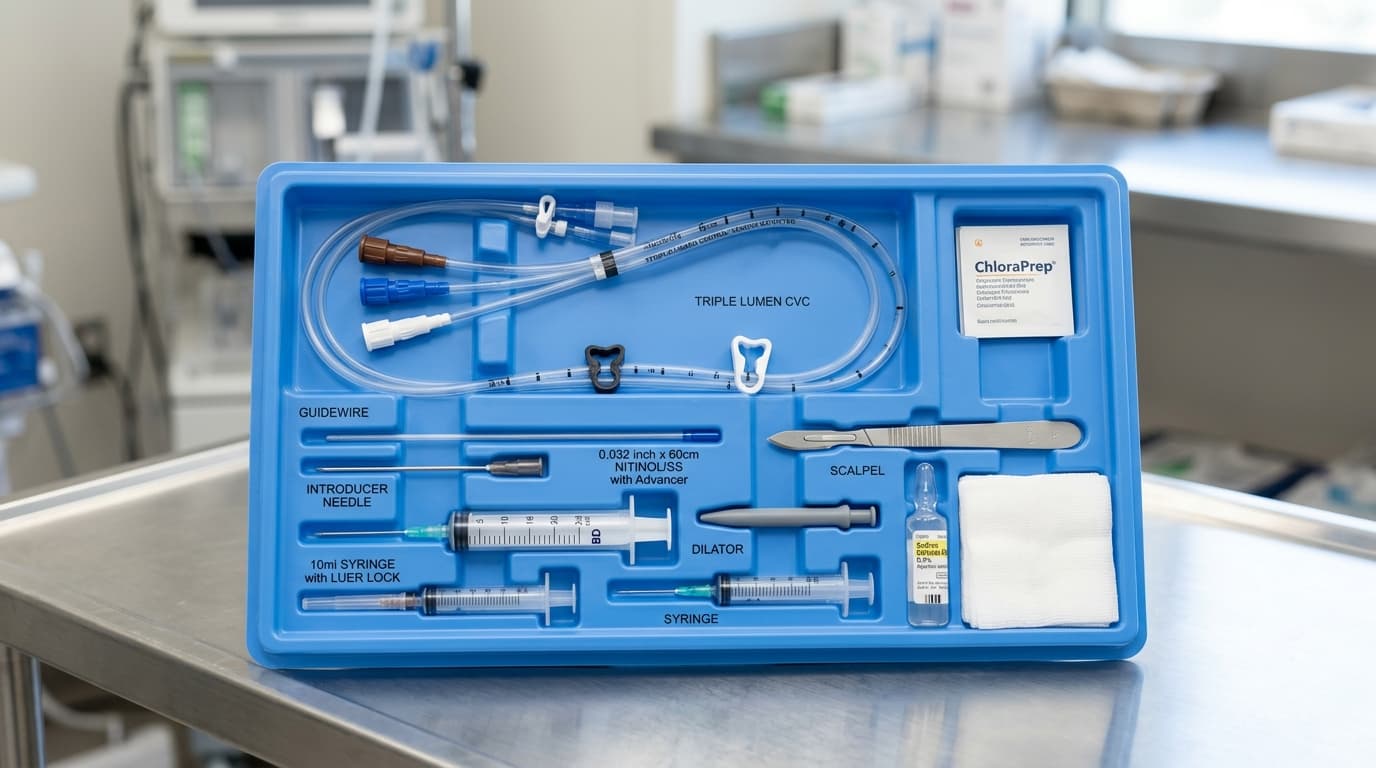
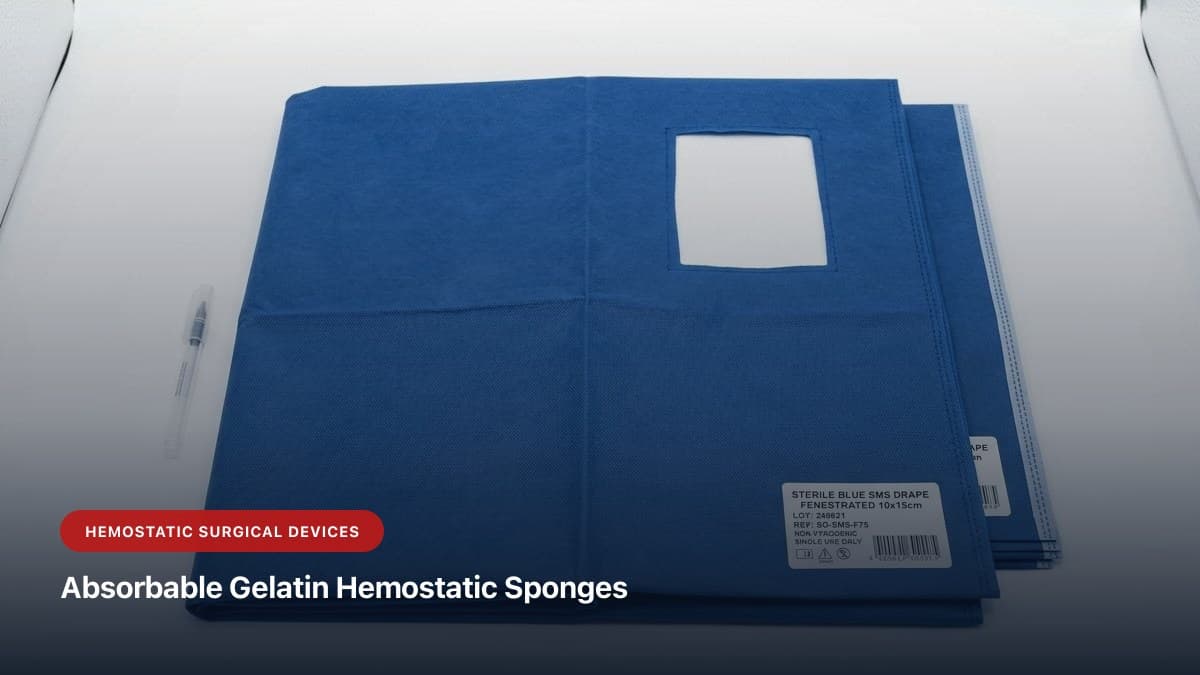
A standard arterial line kit contains the radiopaque polyurethane catheter, straight-tip guidewire with thumb feeder, introducer needle, suture wing attachment, scalpel, and protective sterile drape.

Can the catheter be fixed without sutures?

Yes. In addition to conventional suture wing eyelets, kits are compatible with sutureless securement devices and transparent bordered dressings to reduce catheter-related bloodstream infections (CRBSI).

What is the shelf life of sterile arterial line kits?

Packaged in sterile medical-grade thermoformed blister trays with Tyvek lids and sterilized via Ethylene Oxide (EtO), export-grade arterial kits maintain a validated 5-year sterile shelf life.

Manshav Impex

Manshav Impex is a global exporter of medical devices, surgical consumables and healthcare solutions, serving importers, distributors, hospitals and governments in 48+ countries.

Chat with us