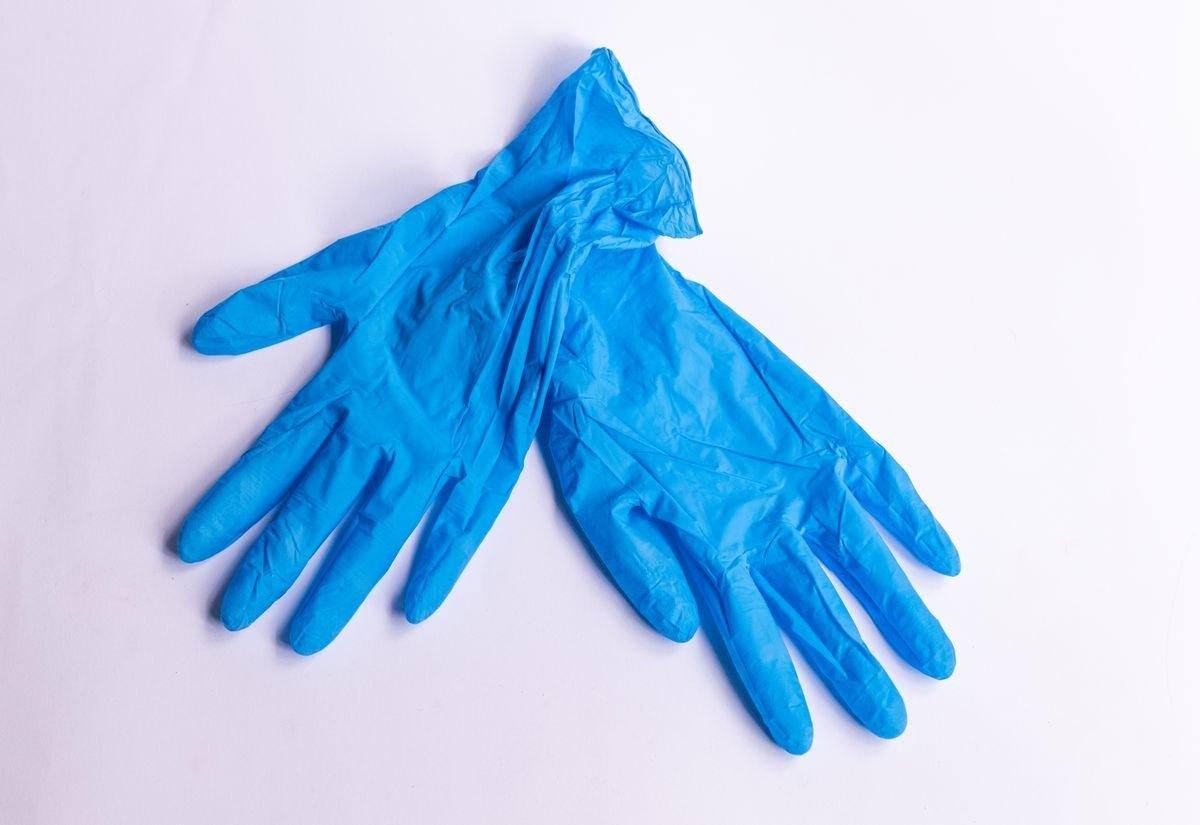
Examination Gloves Thickness and AQL 1.5: What the Numbers on a Spec Sheet Mean
An aid programme that buys examination gloves by the container usually compares offers on price per box. The glove that wins on price often loses in the clinic: it tears when a nurse pulls it on in a hot store room, or it lets fluid through on the third patient. The numbers that predict this are already on the spec sheet, if you know which ones to read and how they were measured.
Sharmil Mangukiya (Founder & MD) 6 min read November 10, 2026
In short
Two examination glove offers can look identical and perform very differently. The difference hides in five numbers on the spec sheet: thickness, AQL, length, tensile strength and protein. Here is how NGO and aid buyers read them, and what to ask when a number is missing.
Our full specification, packing and MOQ are on the latex examination gloves product page. This guide is written for NGO and humanitarian procurement teams buying for clinics in Ethiopia, Kenya, South Sudan, Uganda and similar programmes. It explains what examination gloves thickness, AQL 1.5 and the other spec-sheet numbers mean, so you can compare suppliers on the same basis.
What examination gloves thickness and AQL should an aid buyer ask for?
For general clinical examination, ask for a single-wall palm thickness of about 0.10 mm or more, measured to a named method, and a pinhole AQL of 1.5 tested to EN 455-1. Thicker gloves resist tears and punctures better but reduce touch sensitivity, so match the thickness to the task, and always confirm whether the supplier quotes single-wall or double-wall thickness, because the two numbers are not comparable.
The five numbers on an examination glove spec sheet
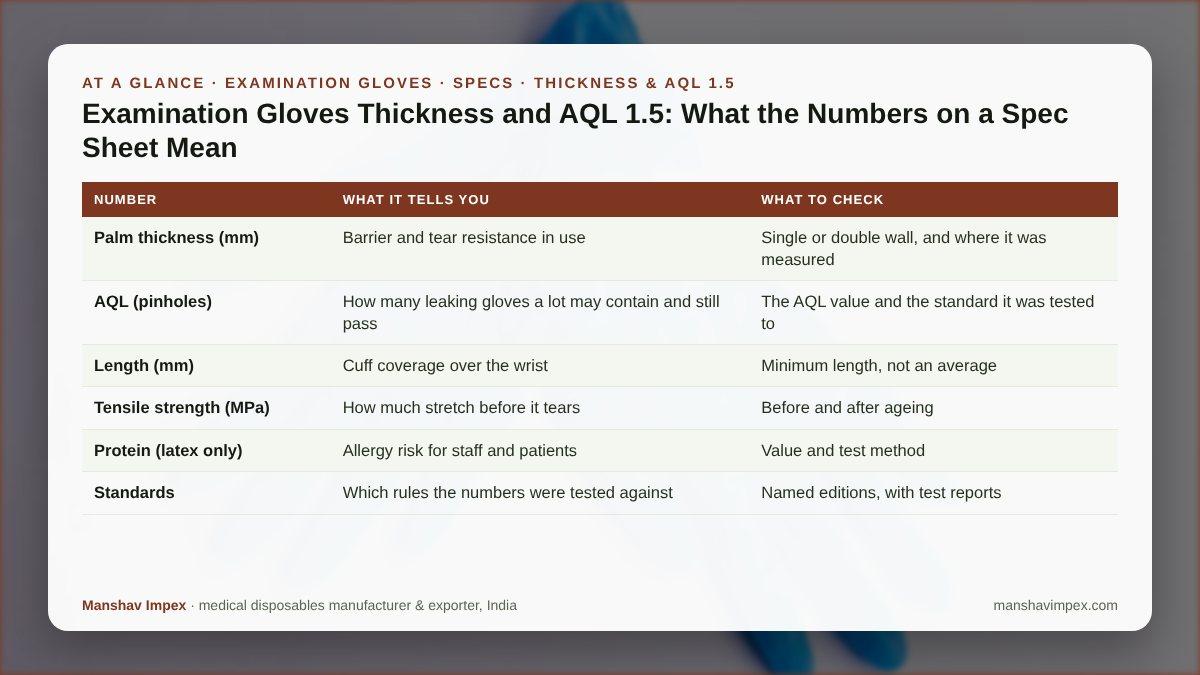
Number
What it tells you
What to check
Our latex examination glove
Palm thickness (mm)
Barrier and tear resistance in use
Single or double wall, and where it was measured
0.10 to 0.14 mm
AQL (pinholes)
How many leaking gloves a lot may contain and still pass
The AQL value and the standard it was tested to
AQL 1.5
Length (mm)
Cuff coverage over the wrist
Minimum length, not an average
240 mm minimum
Tensile strength (MPa)
How much stretch before it tears
Before and after ageing
≥ 18 MPa before / ≥ 14 MPa after ageing
Protein (latex only)
Allergy risk for staff and patients
Value and test method
Below 50 µg/g
Standards
Which rules the numbers were tested against
Named editions, with test reports
EN 455 parts 1–4, ASTM D3578, ISO 11193-1
Thickness: single wall, double wall and mil
Glove thickness is measured on a single layer of film at set points, usually the palm and the fingertip. Some suppliers quote double-wall thickness, measured through both layers of a flattened glove, which makes the same glove look twice as thick. Others quote mil, the American unit: 1 mil is 0.0254 mm, so a 4 mil glove is about 0.10 mm.
Ask for single-wall figures at the palm and the fingertip. Fingertips take the most wear and are often thinner or thicker than the palm by design.
Ask for the weight per glove in grams for one size. Weight is hard to fake and moves with thickness, so it is a quick cross-check between two offers that claim the same thickness.
Measure a sample yourself. A simple micrometer on a cut piece of the palm tells you within minutes whether the sheet is honest.
What AQL 1.5 actually means
AQL (acceptance quality limit) is a sampling rule, not a defect rate printed on every box. The factory takes a sample from each production lot, fills the gloves with water, and counts the ones that leak. If the number of leakers stays within the limit set for AQL 1.5 at that sample size, the lot passes. A lower AQL number is stricter: AQL 1.0 accepts fewer leakers than AQL 1.5, and AQL 2.5 accepts more.
EN 455-1 sets AQL 1.5 for freedom from holes in medical gloves; it is the figure most aid tenders quote.
ASTM D3578 (latex) and ASTM D6319 (nitrile) use their own sampling rules, so an ASTM-only claim is not the same as an EN 455-1 claim.
Ask for the lot test report, not only a certificate. The report shows the sample size, the number of leakers found and the date.
Check the inspection level on the report. A smaller sample makes the same AQL easier to pass.
Standards are revised from time to time. Verify current requirements against the latest edition of each standard and with the regulator in your destination country before you write them into a tender.
The key checks from this guide at a glance.
Procurement note
Before you approve a new glove supplier for a field programme, send twenty gloves from the sample box to the hottest store room you run and leave them there for two weeks. Then ask staff to pull them on quickly with damp hands. Gloves that pass in an air-conditioned office and tear in a store room at 38 °C are a common cause of complaints, and two weeks of heat shows it before a full container arrives.
Length, tensile strength and protein
Length matters for staff who work with fluids: a short cuff leaves the wrist exposed when the gown sleeve rides up. Ask for the minimum length, because an average can hide short gloves in the lot. Tensile strength is measured before and after an ageing test that simulates storage, so the after-ageing figure is the one that predicts how the glove behaves near the end of its shelf life. For latex gloves, a low protein figure reduces the risk of latex allergy among clinic staff who wear gloves all day; where allergy is a concern, a nitrile glove avoids latex proteins entirely.
The cheapest glove per box is rarely the cheapest glove per patient. If staff double-glove because the first pair tears, you have paid twice.
How to compare examination glove offers for an aid programme
Write the spec into the request: material, powder-free or powdered, single-wall palm thickness, AQL and the standard, minimum length, and packing.
Ask every supplier for the same documents: ISO 13485 certificate of the factory, product test reports for the offered lot, and the declaration of conformity.
Request samples in every size and measure thickness and length yourself.
Compare a current quotation on the same Incoterm, for example CIF Mombasa or CIF Djibouti, and on the same packing (100 gloves per box).
Check remaining shelf life at delivery and storage conditions for your warehouse.
Agree an inspection: a third-party AQL check before shipment is common for programme purchases.
Our latex examination gloves are packed 100 per dispenser box and 10 boxes per carton, with an MOQ of 100,000 pieces and a production time of 12–18 days. For programmes that need latex-free gloves, our nitrile examination gloves are tested to EN 455 and ASTM D6319 with AQL 1.5.
See thickness, length, AQL and packing for our latex examination gloves, powdered and powder-free.
Ambidextrous medical-grade natural rubber latex examination gloves offering exceptional tactile sensitivity and high elasticity, available in light powdered and polymer-coated powder-free options. Container consignments dispatched from Port Mundra & Port Nhava Sheva, with certificates and test reports shared with every quotation.
Made to CE MDRMade to ISO 13485Made to EN 455Made to ASTM D3578MOQ: 100,000 pcs
What is the standard thickness of examination gloves?
Most medical examination gloves have a single-wall palm thickness of about 0.08 to 0.15 mm. Our latex examination gloves are 0.10 to 0.14 mm at the palm. Always confirm whether a spec sheet quotes single-wall or double-wall thickness.
What does AQL 1.5 mean for gloves?
AQL 1.5 is the sampling limit used to accept or reject a production lot for pinholes under EN 455-1. A sample from each lot is water-tested; if the number of leaking gloves stays within the AQL 1.5 limit for that sample size, the lot passes.
Is AQL 1.0 better than AQL 1.5?
Yes, a lower AQL number is stricter: AQL 1.0 allows fewer leaking gloves per sample than AQL 1.5. Surgical gloves are usually held to a stricter AQL than examination gloves.
How many mil is a 0.10 mm glove?
About 4 mil. One mil is 0.0254 mm, so 0.10 mm is roughly 3.9 mil and 0.12 mm is roughly 4.7 mil.
What is the HS code for latex examination gloves?
Non-surgical gloves of vulcanised rubber, including latex and nitrile examination gloves, fall under HS 4015.19. Your customs broker will confirm the full national tariff line in your country.
Sharmil Mangukiya (Founder & MD)
Sharmil Mangukiya is the founder and managing director of Manshav Impex, an Indian manufacturer & exporter of medical disposables serving importers, distributors, hospitals and governments in 48+ countries since 2019.