How to Import Medical Devices from India: A Complete Buyer's Guide (2026)
From certification to customs — the essentials every importer should verify before placing an order with an Indian medical supplier.

Certifications are the language of trust in medical trade. But CE, FDA and ISO 13485 are not interchangeable — each covers something different, and each is required in different markets. Here is what every importer should understand before placing an order.
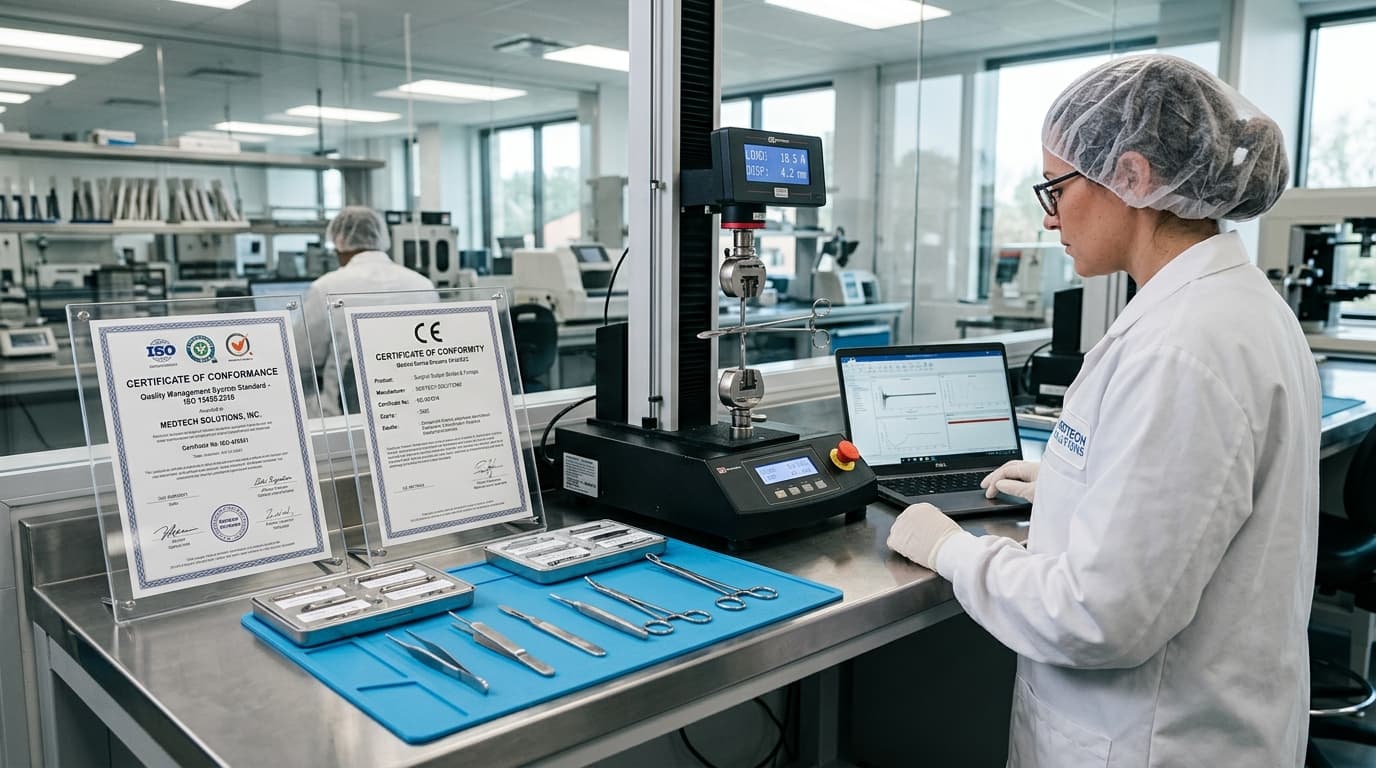
A plain-language guide to the standards that matter when sourcing healthcare products — and how to check them.
When you buy a medical product, the certification tells you two things: that it was made under a controlled quality system, and that it is legally permitted to be sold in a given market. Confusing one certification for another is one of the most common — and most expensive — sourcing mistakes.
ISO 13485 is an international standard for a medical-device Quality Management System (QMS). It certifies how a company designs, manufactures and controls its products — not the product itself. Think of it as the foundation: a manufacturer with a valid ISO 13485 certificate has documented, audited processes for traceability, sterilization control and complaint handling.
ISO 13485 certifies the manufacturer's system. It does not, on its own, permit a specific product to be sold in the EU or USA — that requires market-specific approval.
A CE mark shows a product complies with the applicable EU regulations — for medical devices, the EU Medical Device Regulation (MDR 2017/745). The conformity route depends on the device's risk class (I, IIa, IIb, III); higher-risk devices require assessment by a Notified Body. A genuine CE certificate references the specific device and, for most classes, a Notified Body number.
For the US market, most devices go through the FDA. Low-risk devices may only need establishment registration and listing; many moderate-risk devices require 510(k) clearance (demonstrating equivalence to a legally marketed device); the highest-risk devices require Premarket Approval (PMA). 'FDA registered' and 'FDA cleared/approved' are not the same thing — always confirm which applies.
Good Manufacturing Practice (GMP) governs the conditions and controls under which products are made. WHO-GMP is a widely recognized benchmark, frequently required for tenders and public-health procurement in many countries. It is especially relevant for sterile disposables and consumables.
| Certification | What it covers | Primary market |
|---|---|---|
| ISO 13485 | Manufacturer's quality system | Global (foundation) |
| CE (MDR) | Product conformity to EU rules | European Union / EEA |
| US FDA | Product clearance/approval or registration | United States |
| GMP / WHO-GMP | Manufacturing conditions & controls | Tenders & many regulated markets |
No. ISO 13485 certifies the manufacturer's quality-management system, while CE marking certifies that a specific product conforms to EU regulations and can be sold in Europe. A manufacturer usually needs both.
No. 'FDA registered' means the manufacturer has listed its establishment with the FDA. Many devices additionally need 510(k) clearance or PMA approval to be legally marketed in the US. Always confirm which applies to your product.
It depends on your national regulations. CE covers the EU/EEA, FDA covers the US, and many other countries accept CE, FDA, ISO 13485 or WHO-GMP for import registration or tenders. Check your local medical-device authority's requirements.

From certification to customs — the essentials every importer should verify before placing an order with an Indian medical supplier.
Invoice, packing list, COO and certificates — what each document does and why it matters.
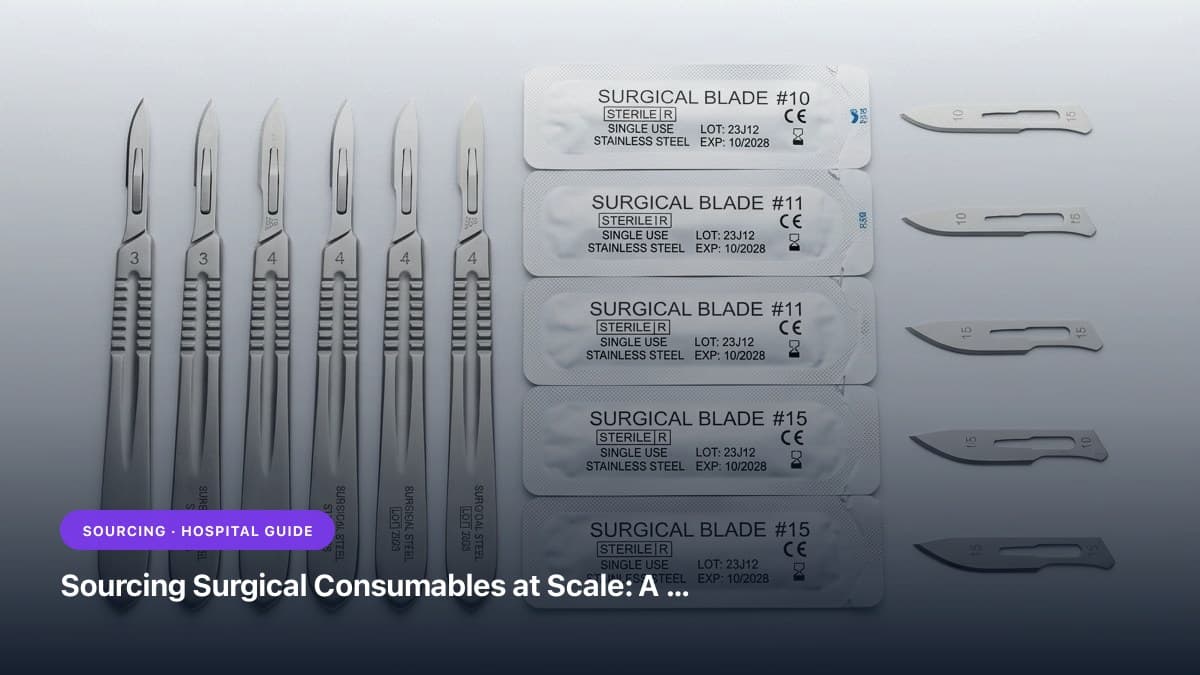
Sutures, blades, drapes and kits — how to source consumables that clear QC every time.