CE, US FDA & ISO 13485: What Each Medical Certification Really Means
A plain-language guide to the standards that matter when sourcing healthcare products — and how to check them.

India has become one of the world's most competitive sourcing bases for medical devices, surgical consumables and hospital equipment. This guide walks importers, distributors and procurement teams through exactly how to buy from India with confidence — what to verify, what to negotiate and what to expect at every stage.
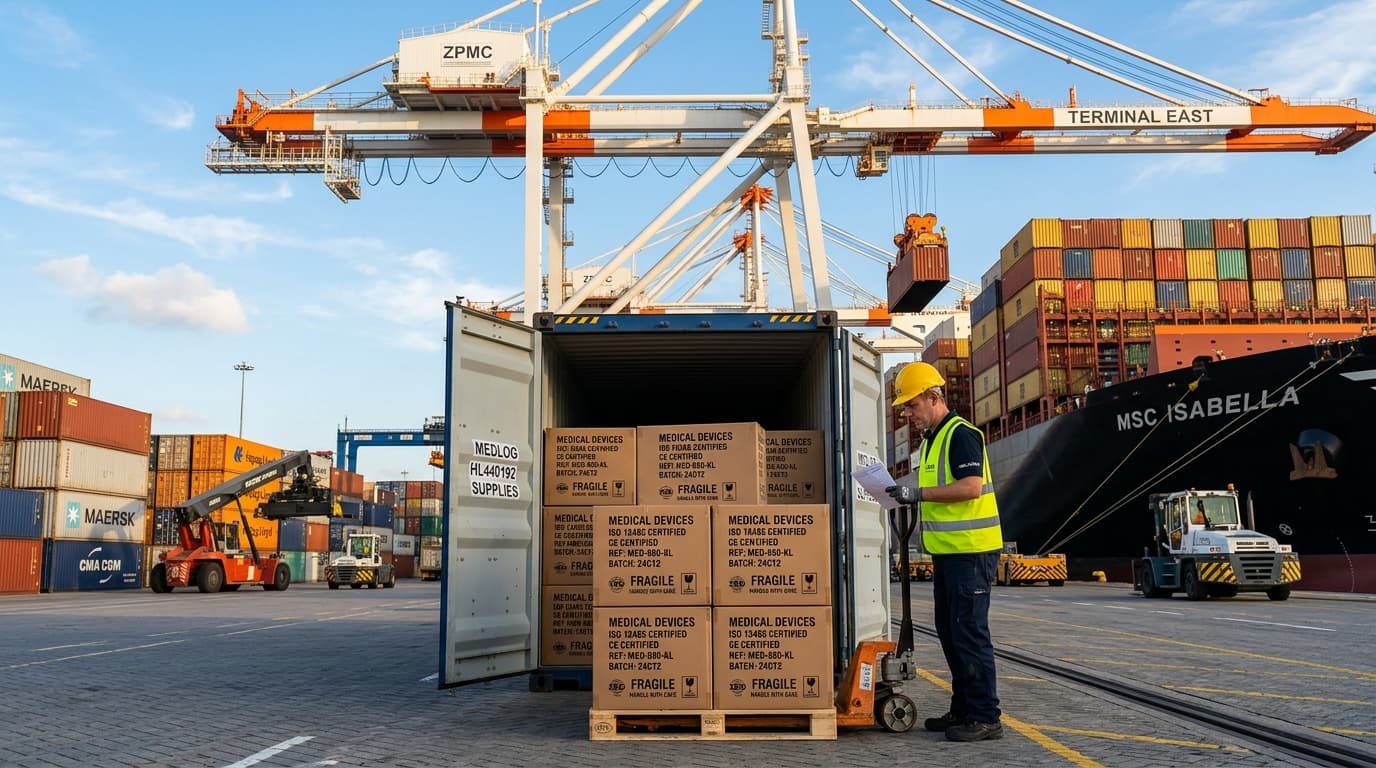
From certification to customs — the essentials every importer should verify before placing an order with an Indian medical supplier.
India exports medical products to more than 150 countries, combining internationally certified manufacturing with pricing that is typically 30–60% below Western equivalents. For importers and distributors, that makes it an attractive base — but only when you source from the right partner and verify the right things up front.
Below is the process our own buyers follow, distilled into a repeatable checklist you can use with any Indian supplier.
Before you commit to any order, confirm each of the following. A trustworthy exporter will provide all of it without hesitation.
A company holding ISO 13485 does not mean every product it sells is CE-marked. Always ask for the certificate tied to the exact product and model you are importing, and check the certificate number and validity date.
Minimum order quantities vary enormously by category. Disposables such as gloves and syringes may start in the tens of thousands of pieces, while capital equipment like ICU beds or patient monitors can start at 20–50 units. Pricing is driven by volume, specification, packaging and freight terms.
| Category | Typical MOQ | Lead time |
|---|---|---|
| Disposables (gloves, syringes) | 50,000–100,000 pcs | 12–20 days |
| Surgical consumables (sutures, blades) | 10,000+ pcs | 18–25 days |
| Orthopedic implants | 500+ pcs | 25–35 days |
| Hospital furniture & equipment | 20–50 units | 30–45 days |
For a first order, most exporters will accept a mixed container or reduced MOQ so you can evaluate quality before scaling. Always request pricing on more than one Incoterm (e.g. FOB and CIF) so you can compare the true landed cost.
Correct paperwork is what clears your goods through customs. A competent exporter prepares these as standard:
Sea freight is the default for bulk consumables and furniture — lowest cost per unit, 3–6 weeks in transit depending on the lane. Air freight suits urgent, high-value or low-volume orders. For samples and small parcels, international courier is fastest. Your supplier should quote all three when relevant.
Start with a clear enquiry: the products, target quantities, destination country and any certification or labeling requirements. A good exporter replies with a detailed quotation — pricing, MOQ, lead time and documentation — usually within one business day. Request samples, confirm terms in writing, and begin with a manageable first order before scaling to full containers.
Yes — provided you verify product-level certifications (CE, US FDA, ISO 13485), the exporter's IEC and GST registration, and export references. India's leading manufacturers supply regulated markets across Europe, the Middle East and the Americas.
It depends on the product. Disposables often start at 50,000+ pieces, while equipment can start at 20–50 units. For first orders, most exporters accept reduced or mixed-container quantities.
Sea freight typically takes 3–6 weeks depending on the destination; air freight a few days for urgent orders. Manufacturing lead time is usually 12–45 days before dispatch.
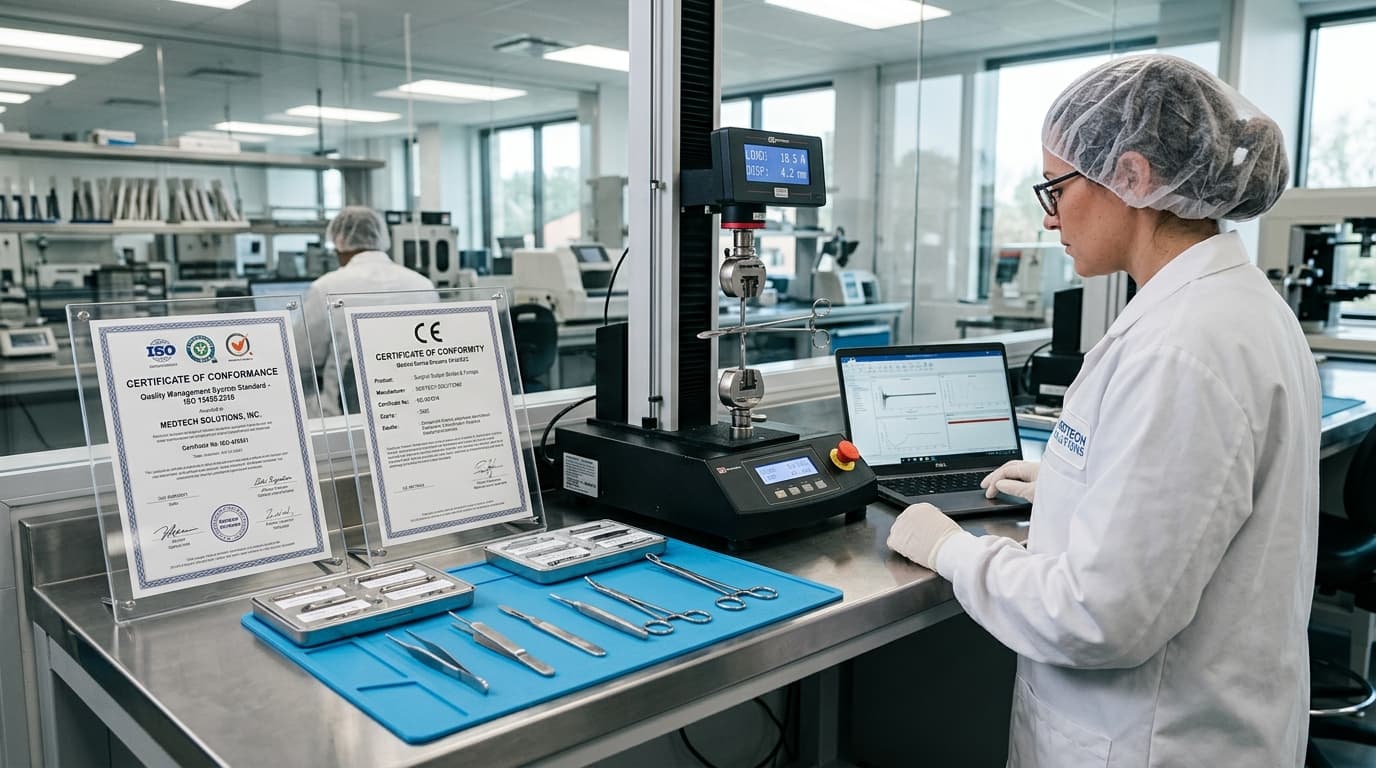
A plain-language guide to the standards that matter when sourcing healthcare products — and how to check them.
Invoice, packing list, COO and certificates — what each document does and why it matters.
How order volume shapes pricing — and how to plan a first import that is easy to scale.