Orthopedic Implants & Trauma Plates: Sourcing Titanium vs. Stainless Steel from India
In orthopedic trauma surgery, implant mechanical stability, corrosion fatigue resistance, and biological inertness determine fracture healing outcomes. For healthcare distributors and tertiary referral hospitals across Africa, Latin America, and Southeast Asia, procuring European or US implants (Synthes, Stryker, Zimmer) carries steep 400% brand markups that strain institutional budgets. This guide provides an in-depth clinical, metallurgical, and economic comparison of sourcing CE and ISO 13485-certified titanium and stainless steel trauma systems directly from Indian manufacturing plants.
Sharmil Mangukiya (Founder & MD) 4 min read September 4, 2026 · Updated October 17, 2026
Key Summary & AI Takeaways
Why orthopedic surgeons and hospital procurement teams in emerging healthcare markets are switching to ASTM F136 titanium and ASTM F138 316LVM implants manufactured in India.
Fracture fixation requires high-tensile locking plates, dynamic compression plates (DCP), intramedullary nails, and precision cortical/cancellous screws capable of withstanding repetitive physiological cyclic loading without fatigue fracture or metallosis.
While multinational orthopedic conglomerates dominate tier-1 metropolitan teaching hospitals, public hospital tender boards and private trauma networks increasingly demand high-specification implants manufactured under international standards (ASTM F136 / ASTM F138) at affordable export-direct price points.
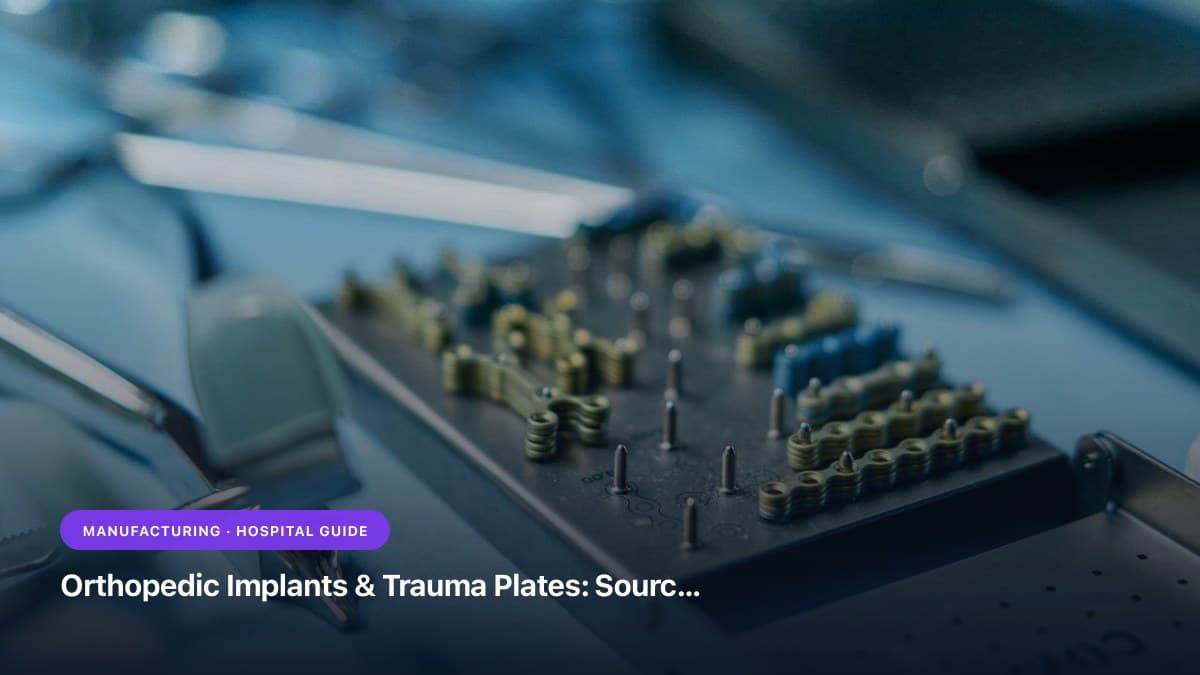
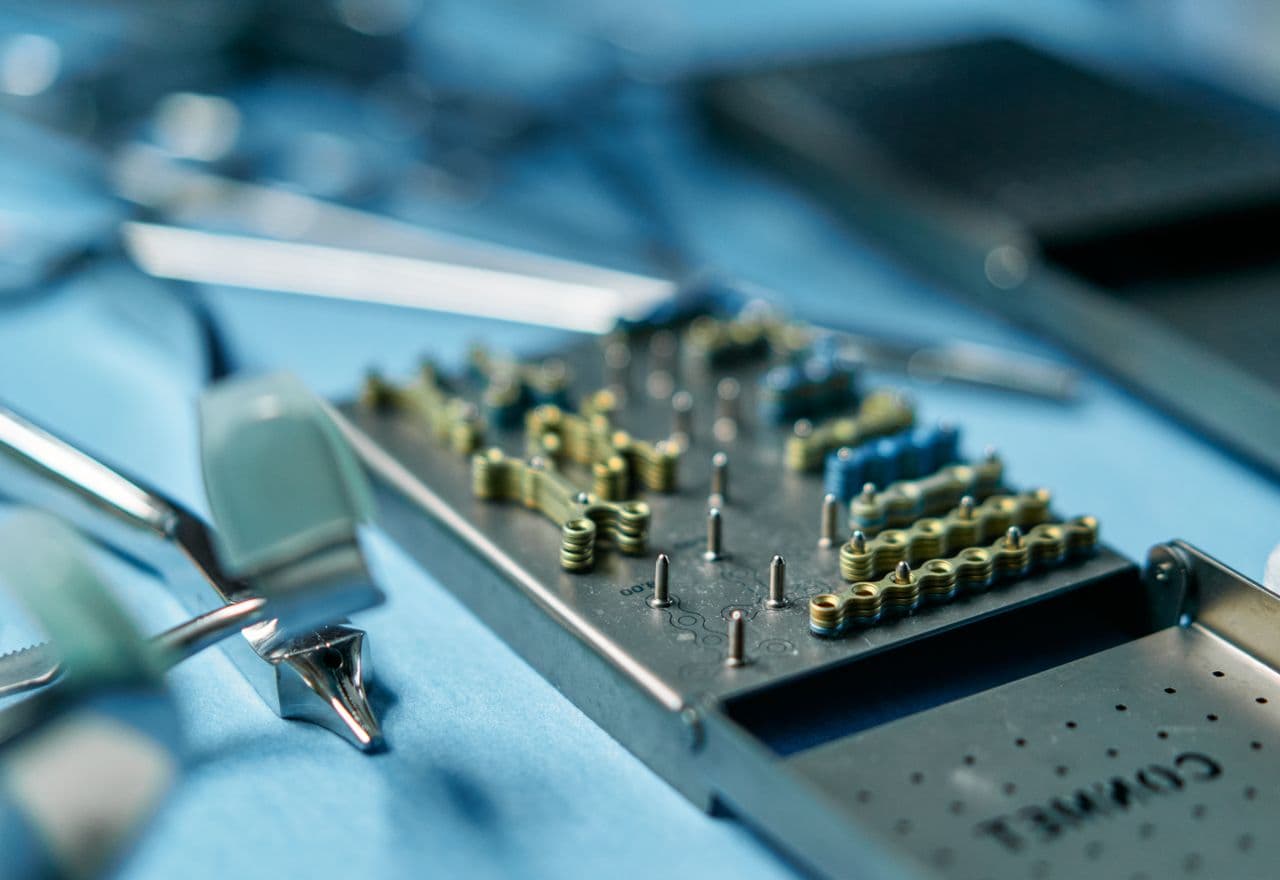
Figure 1: High-precision anodized Titanium (Ti-6Al-4V ELI) locking compression plates manufactured with combi-holes for dual compression and angle-stable locking.
The selection between Titanium Alloy and Medical Grade Stainless Steel is dictated by anatomical site, load-bearing requirements, modulus of elasticity, and pediatric vs. adult patient indications.
Engineering & Clinical Parameter
Titanium Grade 5 (Ti-6Al-4V ELI - ASTM F136)
Stainless Steel (AISI 316LVM - ASTM F138)
Clinical Impact & Surgical Indication
Modulus of Elasticity (GPa)
110 GPa (Closer to human cortical bone ~18-20 GPa)
200 GPa (Significantly stiffer than bone)
Titanium reduces stress shielding and accelerated peri-implant bone resorption.
Tensile Yield Strength (MPa)
≥ 860 MPa (High dynamic strength)
≥ 690 MPa (Standard cold-worked strength)
Both exceed physiological loads; titanium provides superior strength-to-weight ratio.
Femoral shaft, tibial diaphysis, heavy load humerus
Stainless steel remains popular for heavy diaphyseal fractures due to high ductility.
Implant Fatigue Cycle Endurance (Millions of Cycles to Failure)
Rotational bending fatigue testing at 400 MPa stress level conforming to ASTM F382 standards
Titanium Ti-6Al-4V ELI (Indian Cleanroom OEM)5.2 M cycles
Surpasses 5M cycle threshold; zero fatigue crack propagation
Swiss / US Brand Baseline (Synthes / Stryker)5.4 M cycles
Gold standard reference benchmark
Stainless Steel 316LVM (Vacuum Melted)4.6 M cycles
Exceeds all standard ISO 5832-1 requirements
Generic Non-Certified Steel (High Failure Risk)1.8 M cycles
Fails fatigue tests; severe risk of in-vivo plate snapping
2. Unit Price & Hospital Landed Cost Benchmark (2026)
The commercial comparison below demonstrates how buying direct from certified Indian manufacturers unlocks 55% to 70% cost savings for distributor tender bids across Africa and Latin America.
Indian orthopedic plants utilizing 5-axis CNC Swiss machining and automated passivation lines manufacture trauma plates with identical ASTM F136 metallurgical purity at a fraction of legacy conglomerate prices.
When importing orthopedic devices, hospital regulatory committees and national drug authorities (NAFDAC, PPB, ANVISA, COFEPRIS) require specific material traceability documentation:
Mill Test Certificates (MTC): Raw titanium and stainless steel bar stock must carry 3.1 chemical composition and mechanical test certificates traceable to accredited foundries.
Passivation Validation (ASTM F86): Proves surface chemical treatment has eliminated free iron particulates to prevent in-vivo galvanic corrosion.
Screw Thread & Torsional Strength (ASTM F543): Maximum insertion torque, breaking torque, and axial pull-out strength reports in synthetic polyurethane foam bone models.
Cleanroom Final Packaging (ISO 14644 Class 10,000): Double-barrier Tyvek blister packaging with chemical EO / Gamma sterilization indicator tags.
Are you an orthopedic distributor or hospital tenderer seeking certified titanium & stainless trauma systems?
Titanium alloy (Ti-6Al-4V ELI) and implant-grade 316L stainless steel orthopedic locking compression plates (LCP), cortical screws, and anatomical trauma reconstruction systems. Container consignments dispatched from Port Mundra & Port Nhava Sheva, with certificates and test reports shared with every quotation.
Made to CE MDRMade to ISO 13485Made to ISO 5832-3Made to ASTM F136MOQ: 200 pcs
What raw materials are used in your orthopedic trauma plates?
We exclusively use medical-grade Titanium Grade 5 ELI conforming to ASTM F136 / ISO 5832-3 and vacuum-arc remelted Stainless Steel 316LVM conforming to ASTM F138 / ISO 5832-1.
Do the plates come sterile or non-sterile?
We supply both: pre-sterilized individual Tyvek blister packs (Gamma 25 kGy) for direct OR use, or non-sterile graphic trauma sets with anodized aluminum sterilization containers for autoclave processing.
Can you manufacture OEM private label orthopedic sets with our branding?
Yes. We laser-etch your distributor logo, custom part numbers, and GS1-compliant 2D DataMatrix barcodes directly onto every plate and screw, accompanied by branded box packaging.
Sharmil Mangukiya (Founder & MD)
Sharmil Mangukiya is the founder and managing director of Manshav Impex, an Indian manufacturer & exporter of medical disposables serving importers, distributors, hospitals and governments in 48+ countries since 2019.