Hypodermic Syringes & IV Cannulas: Luer Lock vs Luer Slip, Siliconization & Needle Penetration Force Standards
A clinical engineering guide on selecting high-grade disposable hypodermic syringes, needles, and IV cannulas for hospital supply chains.

Head and neck surgical procedures, neurosurgical craniotomies, and complex oral-maxillofacial surgeries present unique challenges for anesthesiologists across Jordan's leading medical centers—such as the King Hussein Cancer Center and specialized private hospitals in Amman. In these operations, the patient's head and neck are frequently flexed, extended, or rotated, while surgical teams lean directly across the airway. Standard PVC endotracheal tubes kink or collapse when bent acutely, immediately occluding ventilation and triggering hypoxemia emergencies. To maintain an unyielding, patent airway under extreme flexion, anesthesiology procurement teams mandate the sourcing of spiral wire-reinforced (armored flexometallic) endotracheal tubes.
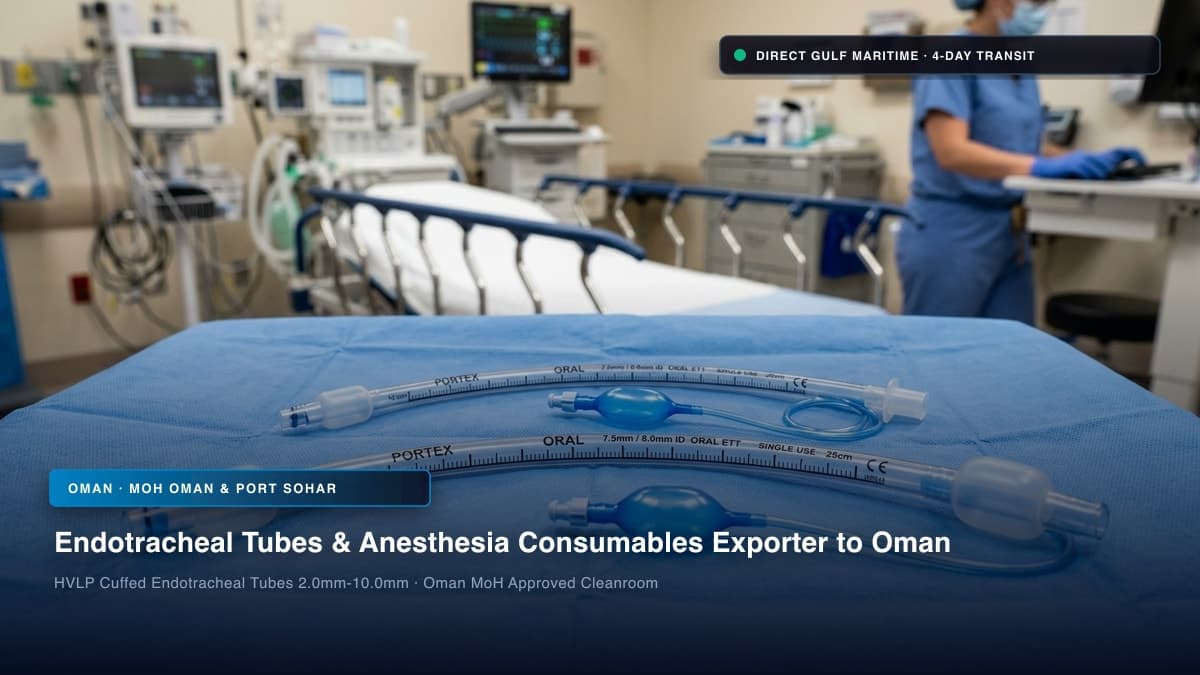
Complex head, neck, and neurosurgical procedures in Amman present unique airway management challenges requiring kink-proof armored endotracheal tubes.
A reinforced endotracheal tube incorporates a continuous stainless steel wire coil wound helically through the entire thickness of the medical PVC or silicone tube wall. This internal spiral exoskeleton provides 360-degree radial crush resistance, allowing the tube to bend into acute angles (>120°) without collapsing the internal lumen.
| Airway Parameter | Reinforced (Armored) Flexometallic Tube | Standard Cuffed PVC Tube | Maxillofacial Surgical Impact |
|---|---|---|---|
| Kink Resistance | Absolute: Bends > 120° without lumen collapse | Fails: Kinks sharply at > 45° angle | Prevents intra-operative airway obstruction |
| Radial Compression | Resists external tooth bite or surgical clamp force | Easily crushed under direct pressure | Protects airway during oral and prone procedures |
| Flexibility Profile | Ultra-flexible; conforms to complex anatomy | Rigid curved memory (Magill curvature) | Eliminates leverage pressure on tracheal carina |
| Stylet Dependency | Requires stylet for oral/nasal intubation | Can often be intubated without stylet | Complete set must include sterile stylet |
| Typical Unit Cost | 3.5x – 4.5x over standard PVC | Baseline commodity | Reserved for high-risk surgical positioning |
In prone spine surgery or maxillofacial reconstruction, accidental tube kinking beneath surgical drapes is a catastrophic emergency. Anesthesiologists in Amman insist on armored flexometallic tubes because the spiral wire coil guarantees ventilation regardless of patient neck position.
Medical devices require Jordan Food and Drug Administration (JFDA) registration, ISO 5361 laboratory bend testing certificates, and bilingual Arabic/English sterile packaging labels.
Yes. Flexometallic tubes are widely utilized for nasotracheal intubation in maxillofacial and dental surgery because their flexibility allows smooth navigation through the nasopharynx without mucosal shearing.
Standard reinforced tubes contain a ferromagnetic stainless steel spiral wire and are not MRI safe. Non-metallic, high-density polymer or monofilament nylon-reinforced tubes must be specified for intra-operative MRI environments.
No. The metal wire coil stops approximately 15 mm to 20 mm above the distal tip, allowing the Murphy eye and distal bevel to remain soft, flexible, and completely atraumatic.
Sizes range from ID 5.0 mm to 9.0 mm in 0.5 mm increments, both cuffed and uncuffed (pediatric).
Sea freight from Nhava Sheva (JNPT) or Mundra to Aqaba Port typically transits in 10 to 14 days via direct Red Sea routes.

A clinical engineering guide on selecting high-grade disposable hypodermic syringes, needles, and IV cannulas for hospital supply chains.
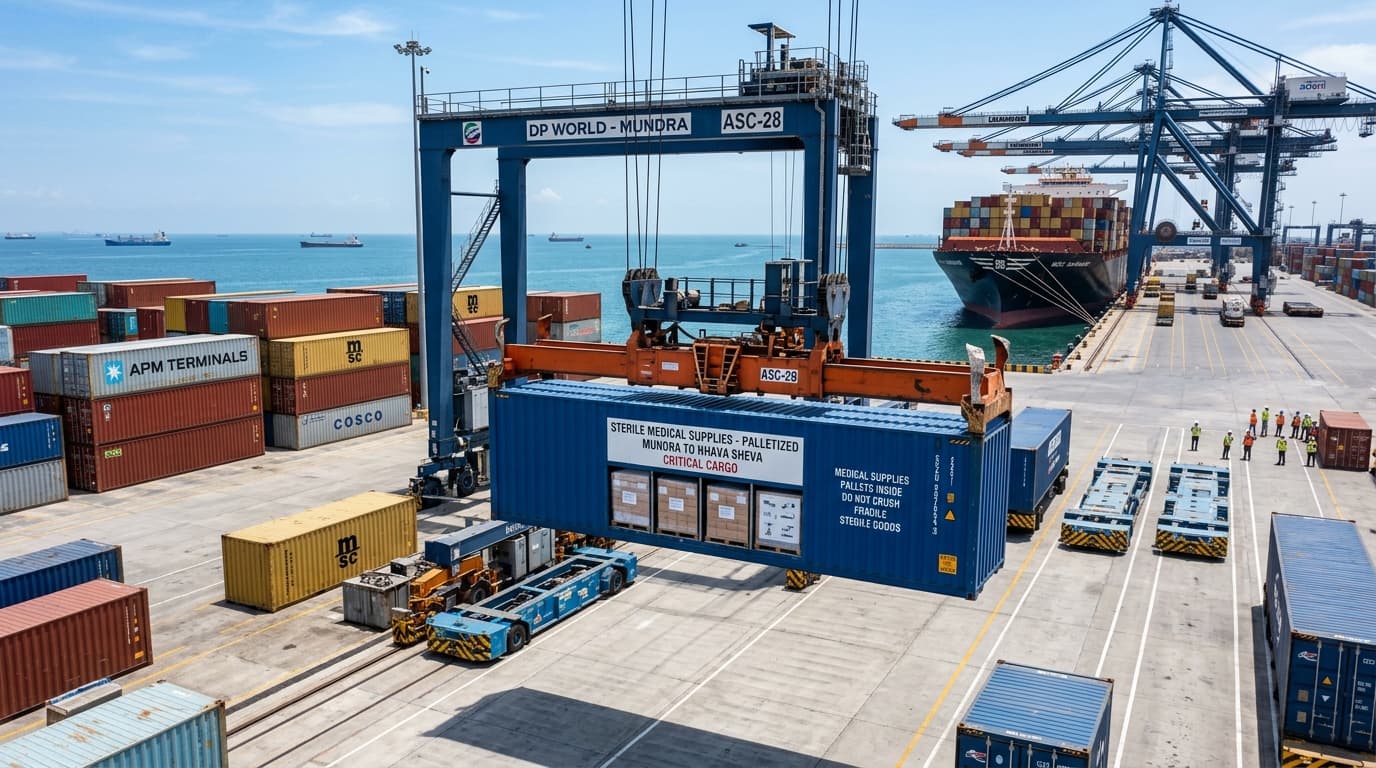
A complete step-by-step procurement blueprint for international buyers importing surgical gloves, blades, syringes, and hospital disposables from Indian factories.
Invoice, packing list, COO and certificates — what each document does and why it matters.