Sourcing

Retractable Safety Syringes vs Conventional Syringes: NHS Supply Chain Compliance & Sourcing Economics

The implementation of the Health and Safety (Sharps Instruments in Healthcare) Regulations in the UK and European Directive 2010/32/EU transformed hypodermic syringe purchasing from a low-cost commodity decision into a stringent legal compliance requirement. For UK distributors and NHS Supply Chain framework contractors, securing high-volume, reliable supplies of ISO 7886-4 compliant safety syringes with integrated needle retraction is paramount to eliminating needlestick injuries (NSIs).

Retractable Safety Syringes vs Conventional Syringes: NHS Supply Chain Compliance & Sourcing Economics
Key Summary & AI Takeaways

The implementation of the Health and Safety Regulations in the UK transformed hypodermic syringe purchasing from a low-cost commodity decision into a stringent legal compliance requirement.

Quick Answer: The True Cost-Benefit of Retractable Safety Syringes

While manual retractable safety syringes carry a 40% to 65% unit manufacturing premium over conventional 3-part syringes, they eliminate downstream post-exposure prophylaxis (PEP) costs, bloodborne pathogen litigation, and sharps bin volume overflow. For NHS trusts, deploying automated spring-driven retraction reduces institutional sharps injury costs by over £1,200 per avoided incident.

Engineering Mechanisms: Active vs Passive vs Shielding Systems

Procurement teams evaluate three distinct safety syringe architectures when sourcing from international manufacturers:

  • Active Manual Plunger Retraction: Following injection, the clinician applies extra forward pressure on the thumb rest, engaging a locking ring on the needle hub. Pulling the plunger backward pulls the contaminated needle securely into the barrel, where it locks permanently.
  • Automated Spring Retraction: Continued forward depression at the end of the stroke trips a stainless steel spring mechanism, shooting the needle back into the barrel within 0.15 seconds without user-dependent recoil force.
  • Sliding Needle Shielding: A transparent sleeve slides forward over the needle and clicks into a locked position. While cheaper to produce, shielding leaves the needle outside the barrel, occupying 30% more space in sharps containers.
Syringe ArchitectureMechanism TypeISO 7886 StandardAccidental Activation RiskSharps Container Volume ImpactRelative Unit Cost Index
Conventional 3-PartNone (Manual recapping)ISO 7886-1High (Prohibited in NHS)Baseline1.0x
Hinged Shield SafetyPassive/Active ShieldISO 7886-4Low+30% volume required1.35x
Manual Plunger RetractActive RetractionISO 7886-4Zero post-lock-40% volume required1.55x
Spring-Loaded Auto-RetractAutomated End-StrokeISO 7886-4Minimal if calibrated-40% volume required1.70x
Procurement teams frequently underestimate the indirect logistics savings of barrel-retracting syringes. Because the needle is secured entirely inside the syringe body, clinicians do not need to expand sharps bin access, saving NHS trusts significant waste disposal fees per container changeout.

Technical Sourcing Specifications for NHS Framework Compliance

When importing to Felixstowe or London Gateway, batches must conform to strict manufacturing thresholds: low dead space (LDS) needle hubs compliant with ISO 7886-1 Annex B, synthetic polyisoprene elastomer gaskets that prevent chemical leaching, and micro-siliconization ensuring penetration force below 0.65 N.

UKCA & MHRA Regulatory Notice

UK importers must ensure the foreign manufacturer holds UKCA / CE Mark certification under EU MDR / UK Medical Devices Regulations 2002, backed by ISO 10993 biocompatibility and endotoxin reports below 0.25 EU/ml.

Evaluating bulk safety consumable contracts for UK healthcare frameworks? Discover Manshav Impex's ISO 7886-4 certified retractable syringe portfolio.
Explore Safety Syringes

Frequently asked questions

What is the difference between an auto-disable (AD) syringe and a retractable safety syringe?

Auto-disable (ISO 7886-3) syringes lock the plunger to prevent reuse (primarily used in mass immunization programs), but leave the sharp exposed. Retractable safety syringes (ISO 7886-4) both prevent reuse and retract the needle inside the barrel to prevent sharps injury.

Can retractable safety syringes be used with high-viscosity medications?

Yes, provided the internal hub fluid path has no restrictive choke points. High-viscosity formulations require larger gauge hubs (20G–22G) engineered with ultra-thin wall (UTW) cannula technology.

Are Indian medical syringe factories equipped for automated vision inspection?

Leading Indian exporters operate automated high-speed German vision inspection cameras that verify needle bevel orientation, siliconization, and glue dispensing before blister sealing.

What are the standard carton and pallet packing specs for sea freight?

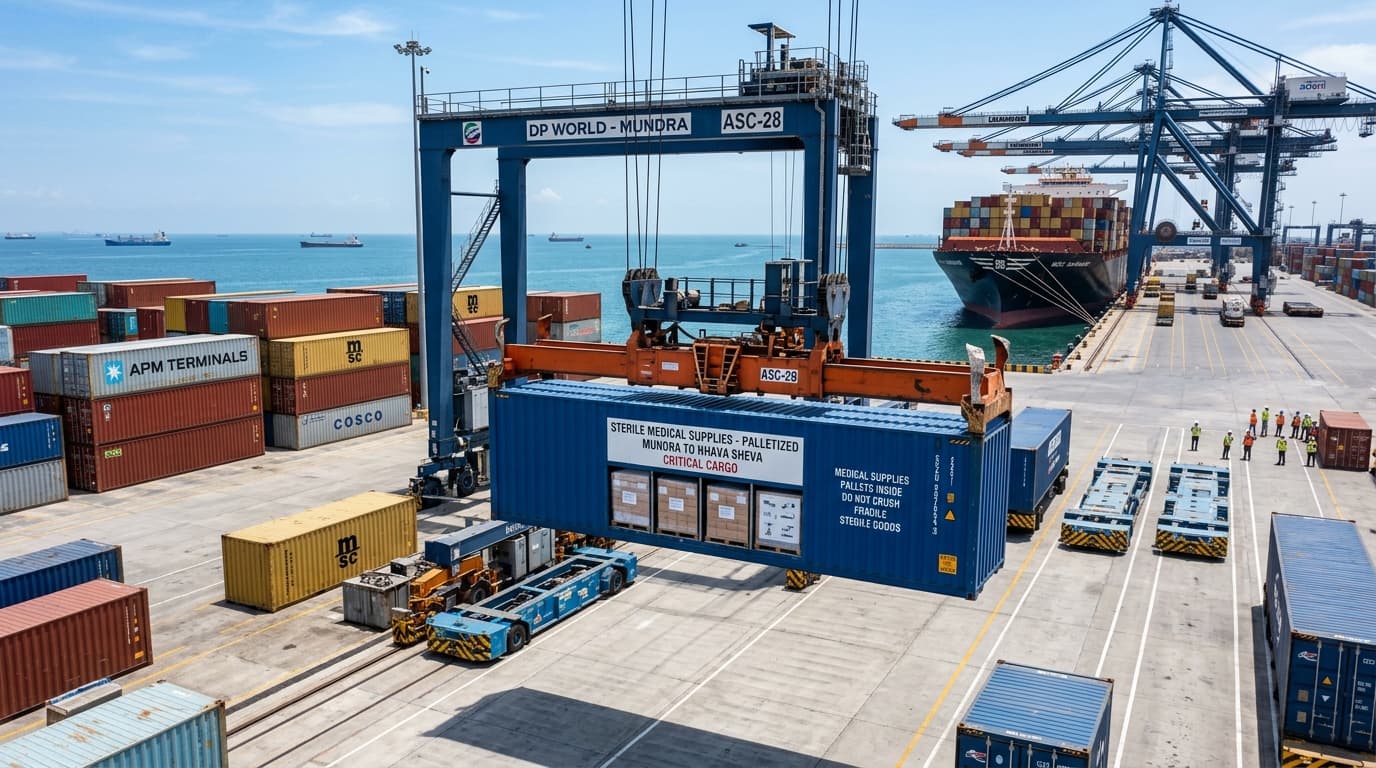
Standard 3ml and 5ml safety syringes are packed 100 units per inner dispenser box, 2,000 units per master export carton. A 40ft High Cube container typically holds between 720,000 and 850,000 units.

How does MHRA enforcement impact non-safety syringes in UK healthcare?

Conventional non-safety syringes can only be legally procured in the UK when an NHS risk assessment confirms that a safety-engineered alternative is not clinically viable.

Manshav Impex

Manshav Impex is a global exporter of medical devices, surgical consumables and healthcare solutions, serving importers, distributors, hospitals and governments in 48+ countries.

Chat with us