Laparoscopic Veress Insufflation Needles & Spring-Loaded Trocars: Sourcing Guide for Colombian Minimally Invasive Surgery (INVIMA)
Minimally invasive abdominal surgery (laparoscopy) represents the standard of care for cholecystectomies, appendectomies, and gynecological interventions across Colombia's premier surgical institutions—including Fundación Santa Fe de Bogotá, Hospital Pablo Tobón Uribe in Medellín, and Centro Médico Imbanaco in Cali. The most critical step of any laparoscopic procedure is establishing the initial pneumoperitoneum. Surgeons rely on Veress insufflation needles to puncture the abdominal wall safely and insufflate carbon dioxide (CO2). For Colombian medical device importers managing INVIMA compliance, sourcing precision-engineered Veress needles from Indian manufacturers combines surgical safety with high gross distributor margins.
Sharmil Mangukiya (Founder & MD) 9 min read September 23, 2026
Key Summary & AI Takeaways
Minimally invasive abdominal surgery represents the standard of care for cholecystectomies, appendectomies, and gynecological interventions across Colombia's surgical institutions.
Quick Answer: Mechanism of Action & Safety Geometry of the Veress Needle
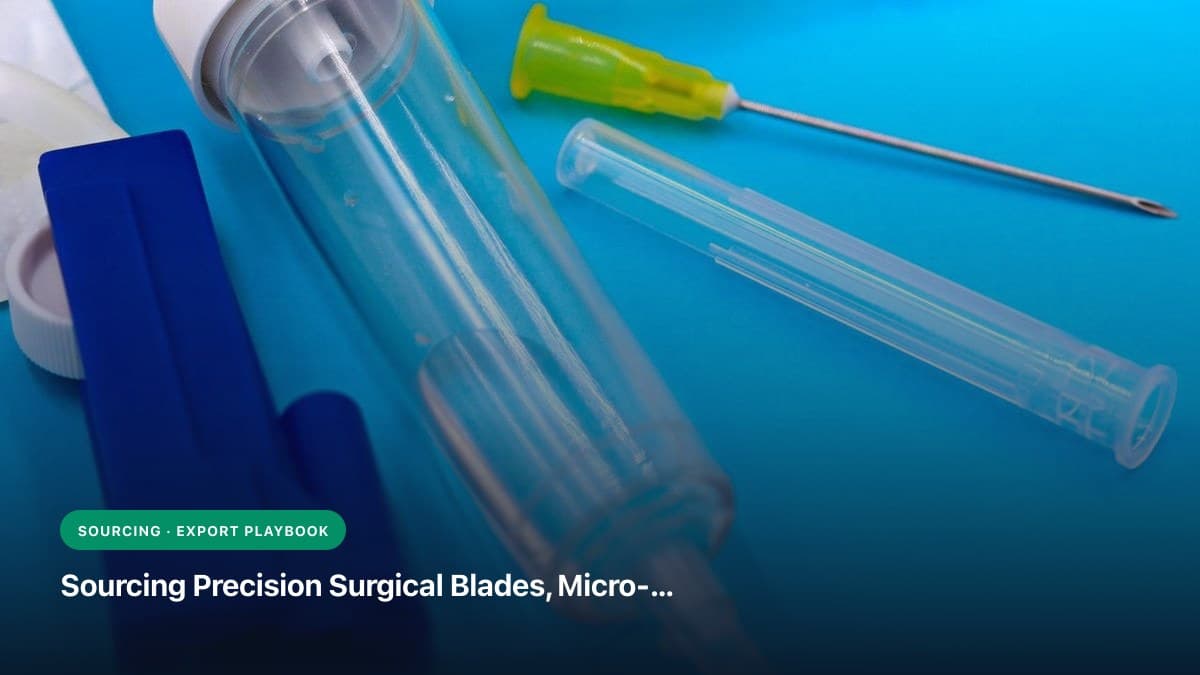
A surgical Veress needle consists of an outer cannula ground to a sharp, beveled cutting point (14G OD) and an internal spring-loaded stylet with a rounded, blunt, atraumatic tip. As the surgeon applies downward pressure through the abdominal fascia and peritoneum, the tissue resistance pushes the blunt stylet back inside the outer cannula, allowing the sharp needle bevel to pierce the layers cleanly. The microsecond the needle tip enters the free peritoneal cavity, tissue resistance drops to zero, and the internal spring instantly propels the blunt stylet forward past the sharp cutting edge, shielding internal abdominal viscera, intestines, and retroperitoneal blood vessels from accidental puncture.
Provides accurate anatomical reach across patient body mass indices
Blunt Stylet
Hemispherical smooth rounded tip
AISI 304 electro-polished
Springs forward upon cavity entry to shield sharp tip
Spring Mechanism
High-cycle stainless spring wire
AISI 302 medical spring steel
Immediate spring actuation (<0.01 sec response time)
Position Indicator
Red / Green visual indicator ring
Medical Polycarbonate
Visual and tactile confirmation of blunt stylet emergence
Stopcock Valve
High-flow luer lock with shut-off lever
Clear polycarbonate
Connects to CO2 insufflation tubing; 0–20 L/min flow
Buyer Insight: Spring Action Sensitivity & Audible Click Feedback
Surgeons rely on two sensory cues when inserting a Veress needle: an audible mechanical 'click' and visual retraction of the internal indicator flag as each fascial plane is traversed. If a needle has internal friction or sluggish spring response, it can fail to advance the blunt shield upon peritoneal entry, creating catastrophic bowel perforation risks.
When evaluating Indian manufacturers for Colombian hospital bids, importers must verify spring activation force. The internal stylet must retract smoothly under approximately 0.5 to 0.8 N axial force and snap forward cleanly without binding against the cannula wall. The distal lateral eye on the blunt stylet must feature polished, deburred edges to permit high-volume CO2 insufflation (up to 15 to 20 L/min) without generating excessive line pressure or gas turbulence.
Supplying Laparoscopic Consumables to South America? Examine our cleanroom assembly lines, microscopic tip inspection protocols, and Latin American regulatory filings.
INVIMA Registration & Maritime Freight to Buenaventura / Cartagena
Medical devices imported into Colombia require sanitary registration (Registro Sanitario) issued by INVIMA (Instituto Nacional de Vigilancia de Medicamentos y Alimentos), classified under Class IIa or IIb. The Indian manufacturer must supply an ISO 13485 certification, Certificate of Free Sale, full biocompatibility test reports (ISO 10993: non-toxic, non-pyrogenic, non-hemolytic), and Spanish-language labeling and instructions for use (IFU). Maritime cargo from Nhava Sheva to the Port of Buenaventura (Pacific coast) takes approximately 30 to 35 days, while shipments to Cartagena (Caribbean coast) arrive within 32 to 38 days.
Frequently asked questions
Why are single-use disposable Veress needles replacing reusable models in Colombia?
Single-use needles guarantee a brand-new, factory-sharpened cutting edge for every procedure, eliminate cross-contamination risks, and avoid the spring fatigue and internal clogging caused by blood and tissue drying inside reusable cannulas.
What is the 'hanging drop' test and how does the needle design support it?
The surgeon places a drop of sterile saline into the needle's transparent luer hub after insertion. When the tip enters the negative-pressure peritoneal cavity, the saline drop is instantly sucked into the needle, providing confirmation of proper cavity placement. The high-transparency polycarbonate hub is vital for this test.
Can Veress needles be used for retroperitoneal or thoracic insufflation?
Yes. In addition to trans-umbilical peritoneal entry, thoracic surgeons and urologists use 120 mm and 150 mm Veress needles for retroperitoneoscopy during adrenalectomies and partial nephrectomies.
What is the packaging configuration for hospital operating theatres?
Veress needles are individually packaged in sterile medical-grade thermoformed blister packs with Tyvek peel-backs (25 units per dispenser box; 100 units per master shipping carton).
How is the gas tightness of the stopcock valve verified?
Each production lot undergoes 100% pneumatic pressure leak testing up to 50 kPa (0.5 bar), ensuring zero CO2 gas leakage around the stopcock valve during high-flow intraoperative insufflation.
Manshav Impex
Manshav Impex is a global exporter of medical devices, surgical consumables and healthcare solutions, serving importers, distributors, hospitals and governments in 48+ countries.