Absorbable Gelatin Hemostatic Sponges: Surgical Bleeding Control Guide
Diffused venous oozing in neurosurgery, spine surgery, and dental extractions cannot be cauterized. Why surgical teams rely on USP absorbable gelatin hemostats.

Surgical site infection protocols and patient safety guidelines across Colombia's premier clinical hubs—including Bogota, Medellin, Cali, and Barranquilla—enforce mandatory counts and radiological traceability for all soft surgical textiles. To eliminate the hazard of Retained Surgical Items (RSI) during deep abdominal procedures, operating theatres require 100% pre-washed cotton laparotomy sponges with heat-sealed barium sulfate radiopaque filaments. Manshav Impex delivers INVIMA Class IIa-compliant gauze directly to Buenaventura and Cartagena ports.
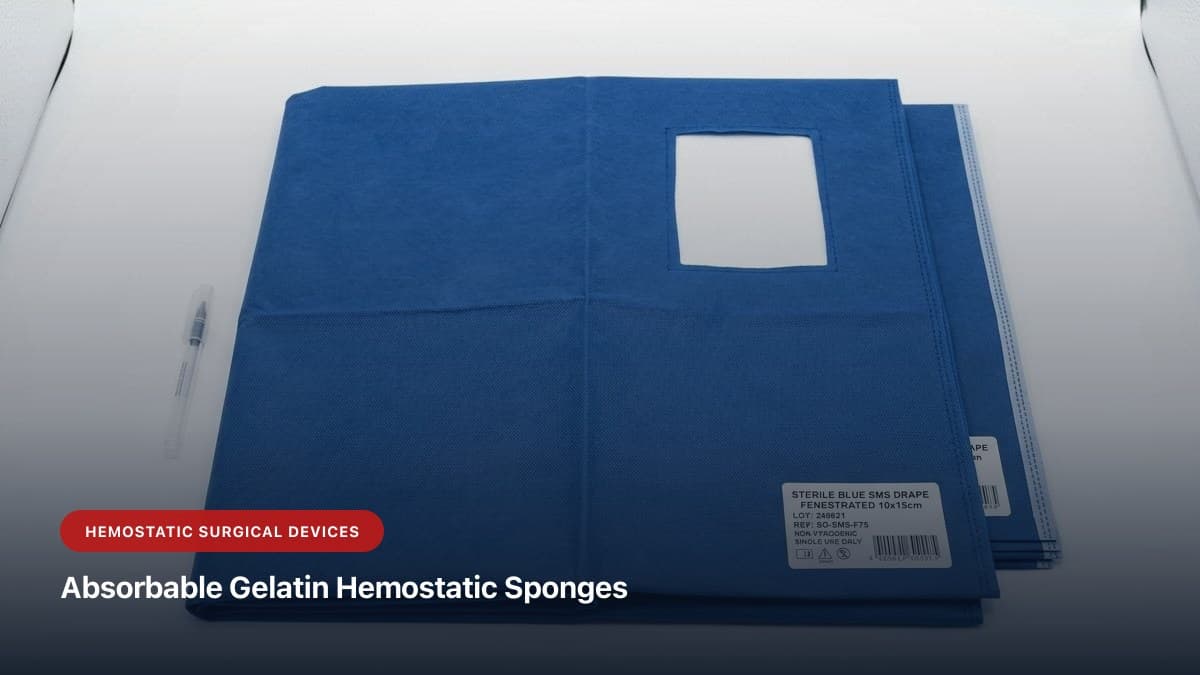
Technical and regulatory guide for Colombian hospital networks and medical importers sourcing X-ray detectable laparotomy sponges and surgical gauze under INVIMA Class IIa sanitary compliance.
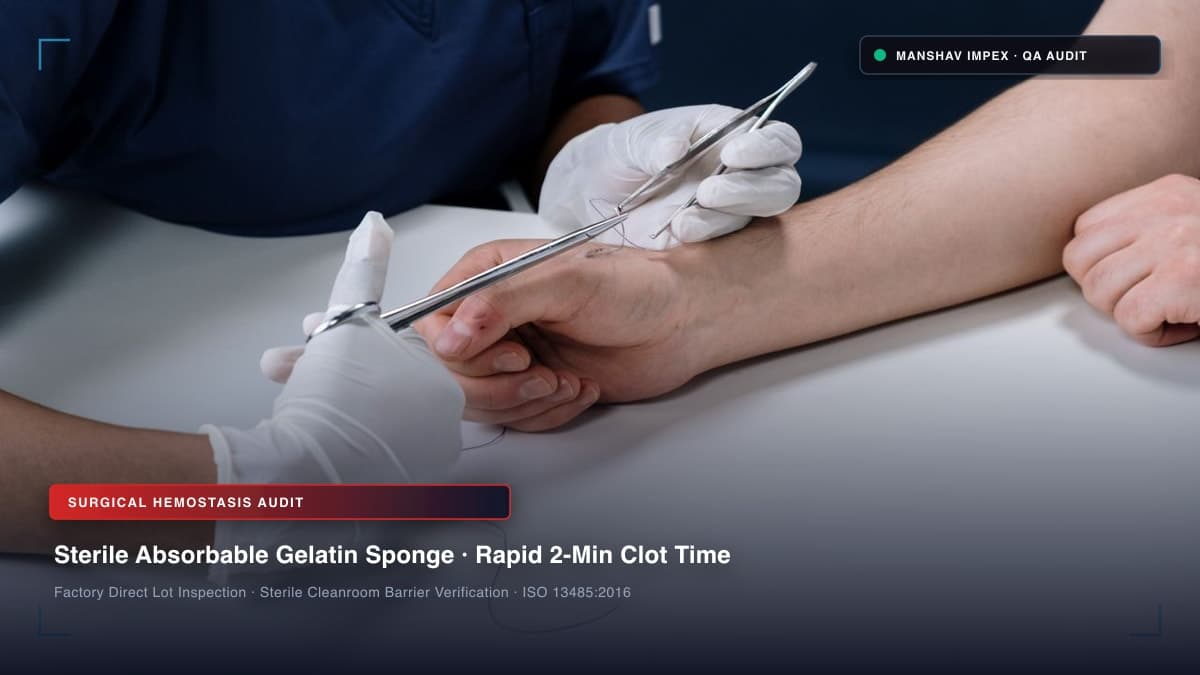
Consignments require Class IIa Sanitary Registration from INVIMA. Manshav Impex delivers pre-washed, lint-free sterile lap sponges directly to Buenaventura and Cartagena ports. Request INVIMA registration files or view our surgical wound dressing products.
During open laparotomy, pelvic surgery, and deep thoracic procedures, surgical sponges are soaked in high volumes of blood and peritoneal fluids. Standard non-detectable gauze poses an extreme hazard of retained foreign bodies post-closure. Manshav Impex lap sponges are manufactured from 100% pure absorbent cotton yarn (40s count) woven into balanced 24x20 or 19x15 mesh structures conforming to USP Type VII specifications. The cotton undergoes chlorine-free bleaching, ensuring high fluid absorbency (> 5 seconds sinking time, holding over 5 times its dry weight in saline).
Critical to surgical safety is the integrated radiopaque element: a flexible blue or black monofilament containing at least 60% medical-grade Barium Sulfate (BaSO4). Unlike cheap competitors who glue radiopaque ribbons onto the surface (which can detach inside the abdominal cavity), our filaments are heat-sealed and interwoven directly into the fabric matrix or anchored by cross-stitching. A reinforced blue cotton loop is sewn into the sponge corner, allowing secure clamping with forceps.
| Quality Parameter | Manshav Impex Lap Sponges (USP Type VII) | Low-Grade Commercial Gauze |
|---|---|---|
| Fabric Composition | 100% Combed Virgin Cotton (Hydrogen peroxide bleached) | Blended cotton/polyester with chemical optical brighteners |
| Radiopaque Element | Woven-in monofilament containing >= 60% Barium Sulfate | Surface glued ribbon (< 35% BaSO4, faint on X-ray) |
| Washing & Lint Prevention | Pre-washed, pre-shrunk, ultrasonic edges (Zero lint) | Unwashed, raw cut edges shedding cotton fibrils |
| Corner Safety Loop | 100% Cotton blue loop, tensile pull strength > 30N | Flimsy loop prone to tearing during retraction |
| Packaging Format | Sterile 5 pcs/pack in double peel pouch; Non-sterile 50s | Loose paper bundling prone to dust contamination |
| Colombia Port Arrival | 26–32 days direct to Buenaventura (Pacific) or Cartagena | 45+ days with multi-port delays |
The Instituto Nacional de Vigilancia de Medicamentos y Alimentos (INVIMA) classifies sterile X-ray detectable surgical sponges as Class IIa medical devices. The registration process requires the submission of an audited ISO 13485:2016 certificate, Certificate of Free Sale (CFS) apostilled under the Hague Convention, biocompatibility reports (ISO 10993-5 cytotoxicity, ISO 10993-10 irritation/sensitization), sterility validation data (ISO 11135 for EO or ISO 11137 for Gamma), and Spanish-language packaging artwork displaying batch numbers and expiry dates.
Ocean containers sail from Mundra Port (INMUN1) through the Atlantic or via Pacific routes, arriving at Puerto de Buenaventura (COBUN) or Puerto de Cartagena (COCTG) in approximately 26 to 32 days. To prevent moisture absorption during maritime transit, master export cartons are sealed in heavy plastic liners and loaded on fumigated wooden pallets.
We offer standard dimensions including 30cm x 30cm (4-ply), 45cm x 45cm (4-ply/6-ply), and customized sizes with sterile double-pouch presentation for Colombian surgical theatres. Request our wholesale export quote.
In the OR, counting sponges is an absolute protocol, but human error can happen under emergency trauma. Having an unambiguous, high-contrast barium sulfate line visible under portable fluoroscopy prevents catastrophic re-operations.
Medical standards require a minimum of 55% to 60% pure barium sulfate (BaSO4) by weight in the radiopaque element to ensure distinct visibility under portable hospital radiography.
Pre-washing removes loose cotton fuzz and starch residues, significantly reducing the risk of foreign-body granulomas and post-operative adhesions in the patient's peritoneal cavity.
They are commonly packaged in lots of 5 sponges tied with a cotton band, sealed inside a double-peel pouch with duplicate sterility indicator dots and dual-count tracking labels.
Yes, INVIMA mandates that all primary and secondary packaging include clear Spanish labelling detailing product name, sterility method, batch number, expiry date, manufacturer details, and Colombian importer information.
USP Type VII gauze absorbs more than five times its own dry weight in distilled water or physiological saline, sinking in under 5 seconds.
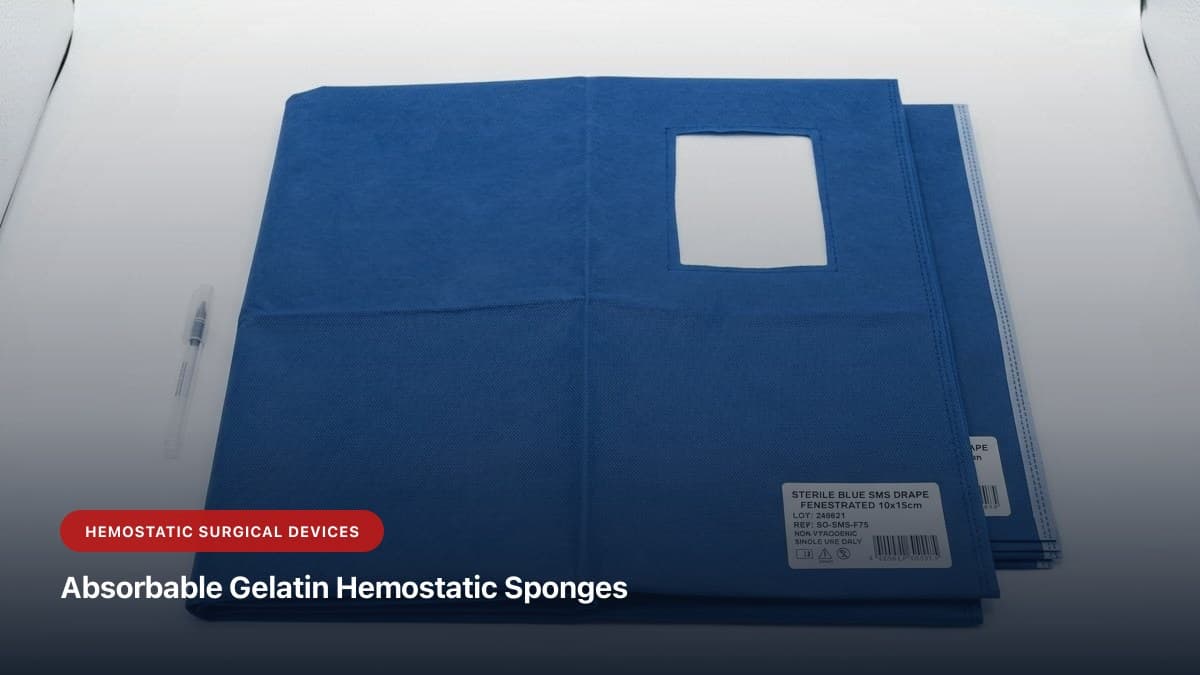
Diffused venous oozing in neurosurgery, spine surgery, and dental extractions cannot be cauterized. Why surgical teams rely on USP absorbable gelatin hemostats.
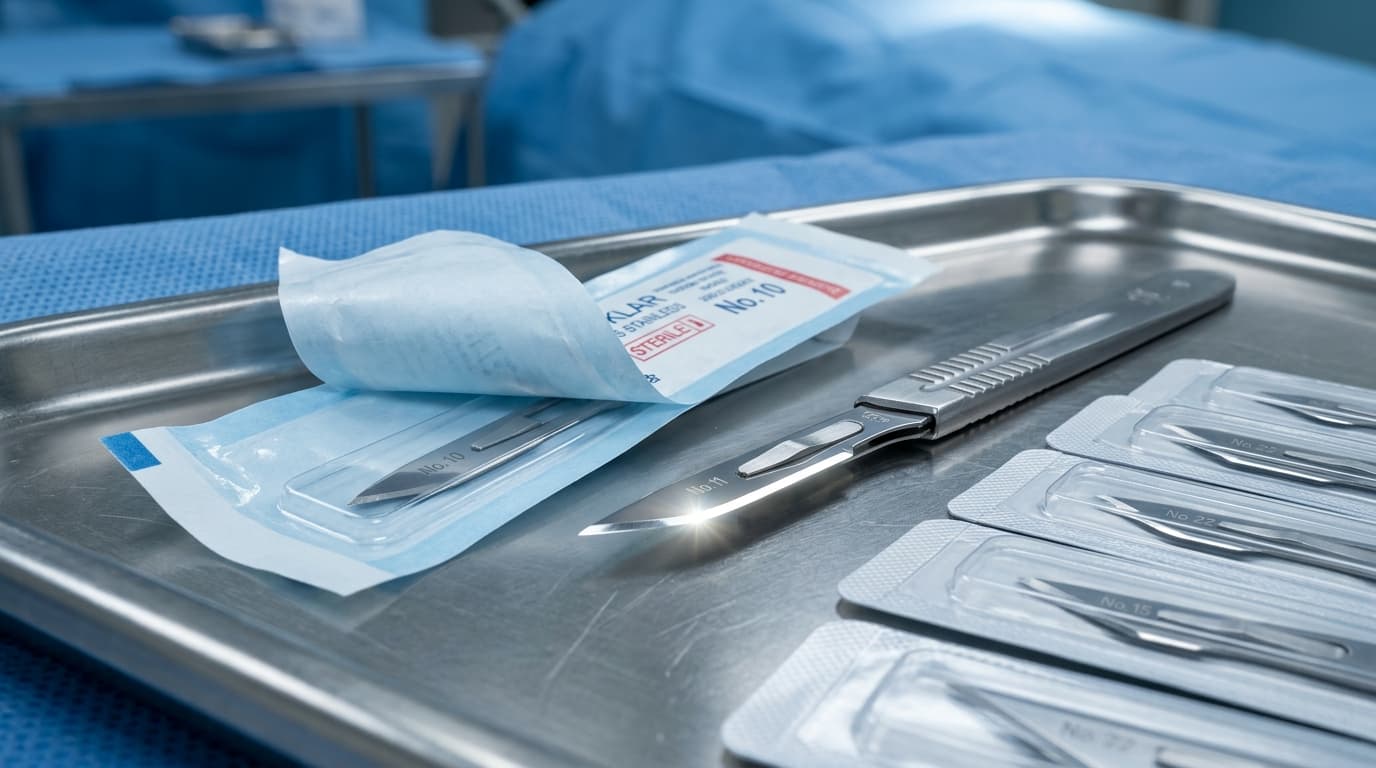
A clinical and engineering breakdown of surgical blade metallurgy (Carbon T10 vs. Stainless AISI 420), micro-honed edge retention, and tropical anti-corrosion packaging.
Clinical and procurement guide for ophthalmic surgical centers sourcing micro-blades, slit keratomes, and irrigation cannulas manufactured in ISO 13485 cleanrooms.