Vietnam's Shift to Single-Use Surgical Blades: What Decree 04/2025 Means for Importers
A distributor supplying three private hospitals around Ho Chi Minh City had a container of surgical blades held at Cat Lai port in February — not because anything inside was unsafe, but because the import dossier still referenced a license format that Decree 04/2025/NĐ-CP had already put on a hard expiry clock. Nobody on the logistics side had actually read the amendment; they'd just kept re-filing last year's paperwork. That kind of gap is becoming more common exactly as Vietnam's hospitals and ambulatory surgery centers move away from resharpened, reprocessed scalpel blades toward sterile single-use ones — a market shift that makes the regulatory fine print matter more, not less.
Sharmil Mangukiya (Founder & MD) 9 min read September 19, 2026
Key Summary & AI Takeaways
Decree 04/2025 didn't rewrite Vietnam's medical device rules from scratch, but it changed deadlines, a licensing portal, and the approval chain right as hospitals pull away from resharpened blades toward single-use. Distributors relying on last year's paperwork are the ones getting held at port.
Decree 04/2025/NĐ-CP, issued and effective 1 January 2025, is the third amendment to Vietnam's core medical device law, Decree 98/2021/NĐ-CP (itself already amended by Decree 07/2023/NĐ-CP). It is a narrower, more technical update than its name suggests: its main substantive provision extends the validity of certain legacy import licenses and in vitro diagnostic registration numbers, issued between 2014 and 2021, through 30 June 2025, rather than rewriting Vietnam's classification or registration framework outright. But narrow doesn't mean low-stakes — the decree lands inside a broader run of changes to how Vietnam processes medical device paperwork, and importers who treat it as a footnote are the ones who get a shipment flagged.
What Decree 04/2025/NĐ-CP actually changed
Since 1 January 2025, medical device licensing in Vietnam runs primarily through the Infrastructure and Medical Device Administration (IMDA) portal at imda.moh.gov.vn, which replaced the legacy dmec.moh.gov.vn system that had run in parallel through the end of 2024. Circular 44/2025/TT-BYT, effective 22 November 2025, layered a further change on top: it decentralizes a number of Ministry of Health administrative procedures out to IMDA and to provincial health departments, meaning approvals that used to route only through Hanoi headquarters can now move through different regional channels — a detail that changes expected turnaround times, not just the letterhead on the certificate. Vietnamese legal commentary on the 2025–2026 transition also flags a harder deadline ahead: from August 2026, Class C and D medical device imports must rely strictly on officially registered circulation numbers, closing the extended legacy import-license pathway that Decree 04/2025 had temporarily kept open.
Where surgical blades and scalpels sit in the classification system
Vietnam classifies medical devices into four risk tiers — A, B, C, D — aligned with the ASEAN Medical Device Directive. Published guidance on the system places items like surgical gauze, conventional examination gloves, and basic hospital beds in Class A, and items like catheters, syringes, and needles in Class B, with X-ray and imaging equipment in Class C and implantable, life-support devices in Class D. A sterile single-use surgical blade sits closer to the needle/catheter category than to gauze — it's an invasive, sharp instrument intended for immediate use on a patient — but the exact classification is a case-by-case determination made by an MOH-accredited classification body, not something a distributor should assume from the product category. Getting that classification opinion in writing determines whether the import route is Class A's simpler declaration of applied standards (filed at the provincial Department of Health) or Class B's marketing-authorization/circulation-number process. Surgical instruments generally also carry HS heading 9018.90.90 under the standardized device-HS code list in Circular 19/2024/TT-BYT (effective 16 November 2024); customs at ports like Cat Lai cross-checks that HS code against the MOH classification result, and a mismatch is one of the more common triggers for a red-channel physical inspection.
Confirm classification before you ship, not after
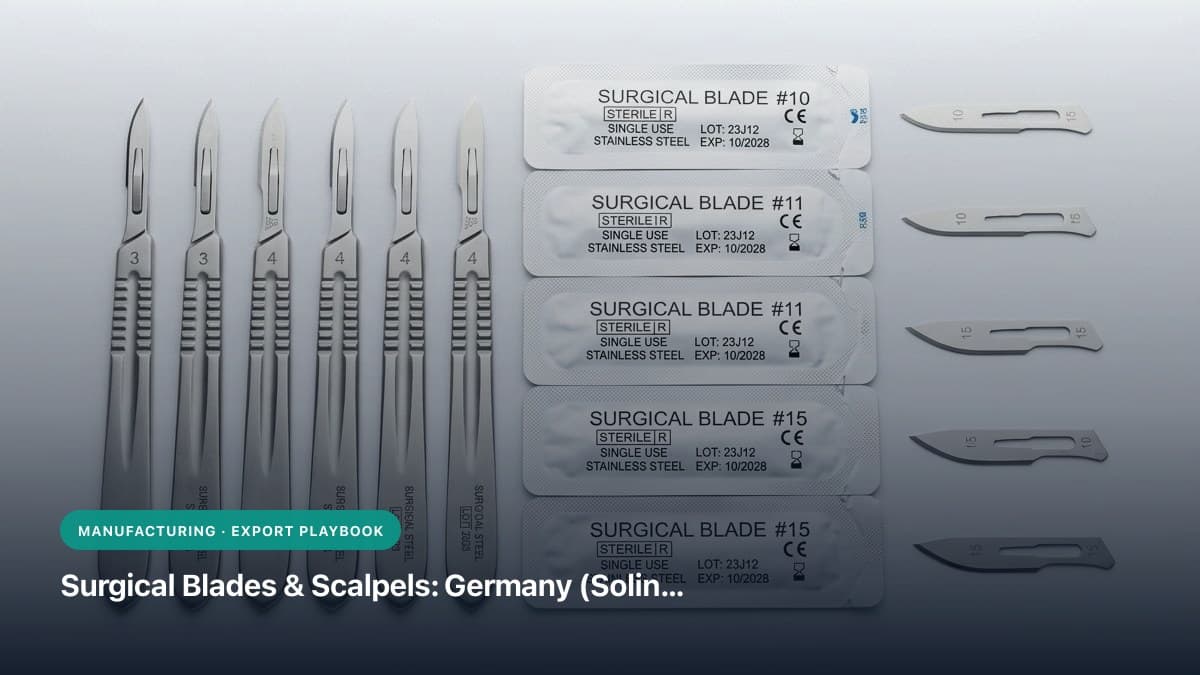
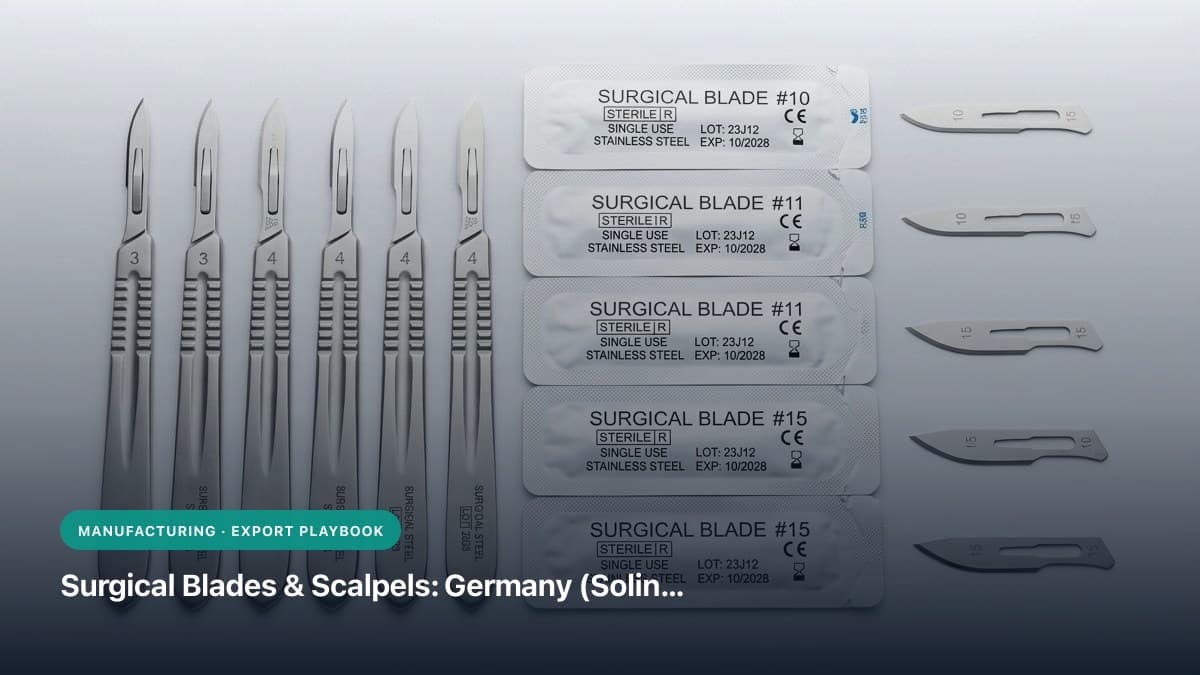
Get the classification opinion in writing and match it to your HS code before a container leaves port. Browse our sterile surgical blades range, check the certifications documentation your distributor's classification body will ask for, or request a quote sized to a single ASC order or a multi-hospital distributor booking.
Why Vietnamese hospitals are moving to single-use anyway
The regulatory changes are landing on top of a real shift in buying behavior. Within Vietnam's general surgery devices market, market research firm Ken Research reports that the single-use share of standardized procedure volume rose from 54% in 2020 to 63% in 2025 — a five-year swing away from resharpened, reprocessed instruments toward disposables. The same research notes that more than 90% of Vietnam's broader medical equipment and supply demand is import-dependent, meaning almost none of that swing can be absorbed by domestic manufacturing capacity. Vietnam's surgical instruments market specifically was estimated at roughly $211 million in 2025, projected to grow past $490 million by 2034, while the narrower general surgery devices segment was estimated near $75 million in 2025. Ken Research also puts the country's hospital count at 1,645 in 2024, including 384 private hospitals — and private and ambulatory facilities are typically the segment least equipped to run in-house reprocessing and resharpening operations, which is part of why they lean toward single-use in the first place.
Item
Detail
Governing framework
Decree 98/2021/NĐ-CP, amended by Decree 07/2023/NĐ-CP and Decree 04/2025/NĐ-CP (effective 1 Jan 2025)
Licensing portal
IMDA — imda.moh.gov.vn (live since 1 Jan 2025; replaced legacy dmec.moh.gov.vn)
From August 2026, Class C/D imports need a registered circulation number — no further extensions reported
Device classification system
Four-tier A/B/C/D, aligned with the ASEAN Medical Device Directive (AMDD)
Typical HS heading, surgical instruments
9018.90.90 (Circular 19/2024/TT-BYT device-HS code list, effective 16 Nov 2024)
Vietnam surgical instruments market size
~$211 million (2025), projected toward ~$490 million by 2034
What single-use blades cost to source
Pricing on sterile surgical blades varies with steel grade, packaging format, and order volume. Indicative export-listing ranges from Indian manufacturers show a wide spread between bulk carbon-steel boxes and individually foil-wrapped sterile pieces built for single-procedure kits — the kind of format ambulatory surgery centers increasingly ask for.
Blade format
Indicative FOB India export range*
Typical buyer fit
Carbon steel blades, bulk box (~100 pcs)
$1.50 – $3.00 per box
High-volume general hospital wards
Stainless steel blades, bulk box (~100 pcs)
$2.50 – $4.50 per box
Private hospitals, standard OR use
Individually foil-wrapped sterile blades
$0.15 – $0.30 per piece
Ambulatory surgery centers, single-procedure kits
Specialty/precision blades (ophthalmic, micro)
$0.30 – $1.00+ per piece
Aesthetic, ophthalmic, plastic surgery clinics
*Figures are indicative, drawn from public B2B export listings rather than fixed quotes — confirm landed cost against your exact spec and volume before committing a container.
Reusable resharpened blades vs single-use: the comparison distributors keep getting asked about
As hospitals decide whether to renew in-house reprocessing and resharpening contracts or move a department to disposables outright, distributors are often the ones asked to lay out the trade-off in plain terms.
Factor
Reusable/resharpened blades
Single-use sterile blades
Per-procedure cost
Lower unit cost, but a recurring reprocessing/resharpening fee applies
Higher unit cost, no reprocessing fee
Infection control
Depends on reprocessing quality control at the facility
Sterile at point of use; no reprocessing-failure exposure
Regulatory obligation
Same MOH classification and registration requirements apply
Same MOH classification and registration requirements apply — going disposable doesn't reduce the dossier
Facility fit
Works where in-house CSSD/reprocessing capacity exists
Better fit for ASCs and private clinics without in-house reprocessing
Vietnam market direction
Shrinking share per Ken Research (54% → 63% single-use, 2020–2025)
Growing share of standardized procedure volume
A decree that only extends a deadline doesn't feel like news until the deadline arrives and half the shipments in transit are still carrying the paperwork it replaced. The importers caught out by Decree 04/2025 weren't ignoring Vietnamese law — they were relying on a portal and a license format that had already been quietly retired.
What this means for your next order
Confirm whether your specific blade SKU's classification opinion sits in Class A (declaration of applied standards, filed provincially) or Class B (marketing authorization/circulation number) — never assume by product category.
Check any import license or legacy registration your current dossier relies on against the 30 June 2025 extension deadline in Decree 04/2025 — anything predating that needs renewal, not reuse.
Cross-verify the HS code your freight forwarder is filing (commonly 9018.90.90 for surgical instruments) against the MOH classification result before the shipment reaches port — mismatches are a common trigger for red-channel inspection.
If you're advising a hospital or ASC client on reusable vs. single-use, price the reprocessing/resharpening fee as a recurring line item, not a one-time sunk cost.
Track Circular 44/2025/TT-BYT's decentralization — approvals that used to sit only with MOH headquarters may now route through IMDA regional or provincial channels, changing your expected timeline.
None of this replaces registration work specific to your buyer's exact product code and classification opinion. But Vietnam's medical device framework keeps moving even when the headline change looks small, and a distributor who treats a decree amendment as a formality is the one left explaining a port hold to a hospital client waiting on an OR schedule.
Frequently asked questions
What does Decree 04/2025/NĐ-CP actually change for medical device importers?
It's the third amendment to Decree 98/2021/NĐ-CP (following Decree 07/2023/NĐ-CP), issued and effective 1 January 2025. Its core provision extends the validity of certain legacy import licenses and in vitro diagnostic registration numbers, issued between 2014 and 2021, through 30 June 2025, rather than rewriting Vietnam's classification or registration framework outright.
Are surgical blades and scalpels Class A or Class B medical devices in Vietnam?
It depends on the specific product's classification opinion. Vietnam's four-tier A/B/C/D system, aligned with the ASEAN Medical Device Directive, places items like gauze and conventional gloves in Class A and items like catheters, syringes and needles in Class B. A sterile single-use surgical blade should be classified case-by-case by an MOH-accredited classification body, not assumed from its category.
What licensing portal do importers need to use now?
Since 1 January 2025, Vietnam's Infrastructure and Medical Device Administration (IMDA) runs the primary licensing portal at imda.moh.gov.vn, which replaced the legacy dmec.moh.gov.vn system that operated in parallel through the end of 2024.
Is Vietnam's hospital sector really moving away from reusable surgical blades?
Market research from Ken Research shows the single-use share of standardized procedure volume in Vietnam's general surgery devices market rose from 54% in 2020 to 63% in 2025. Private hospitals and ambulatory facilities, which more often lack in-house reprocessing capacity, are a growing share of the 1,645 hospitals reported nationally in 2024.
What HS code applies to imported surgical blades in Vietnam?
Surgical instruments generally fall under HS heading 9018.90.90 per the standardized device-HS code list issued in Circular 19/2024/TT-BYT (effective 16 November 2024). The exact code should still be confirmed against your product's classification result, since HS code and MOH classification mismatches are a common cause of customs holds.
What changes for importers from August 2026?
Vietnamese legal commentary on the 2025–2026 transition indicates that from August 2026, Class C and D medical device imports must rely strictly on officially registered circulation numbers, closing out the extended legacy import-license pathway that Decree 04/2025 kept open temporarily.
Do single-use blades need the same registration as reusable ones?
Yes. Classification and registration requirements apply based on the device's risk class and intended use, not on whether it's reusable or single-use. Switching a hospital department from resharpened to disposable blades doesn't reduce the regulatory dossier a distributor needs to hold.
Manshav Impex
Manshav Impex is a global exporter of medical devices, surgical consumables and healthcare solutions, serving importers, distributors, hospitals and governments in 48+ countries.