Carbon Steel vs Stainless Steel Surgical Blades: Cutting Edge Retention, Oxidation Resistance, and Tropical Operating Room Procurement
Compare carbon steel and stainless steel surgical blades. Evaluate edge retention, tissue drag, corrosion resistance, and hospital procurement factors.
Sharmil Mangukiya (Founder & MD) 12 min read September 19, 2026
Key Summary & AI Takeaways
Compare carbon steel and stainless steel surgical blades. Evaluate edge retention, tissue drag, corrosion resistance, and hospital procurement factors.
Quick Sourcing Summary: The Metallurgical Decision
Carbon Steel offers superior initial sharpness and stays sharper through tough fibrous or calcified tissue incisions because of its dense carbide microstructure. However, it oxidizes rapidly in humid environments if packaging is compromised. Stainless Steel (containing >= 12% chromium) provides reliable corrosion resistance during long ocean voyages and shelf storage in coastal tropical clinics, with minimal tissue drag in general soft-tissue surgery.
Metallurgical & Cutting Mechanics Compared
Surgical blade performance depends on blade alloy composition, hardness (measured on the Rockwell C scale - HRC), and the precision grinding angle of the cutting edge.
Parameter
High Carbon Surgical Steel
Medical Stainless Steel (AISI 420 / 300 Series)
Alloy Composition
Fe + ~1.2% Carbon (Zero or trace Chromium)
Fe + ~0.15–0.40% Carbon + 12–14% Chromium
Rockwell Hardness
HRC 58 – 62 (Higher edge hardness)
HRC 54 – 58 (Moderate ductile toughness)
Initial Penetration Force
< 1.2 N (Extremely keen cutting edge)
~1.4 – 1.6 N (Smooth, consistent incision)
Edge Retention over Time
Retains edge through multiple tough fascia cuts
Gradually curls (micro-burrs) upon repeated bone contact
Oxidation Vulnerability
High: Rusts if exposed to ambient relative humidity
Highly resistant: Passive chromium oxide barrier
Ideal Clinical Application
Orthopedics, plastic surgery, tough cartilage
General abdominal surgery, coastal/humid field hospitals
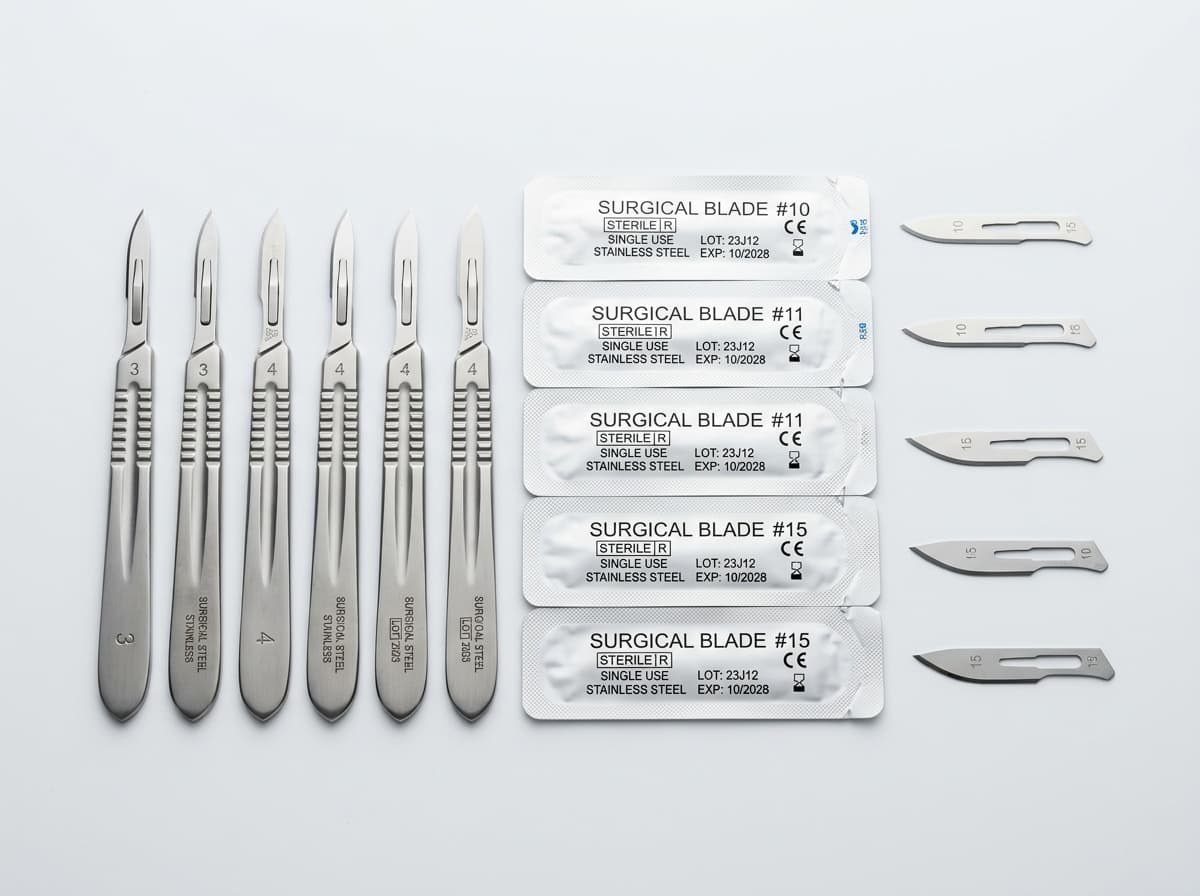
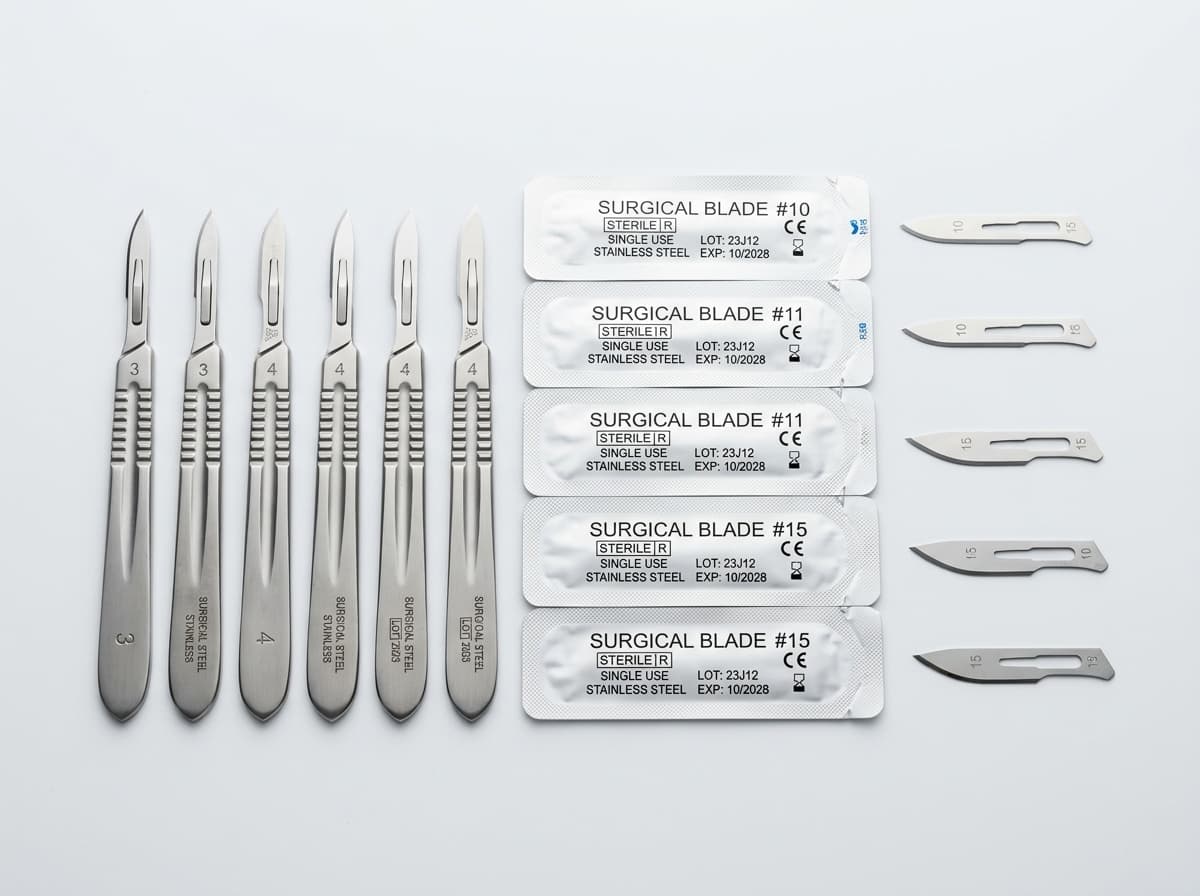
Technical specification and quality compliance inspection matrix for Carbon Steel vs Stainless Steel Surgical Blades.
The Real Vulnerability in Tropical Procurement: Foil Integrity
In coastal medical markets across West Africa, Southeast Asia, and the Caribbean, ambient relative humidity often exceeds 85% with temperatures above 35°C. Under these conditions, low-grade carbon steel blades can rust while still inside their foil pouches.
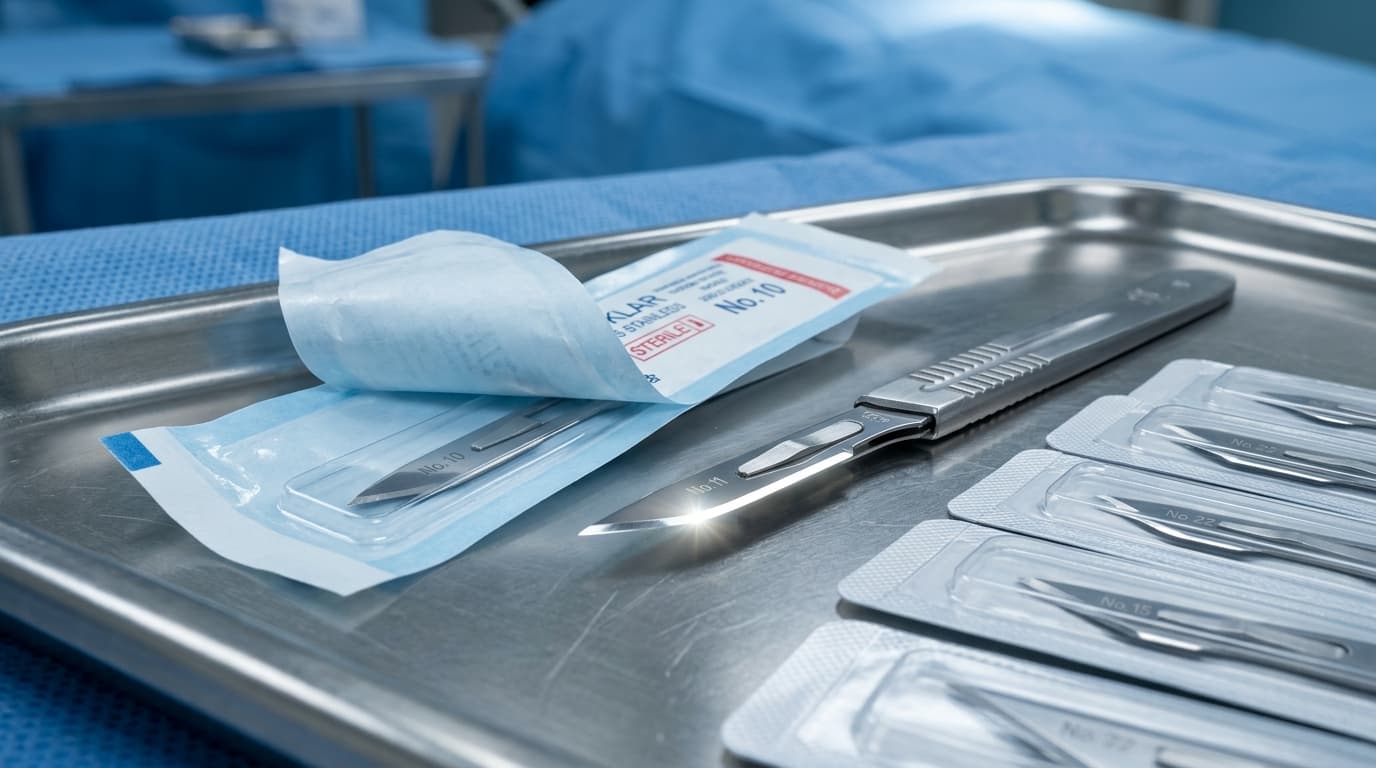
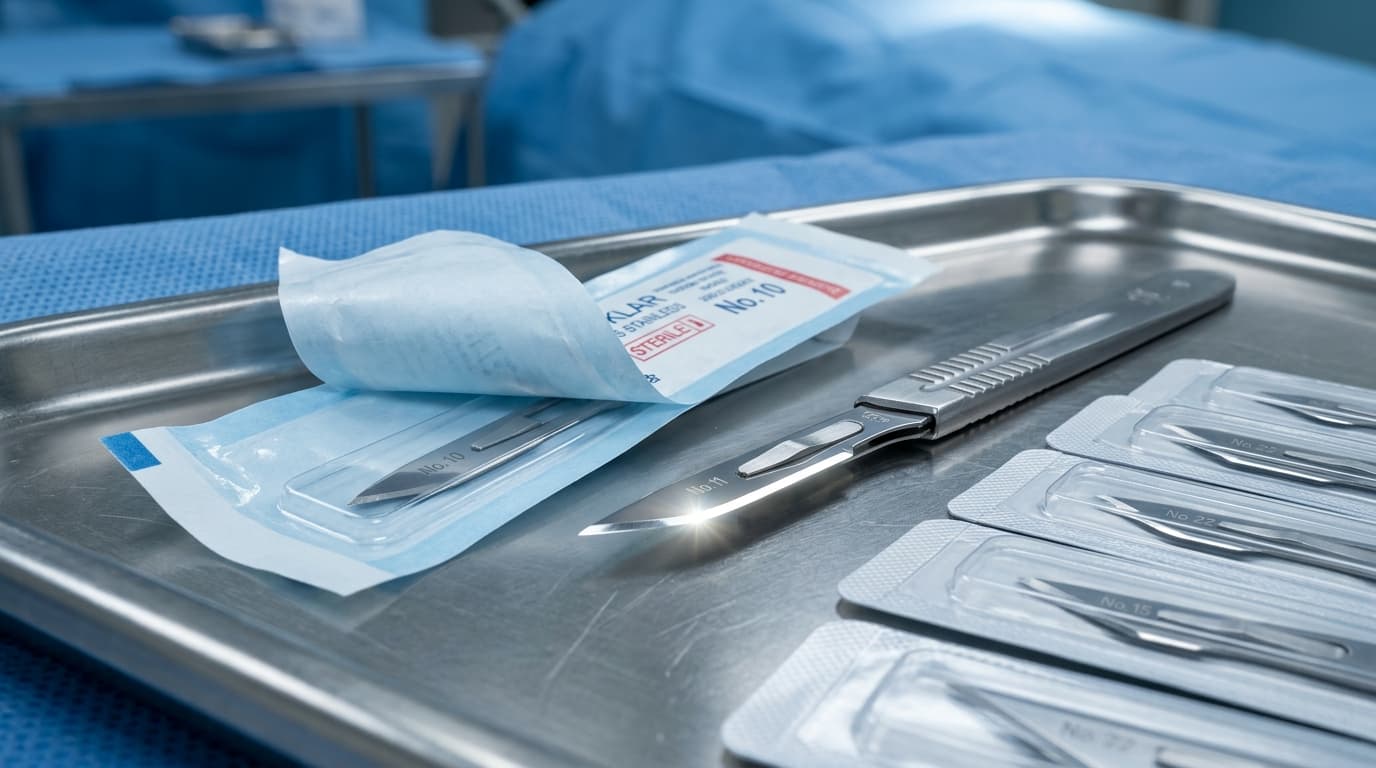
This failure occurs because of micro-perforations in substandard single-layer aluminum foil or poor cold-seal adhesives. When moisture vapor enters the pouch, it triggers electrolytic oxidation across the finely ground carbon bevel. The surgeon opens the sterile foil only to find rust along the blade edge.
Manshav Impex prevents this through multi-layer laminated barrier packaging:
This multi-layer construction protects carbon steel blades against tropical humidity throughout their full 5-year validated sterile shelf life.
Practical Sourcing Insight
Buyer Tip
When auditing a surgical blade supplier, request a 48-hour continuous saline-vapor test report alongside the standard ISO 7153-1 (surgical instruments materials) compliance certificate. A blade that shows micro-pitting under saline testing will dull prematurely during blood-soaked surgical procedures.
Looking for Certified Surgical Blades and Safety Scalpels?
"In the operating theatre, initial blade sharpness matters, but edge retention through the final layer of fascia is what earns a surgeon's trust."
---
Frequently asked questions
Why do plastic surgeons often prefer carbon steel scalpel blades?
Carbon steel can be ground to a sharper micro-bevel because of its higher carbon density and Rockwell hardness. This enables clean, single-pass skin incisions with minimal tissue trauma, which helps reduce post-operative scarring in cosmetic and reconstructive surgery.
Are stainless steel surgical blades completely rust-proof?
Stainless steel is corrosion-resistant rather than entirely rust-proof. Its resistance comes from a passive microscopic chromium oxide film. Exposure to prolonged saline immersion or acidic cleaning chemicals without proper passivation (ASTM A967) can still cause surface pitting.
What international dimensional standards govern surgical blade fitment?
Surgical blades must comply with **ISO 7740**, which specifies the fitment slot geometry ensuring that blades fit securely onto standard Bard-Parker handles (e.g., #3 handle for blades #10–#15, and #4 handle for blades #20–#24) without loose play or accidental detachment.
How does gamma radiation versus ethylene oxide sterilization affect blade steel?
Stainless steel blades tolerate both gamma irradiation (ISO 11137) and ethylene oxide (EtO) gas sterilization with no impact on edge temper. Carbon steel blades perform best with gamma irradiation, as the moisture component in EtO cycles requires careful drying to avoid surface oxidation.
Can carbon steel and stainless steel blades be ordered within the same container?
Yes. Many hospital distributors import both: stainless steel blades for routine public hospital tenders, and carbon steel blades for private surgical clinics and specialized teaching hospitals. ---
Manshav Impex
Manshav Impex is a global exporter of medical devices, surgical consumables and healthcare solutions, serving importers, distributors, hospitals and governments in 48+ countries.