In operating theatres, sterile pharmaceutical manufacturing suites, and hospital isolation units, human personnel are the single largest source of particulate shedding and microbial contamination. Shed hair, epidermal scales, and outdoor shoe-borne contaminants represent severe vectors for surgical site infections (SSI). To maintain sterile field integrity, healthcare institutions enforce mandatory donning of disposable non-woven headwear (bouffant caps, surgeon mob caps) and protective footwear covers. While these products are often treated as low-cost commodities, low-grade imported caps frequently suffer from brittle elastic bands that snap during donning or shed fibrous lint directly into surgical incisions. Similarly, cheap, slick plastic shoe covers present severe slip-and-fall hazards on wet surgical floors. Sourcing certified Indian spunbond polypropylene headwear and chlorinated polyethylene (CPE) anti-skid shoe covers guarantees elastic durability, lint-free cleanliness, and reliable supply chain consolidation. This guide reviews the textile specifications, elastic testing, and container logistics for cleanroom apparel.
Sharmil Mangukiya (Founder & MD) 2 min read September 27, 2026
Key Summary & AI Takeaways
Cleanroom and operating theatre particulate containment begins with headwear and footwear. Low-grade caps with snapped elastics disrupt sterile surgical protocols.
Hospital protective headwear and footwear manufactured in India utilize 100% virgin spunbond polypropylene (SBPP) non-woven fabric (10–14 GSM for bouffant caps; 25–40 GSM for surgeon caps) and heavy-duty chlorinated polyethylene (CPE) or non-woven PP with printed latex/silicone anti-skid treads for shoe covers. Essential procurement checks include double-stitched or ultrasonic-welded synthetic rubber elastic bands with 300% elongation, lint-free ISO Class 8 cleanroom manufacturing, and tight vacuum packaging maximizing container shipping density.
Product Categories & Technical Specifications
Operating theatre and cleanroom protocols mandate specific garment formats based on procedure risk and environmental moisture levels:
Product Category
Material & Grammage
Sizing Options
Key Performance Feature
Primary Healthcare Use
Bouffant Cap (Pleated Mob Style)
Spunbond PP (10 – 14 GSM)
18", 21", 24" diameter expanded
Accordion-pleated strip opening into full hair containment bubble
General ward staff, visitors, food service, routine clinic exams
Surgeon Cap with Ties
Breathable SBPP (25 – 35 GSM)
Universal (Tied at back of neck)
Absorbent sweatband forehead strip and structured crown shape
Surgeons and scrub nurses in operating theatres
Anti-Skid CPE Shoe Cover
Chlorinated Polyethylene (CPE 2.5g – 5.0g per piece)
15 x 40 cm (Universal / XL)
100% waterproof barrier with deep embossed diamond traction pattern
Wet surgical scrub rooms, autopsy suites, isolation areas
Elastic Band Durability & Particle Shedding Standards
The primary clinical failure mode for disposable protective apparel is premature elastic snap or unraveling during donning:
Encapsulated Elastic Welding: The elastic band must be fully encapsulated within an ultrasonic heat-welded or continuous lock-stitched hem, ensuring the rubber string cannot pull free from the fabric edge under tension.
Elongation & Tensile Pull Strength: The finished elastic band must stretch to a minimum of 3 times its relaxed length (300% elongation) and resist an axial tensile pull force exceeding 12 Newtons without breaking.
Helmke Drum Particle Shedding: Tested in accordance with IEST-RP-CC003.4 for cleanroom garments. Virgin polypropylene fibers must demonstrate low lint characteristics, classified as Category I/II cleanroom compatible.
Manshav FCL Consolidation Strategy
Because caps and shoe covers have a very low price per cubic meter, importing them as standalone ocean containers can result in high freight-to-value ratios. Manshav Impex specializes in 'cargo top-loading,' using lightweight compressed cartons of caps and shoe covers to fill the overhead void space above heavy palletized shipments of surgical blades, gloves, or IV fluids.
Incorporate certified disposable bouffant caps, surgeon caps, and anti-skid shoe covers into your consolidated medical supply containers.
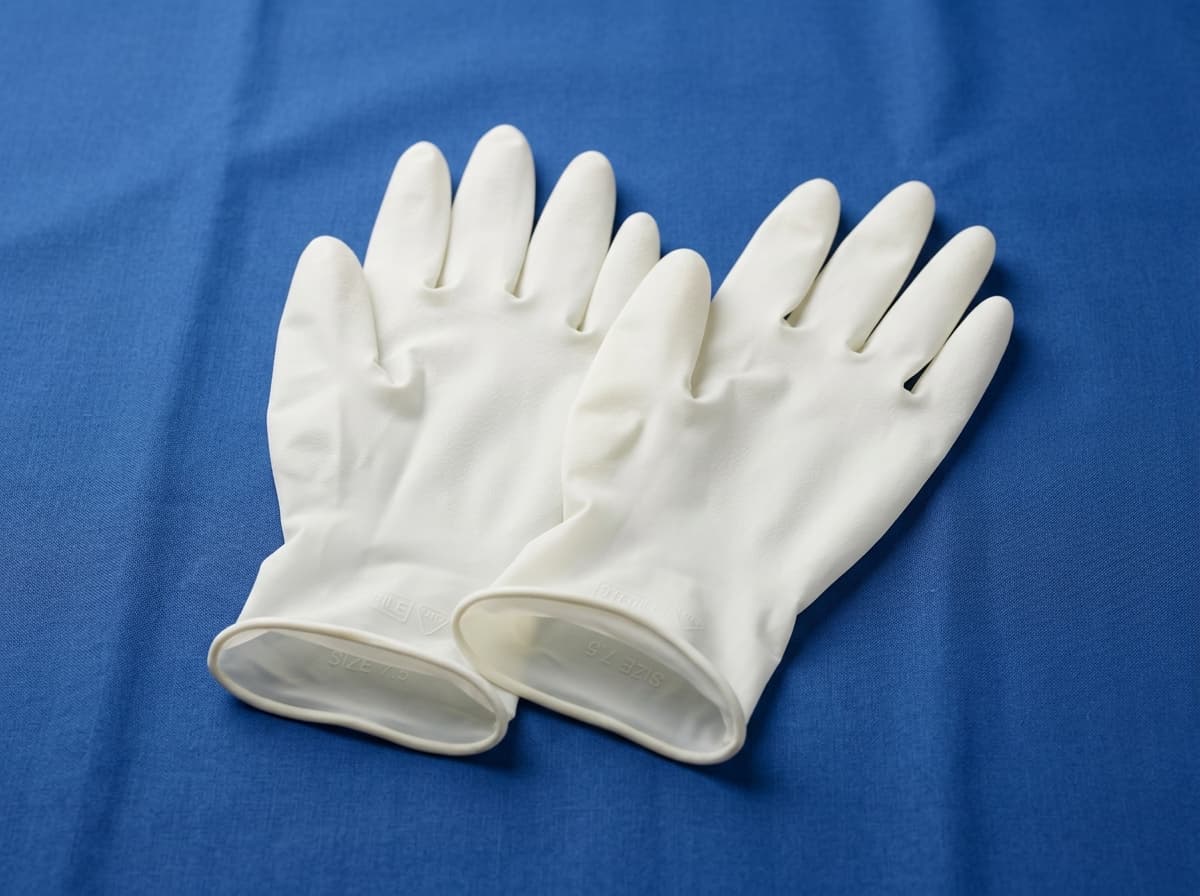
Pre-donned sterile natural latex surgical gloves with curved anatomical fingers, micro-textured anti-slip finish, beaded cuff, available in powdered and powder-free polymer coated grades. Container consignments dispatched from Port Mundra & Port Nhava Sheva, with certificates and test reports shared with every quotation.
Made to CE MDRMade to ISO 13485Made to EN 455Made to ASTM D3577MOQ: 50,000 pairs
What is the difference between a 18-inch and a 21-inch bouffant cap?
An 18-inch cap is designed for personnel with short hair, providing a compact, snug fit. A 21-inch or 24-inch bouffant cap offers a significantly larger volumetric bubble, designed to completely enclose long, thick, or braided hair without pulling or popping off during surgery.
Are CPE shoe covers better than non-woven shoe covers?
CPE (plastic) shoe covers are 100% waterproof and fluid-impermeable, making them superior for procedures involving heavy liquid washdown (orthopedic joint replacement, urology TURP, and labor/delivery). Non-woven shoe covers are softer and more breathable, making them superior for dry cleanrooms and day-long surgical ward wear.
Are disposable caps and shoe covers latex-free?
Yes. All export-grade Indian medical apparel uses synthetic spandex or heat-welded synthetic elastomer rubber bands that are 100% latex-free, preventing Type I allergic reactions in sensitized healthcare staff.
What is the master carton packing density for bouffant caps?
Accordion-pleated mob caps are packed 100 units per polybag, 10 or 20 polybags per master carton (1,000 to 2,000 caps per carton). A 40ft High Cube container can hold up to 1,500,000 to 2,000,000 bouffant caps when vacuum-baled.
Sharmil Mangukiya (Founder & MD)
Sharmil Mangukiya is the founder and managing director of Manshav Impex, an Indian manufacturer & exporter of medical disposables serving importers, distributors, hospitals and governments in 48+ countries since 2019.