Manufacturing

3-Ply Surgical Face Masks ASTM Level 3 / Type IIR Manufacturer India: Splash-Resistance Guide

During invasive surgical procedures, operating theatre teams face the dual hazard of inhaling aerosolized airborne pathogens and being struck by high-velocity arterial blood or body fluid splashes. While the post-pandemic market was flooded with low-cost commercial '3-ply' civil masks, hospital infection control committees strictly differentiate general hygiene face covers from certified medical surgical masks conforming to ASTM F2100 (Level 1, 2, and 3) in the United States and EN 14683 (Type I, II, and IIR) in Europe. The critical differentiator is fluid splash resistance: while basic Level 1 masks withstand only 80 mmHg of synthetic blood splash, ASTM Level 3 and EN 14683 Type IIR masks resist arterial spurts at 160 mmHg while maintaining Bacterial Filtration Efficiency (BFE) and Particle Filtration Efficiency (PFE) exceeding 99%. This guide reviews the meltblown filtration core, differential breathability pressures, and sourcing criteria for certified Indian surgical masks.

3-Ply Surgical Face Masks ASTM Level 3 / Type IIR Manufacturer India: Splash-Resistance Guide
Key Summary & AI Takeaways

In operating rooms, standard dust masks or Level 1 procedure masks fail against high-velocity arterial blood spray. Hospital surgical teams require ASTM Level 3 / Type IIR splash resistance at 160 mmHg.

Quick Buyer Summary: ASTM Level 3 / Type IIR Masks

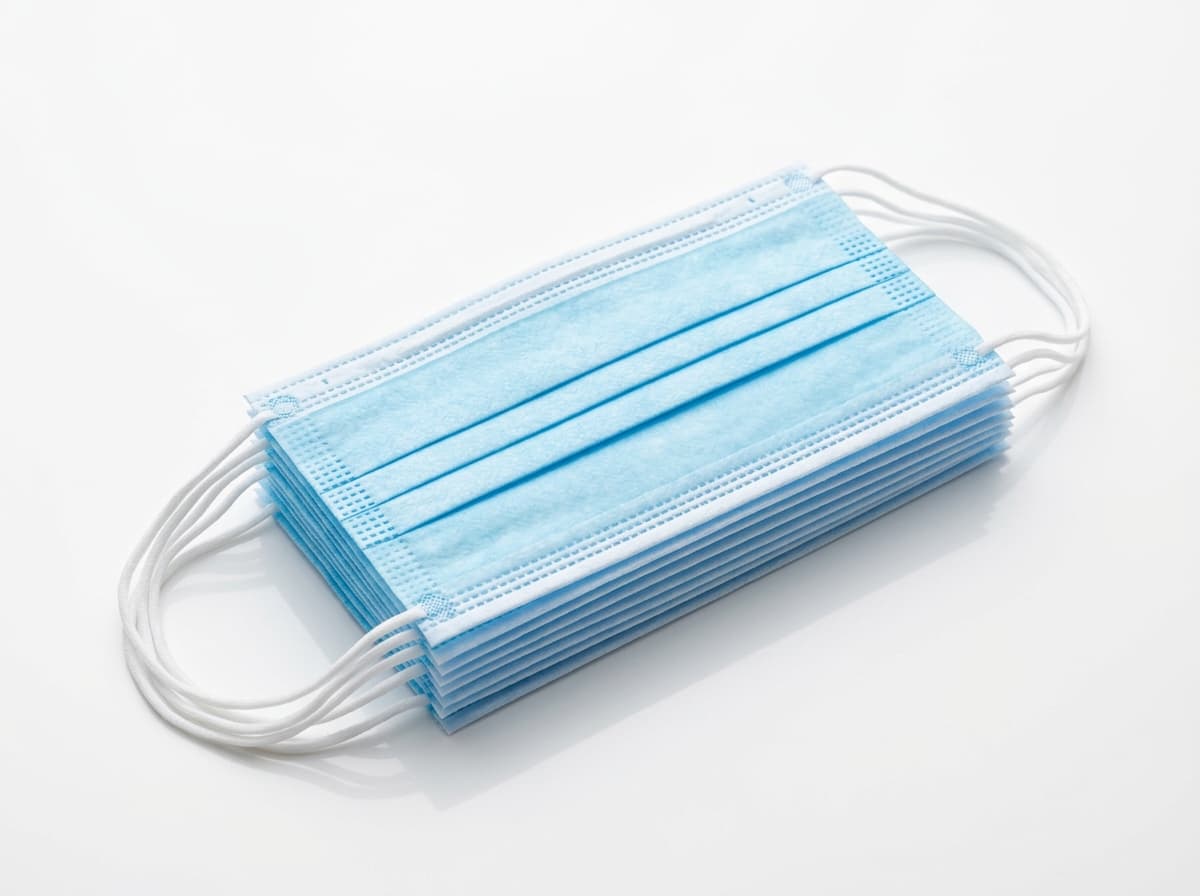
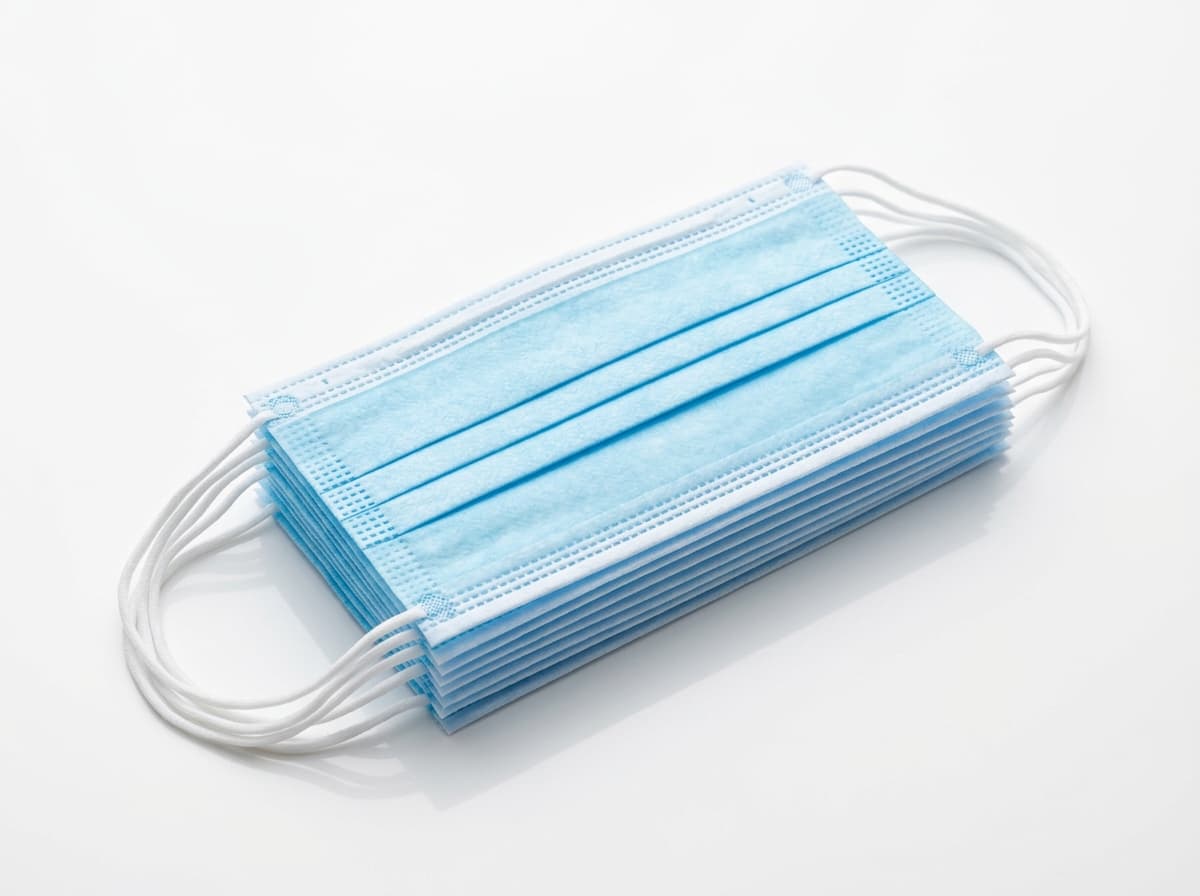
Surgical face masks manufactured in India for hospital operating theatres are composed of a 3-ply ultrasonic-welded structure: an outer fluid-repellent spunbond polypropylene layer, a middle electrostatic meltblown filtration layer (25–30 GSM with BFE ≥ 99% and PFE ≥ 99% at 0.1 micron), and an inner skin-friendly soft spunbond layer. Compliant Level 3 / Type IIR masks provide synthetic blood splash resistance at 160 mmHg (ASTM F1862 / ISO 22609), a differential pressure (breathability Delta P) below 5.0 mm H2O/cm2, and flame spread resistance (Class 1).

Performance Standards Matrix: ASTM F2100 vs EN 14683

Tender specifications must define whether compliance is aligned with North American (ASTM) or European (EN) clinical standards:

Physical Test MetricASTM F2100 Level 1 (Procedure)ASTM F2100 Level 2 (Moderate)ASTM F2100 Level 3 / EN 14683 Type IIRClinical Protection Rationale
Bacterial Filtration Efficiency (BFE %)≥ 95%≥ 98%≥ 99% (Staphylococcus aureus at 3.0 µm)Captures exhaled droplets and aerosolized bacteria
Particle Filtration Efficiency (PFE %)≥ 95% at 0.1 µm≥ 98% at 0.1 µm≥ 99% (Latex spheres at 0.1 µm)Captures sub-micron viral carriers and electrosurgical smoke
Synthetic Blood Splash Resistance80 mmHg120 mmHg160 mmHg (High arterial spurts)Protects mucous membranes against pressurized blood vessel transection
Differential Pressure (Delta P)< 5.0 mm H2O/cm2< 6.0 mm H2O/cm2< 6.0 mm H2O/cm2 (< 60 Pa/cm2 for Type IIR)Ensures comfortable breathing during 4+ hour surgical operations
Flammability RatingClass 1Class 1Class 1 (16 CFR Part 1610)Prevents ignition from surgical lasers and electrocautery sparks

The Meltblown Electret Core: Electrostatic vs Mechanical Filtration

A mask's bacterial and particulate filtration does not depend on thick, suffocating fabric; it depends on an electrostatic charge permanently embedded in the micro-fibers of the meltblown polymer:

  • Fiber Diameter: Meltblown polypropylene fibers are extruded at high velocity to achieve diameters of 1 to 5 microns, forming an intricate random web.
  • Corona Electret Charging: During production, the meltblown sheet passes through high-voltage electric fields, imparting a permanent electrostatic charge that attracts and traps sub-micron viral particles without obstructing airflow.
  • Ultrasonic Earloop Welding: High-tensile elastic earloops or surgical tie-on bands must be ultrasonically bonded to withstand a minimum tensile pull force of 10 Newtons without detachment.
  • Enclosed Full-Length Nosepiece: Pliable aluminum or plastic-coated galvanized wire (minimum length 100 mm) conforming closely to the nasal bridge, eliminating eye-fogging for surgeons wearing loupes or protective glasses.
Quality Warning: Detecting Fake Meltblown

Low-grade commercial suppliers frequently substitute regular spunbond non-woven for the middle filter layer. Spunbond has zero electrostatic charge and drops filtration efficiency to below 60%. A simple field burn test reveals real meltblown melts into a clear resin without flaming, whereas paper or poor substitutes char or burn with black smoke.

Procure verified Nelson Labs or certified lab-tested surgical masks in bulk container quantities from Manshav Impex.
Request ASTM Level 3 / Type IIR Mask Test Reports
🏭 Export Sourcing DeskIndian Manufacturer & Exporter — Vetted Factory Network
3-Ply Surgical Face Mask (Type II & Type IIR Fluid Resistant) manufacturer India

3-Ply Surgical Face Mask (Type II & Type IIR Fluid Resistant)

Certified 3-layer surgical face mask featuring high-efficiency meltblown filter media (BFE ≥ 98%, PFE ≥ 98%), malleable nose bridge, and ultrasonic welded soft ear loops or surgical head ties. Container consignments dispatched from Port Mundra & Port Nhava Sheva, with certificates and test reports shared with every quotation.

Made to CE MDRMade to ISO 13485Made to EN 14683 Type IIRMade to ASTM F2100 Level 3MOQ: 200,000 pcs

Frequently asked questions

What is the difference between tie-on surgical masks and earloop procedure masks?

Tie-on masks feature four non-woven fabric ribbons that are tied behind the surgeon's head and neck, allowing a customized, secure fit that does not exert ear pressure during long operating procedures. Earloop masks use elastic loops around the ears for rapid donning in general hospital wards, outpatient clinics, and triage areas.

What makes a mask 'Type IIR' under European EN 14683?

The 'R' designation in Type IIR stands for Splash Resistance. While Type II masks require BFE ≥ 98% and Delta P < 40 Pa/cm2, Type IIR adds mandatory splash resistance testing against synthetic blood at a minimum pressure of 120 mmHg (16.0 kPa) or 160 mmHg.

Can surgical face masks be sterilized with ETO?

While most surgical face masks are sold non-sterile in cleanroom-dispenser boxes, sterile surgical masks individually wrapped in peel-pouches (ETO sterilized) are produced for sterile core personnel in organ transplant and cleanroom pharmaceutical compounding suites.

What is the packaging capacity of surgical masks in a 40ft High Cube container?

Standard packing is 50 masks per inner dispenser box, 40 boxes per master shipping carton (2,000 masks per carton). A 40ft High Cube container accommodates approximately 500 to 550 master cartons, totaling 1,000,000 to 1,100,000 surgical masks.

Sharmil Mangukiya (Founder & MD)

Sharmil Mangukiya is the founder and managing director of Manshav Impex, an Indian manufacturer & exporter of medical disposables serving importers, distributors, hospitals and governments in 48+ countries since 2019.

Chat with us