Logistics

Preventing Latex Glove Degradation in Tropical African Supply Chains: Climate, Container Stuffing & Shelf-Life Protocols

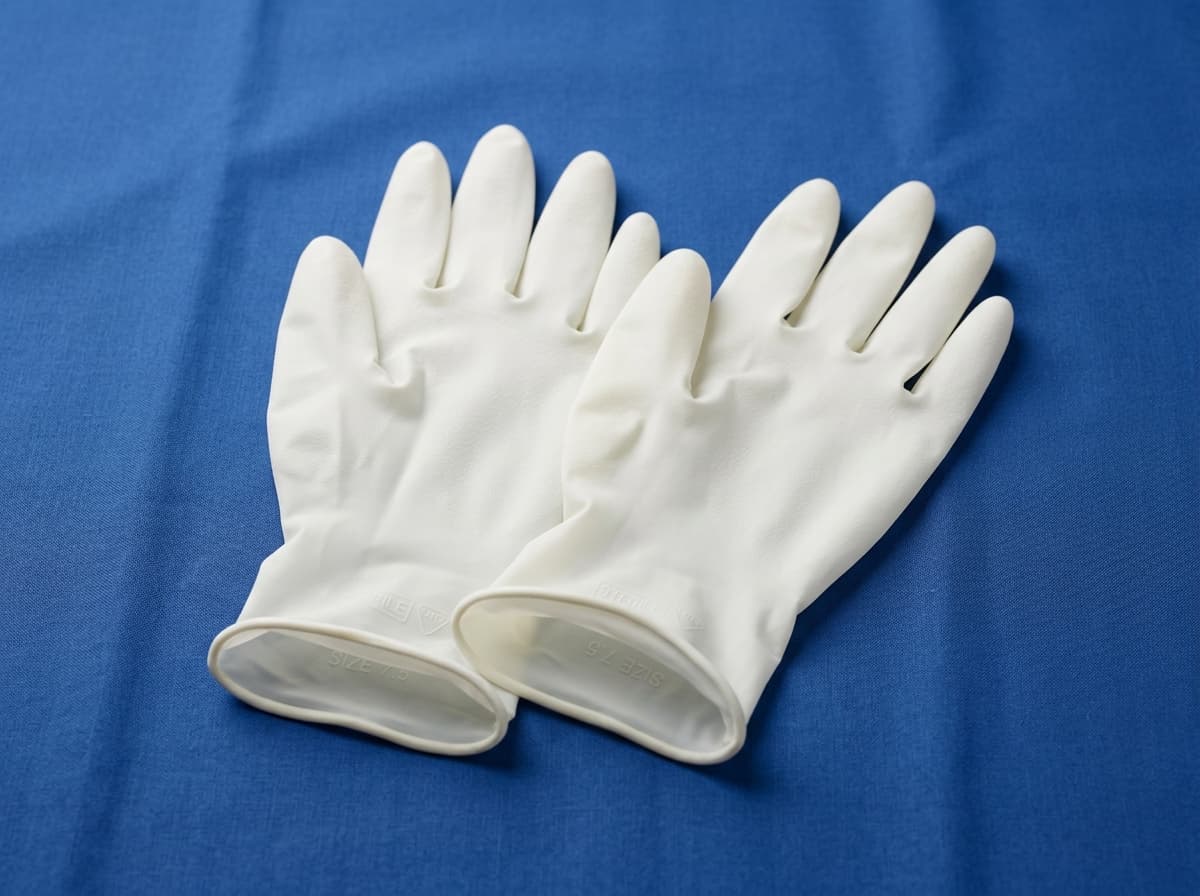
Natural rubber latex (NRL) surgical gloves remain the gold standard in African operating theatres due to unmatched tactile sensitivity, elasticity, and cost efficiency. However, the voyage across the Indian Ocean and prolonged dwell times at humid equatorial ports (Lagos Apapa, Mombasa, Douala, Dar es Salaam) expose consignments to ambient temperatures exceeding 42°C and relative humidity over 85%. Here is the exact technical engineering we deploy to guarantee 5-year shelf-life stability in tropical hospital wards.

Preventing Latex Glove Degradation in Tropical African Supply Chains: Climate, Container Stuffing & Shelf-Life Protocols

Every medical importer in West and Central Africa has either experienced or heard horror stories of a container of sterile surgical gloves arriving at their warehouse only to find that the gloves have become tacky, brittle, or welded together inside their sterile peel-pouches.

This degradation is not a mystery: natural rubber latex is an organic polymer (cis-1,4-polyisoprene). When subjected to thermal oxidation, ozone exposure, and trapped moisture inside a hot metal shipping container, the molecular crosslinks begin to scission, compromising tensile strength and barrier pinhole integrity (AQL 1.0).

The Physics of Tropical Latex Breakdown

  • Thermal Oxidation: When container internal temperatures reach 45°C–52°C during direct sun exposure on port quays, vulcanisation crosslinks degrade, leading to stickiness and loss of elasticity.
  • Hydrolytic Tackiness: High relative humidity penetrates low-grade paper packaging, softening the cornstarch bio-absorbable powder or coagulating the inner polymer coating of powder-free gloves.
  • Ozone Cracking: Atmospheric ozone generated in busy industrial port areas attacks unsaturated polymer bonds, causing micro-fissures along the glove folds and cuffs.

4 Factory-Gate Safeguards Built Into Every Manshav Consignment

Safeguard ProtocolEngineering SpecificationClinical Benefit in African Conditions
Enhanced VulcanisationHigh-grade zinc oxide & sulfur crosslink curing with antioxidant 2246Resists thermal scission up to 55°C without stickiness
Online Double ChlorinationControlled multi-stage chlorine wash followed by de-chlorination neutralizationEliminates surface tackiness and reduces extractable protein to <50 µg/dm²
Heavy-Duty 5-Ply Export Master Cartons275 lb burst-strength virgin kraft board with water-repellent exterior coatingPrevents box crushing and moisture ingress in high-humidity transit
Multi-Chamber Desiccant Systems1000g Calcium Chloride / Clay desiccants placed inside shipping containersAbsorbs 'container rain' and maintains internal RH below 55% during ocean voyage

Ocean Container Stowage Best Practices from Nhava Sheva / Mundra

How your freight forwarder books and stows your container makes a measurable difference in product arrival quality:

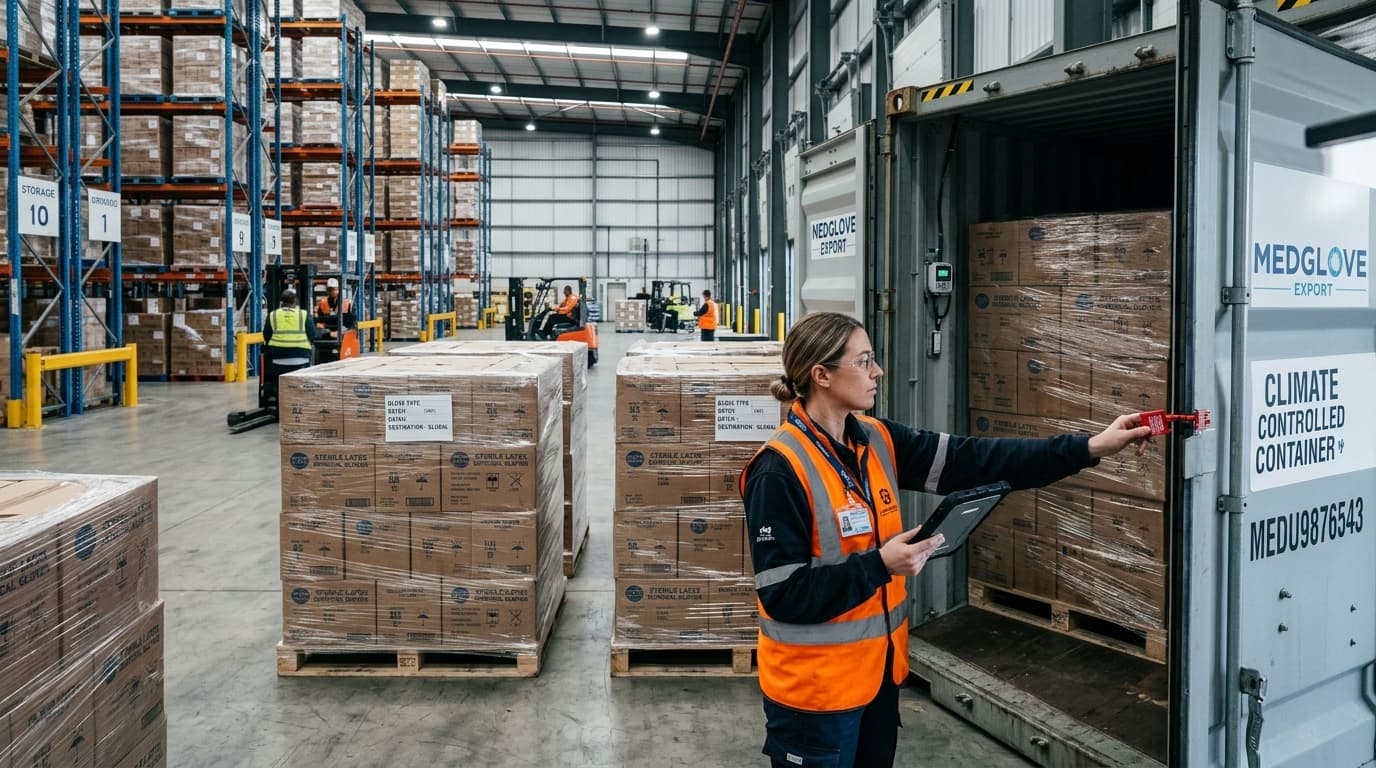
  1. Request Below-Deck Stowage: Instruct shipping lines (Maersk, MSC, CMA CGM) to position medical consumable containers below deck, avoiding direct equatorial solar radiation on the container roof.
  2. Thermal Container Liners: For FCL shipments transiting high-dwell African hubs (such as Lagos Tin Can or Apapa), we install reflective aluminum radiant-barrier thermal blankets inside the container walls.
  3. Palletized Shrink-Wrapping with Top Sheets: Pallets are completely enveloped in UV-stabilized stretch film with moisture-barrier top caps, ensuring individual cartons remain hermetically sealed until warehouse destuffing.

Recommended Storage SOP for African Distributors & Hospitals

To maintain full AQL 1.0 surgical barrier performance throughout the 5-year expiry lifecycle, distributor warehouses across Africa should follow these fundamental storage rules:

  • Temperature Target: Store between 15°C and 30°C. If air conditioning is not feasible across the entire warehouse, install heavy-duty roof turbine ventilators and thermal ceiling insulation.
  • Distance from Walls & Floor: Never stack cartons directly on concrete floors. Use wooden or plastic pallets elevated at least 15 cm off the floor and 30 cm away from perimeter walls to facilitate cross-ventilation.
  • Strict FIFO (First-In, First-Out): Always rotate stock using clear batch coding so older lots move to hospital wards first.
  • Light Protection: Keep sterile glove boxes shielded from direct sunlight and high-UV fluorescent lighting, which accelerate photo-oxidation.
Need tropical-climate reinforced surgical gloves with guaranteed 5-year shelf stability?
Request Specifications & Container Quotation

Frequently asked questions

What is the sea transit time for surgical gloves from Indian ports to African hubs?

Transit times from Nhava Sheva (JNPT) / Mundra are 12–18 days to East Africa (Mombasa/Dar es Salaam), 18–24 days to South Africa (Durban), and 22–30 days to West Africa (Lagos/Tema/Abidjan).

Can powder-free nitrile gloves withstand higher heat than latex in tropical climates?

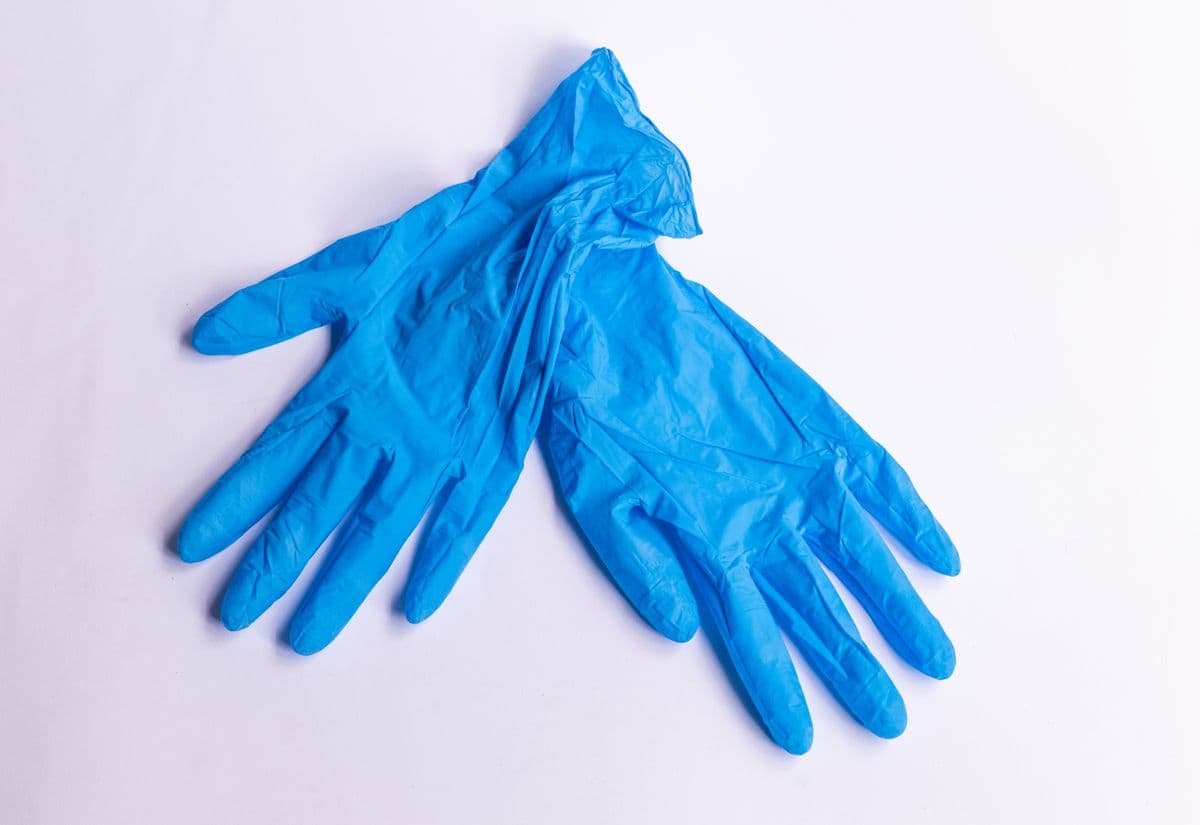
Yes. Synthetic nitrile (NBR) has higher thermal and chemical resistance than natural rubber latex, making it exceptionally resilient in extreme temperatures, though latex remains preferred for specialized microsurgery.

Manshav Impex

Manshav Impex is a global exporter of medical devices, surgical consumables and healthcare solutions, serving importers, distributors, hospitals and governments in 48+ countries.

Chat with us