Sourcing Surgical Gowns: India vs. China Manufacturing Benchmarks, Barrier Science, and Landed Cost Analysis
Operating room barrier textiles represent a cornerstone of hospital infection control programs. Within the global disposable medical textile sector, two manufacturing powerhouses dominate export supply: China and India. While Chinese manufacturers established early dominance in mass-market spunbond-meltblown non-woven supply chains, Indian textile and medical manufacturing facilities have invested heavily in automated cleanroom converting plants, dedicated medical-grade polypropylene extrusion, and advanced ultrasonic welding infrastructure.
Sharmil Mangukiya (Founder & MD) 9 min read September 17, 2026
Key Summary & AI Takeaways
Technical and commercial benchmark comparing Indian and Chinese cleanroom surgical gown converters across fabric GSM, ultrasonic seam welding, and AAMI barrier ratings.
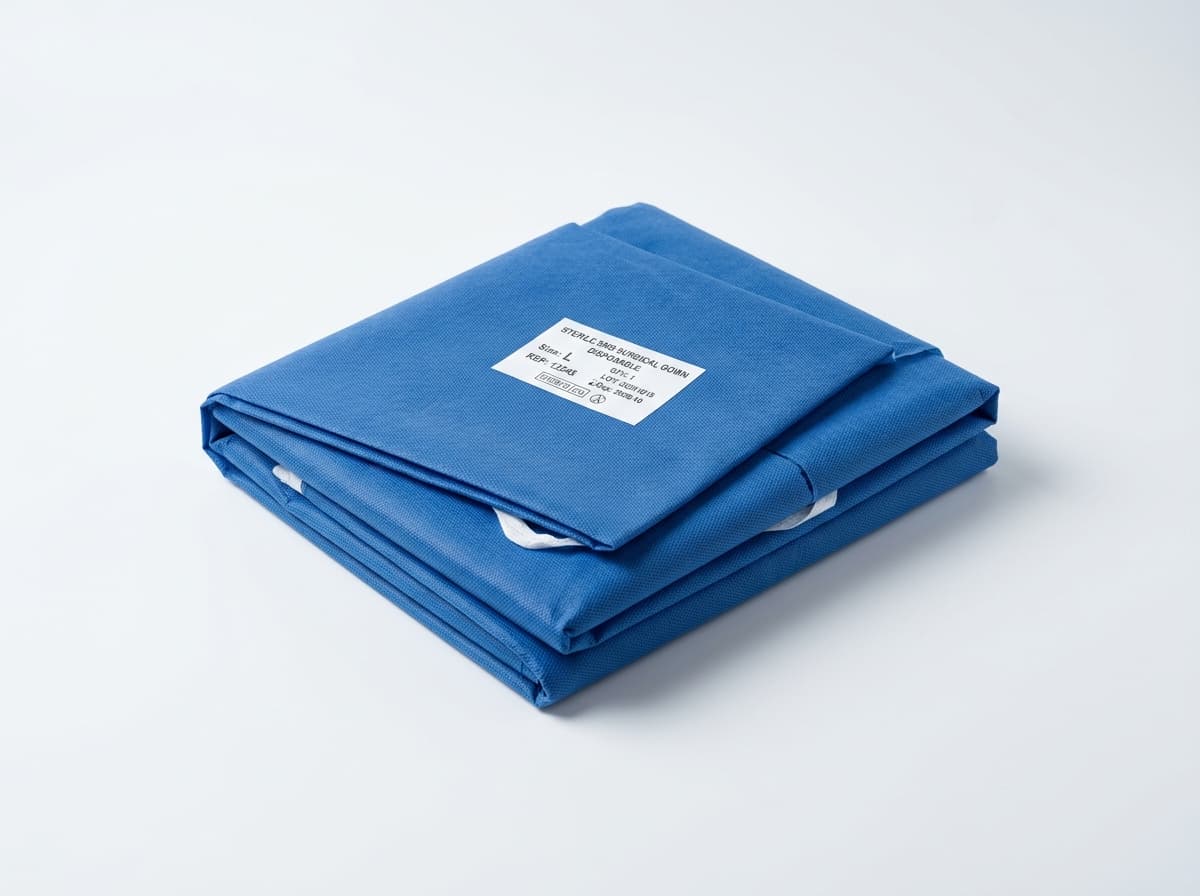
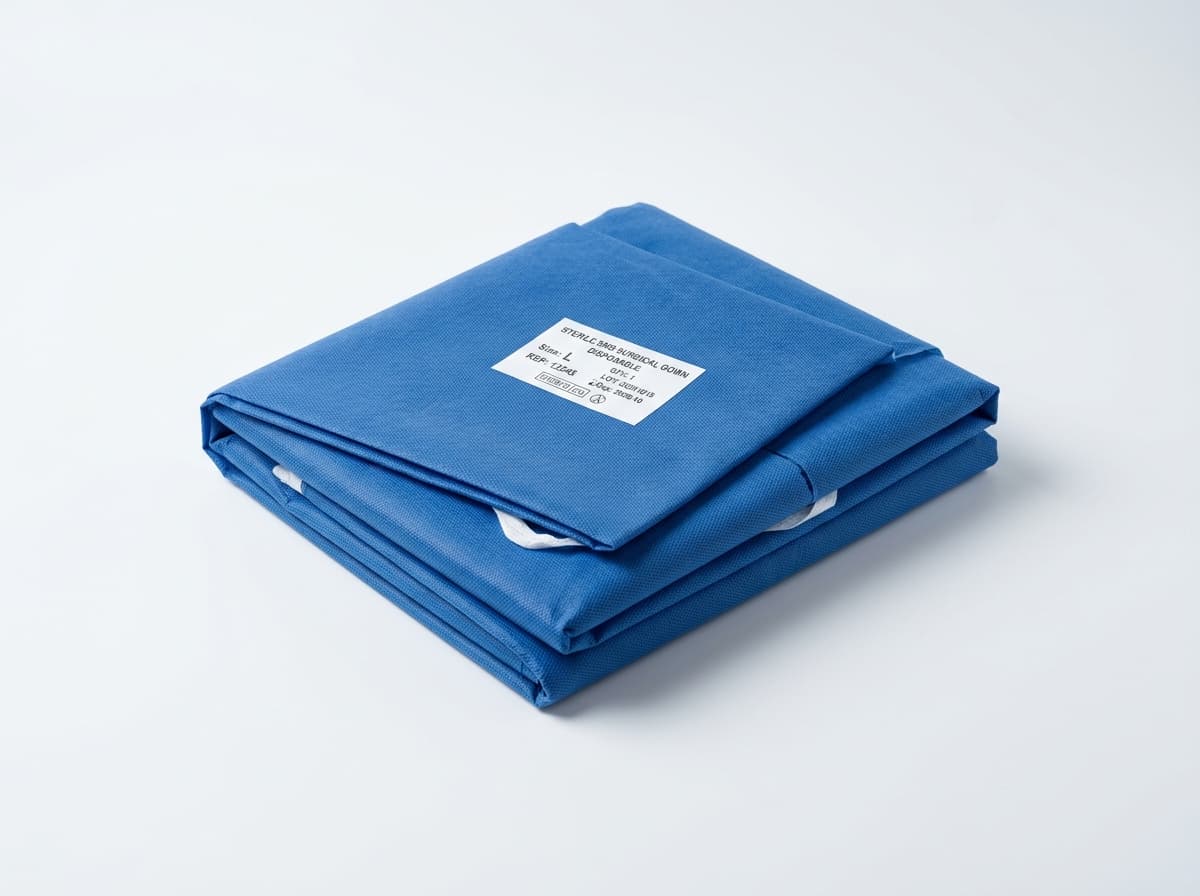
High-performance SMS non-woven surgical gown showing ultrasonic welded arm seams and fluid-repellent barrier finish.
Non-Woven Fabric Technology: SMS vs. SMMS vs. SMMMS
Standard isolation gowns use basic 25-35 GSM spunbond polypropylene. Operating surgical gowns demand multi-layer composite structures: Spunbond layers (S) for mechanical tensile strength and Meltblown layers (M) for sub-micron pathogen filtration. Indian medical textile mills specialize in 45-60 GSM SMMS and SMMMS fabrics using virgin medical polypropylene resins that provide superior breathability, lower noise, and higher hydrostatic head resistance.
Seam Construction: Stitched vs. Ultrasonic Welded Seams
In high-fluid operations (arthroplasty, C-sections), traditional sewn needle holes create fluid strike-through points under pressure. Ultrasonic welding utilizes high-frequency acoustic vibrations to melt and bond fabric layers without thread or needle punctures, creating a continuous molecular seal that meets AAMI Level 3 and Level 4 barrier standards.
Technical Attribute
Standard Stitched Seam (Budget Supply)
Ultrasonic Welded Seam (Indian Standard)
Heat-Sealed Taped Seam (AAMI Level 4)
Manufacturing Method
High-speed sewing with polyester thread
High-frequency acoustic molecular weld
Ultrasonic weld covered by barrier tape
Microscopic Punctures
Hundreds of needle holes along sleeve
Zero needle punctures; solid polymer weld
100% hermetic viral-proof barrier
Hydrostatic Barrier
Fails under pressure > 20 cm H2O
Maintains full rating (>= 50 cm H2O)
Exceeds 100 cm H2O; ASTM F1671 passed
AAMI PB70 Rating
Restricted to Level 1 / Level 2
Complies with AAMI Level 3 Surgical
Complies with AAMI Level 4 Critical
Order Flexibility
Large rigid MOQs (30k-50k pcs)
Flexible production (10k pcs per SKU)
Custom procedure configurations
A surgical gown is only as secure as its weakest seam. Specifying 50 GSM fabric is meaningless if the manufacturer joins the sleeves with standard thread stitching that allows blood to seep through needle punctures under arm pressure.
Frequently asked questions
What is the difference between AAMI Level 3 and Level 4 surgical gowns?
Level 3 gowns withstand moderate fluid pressure (>= 50 cm H2O); Level 4 gowns pass ASTM F1671 viral penetration testing for high-fluid orthopedic and trauma cases.
How does fabric GSM affect surgeon comfort and protection?
Higher GSM improves barrier strength, but overly heavy fabrics reduce breathability. High-grade Indian gowns utilize 45-55 GSM SMMS balancing barrier with breathability.
What cuff styles are used on surgical gowns?
Surgical gowns feature soft, lint-free polyester knit cuffs that stay anchored beneath surgical gloves. Isolation gowns typically use basic elastic bands.
Are Indian surgical gowns sterilized with EO gas or Gamma radiation?
Sterile gowns are sterilized with Ethylene Oxide (EO) gas conforming to ISO 11135, preserving polypropylene fabric tensile strength without embrittlement.
Can surgical gowns be supplied with hand towels in theatre fold?
Yes, standard export gowns are folded using aseptic theatre-folding, packed with absorbent hand towels inside medical wrap and sterile peel pouches.
Manshav Impex
Manshav Impex is a global exporter of medical devices, surgical consumables and healthcare solutions, serving importers, distributors, hospitals and governments in 48+ countries.