Disposable Syringes Manufacturer in India: How Kenyan Importers Choose One
Every Indian syringe offer looks the same on paper. Kenyan distributors who stay in stock compare the same six things before price - here they are.

A procurement officer in Riyadh or Jeddah buys syringes by the hundred thousand, and the complaints that come back from wards are rarely about sterility. They are about fit: a 20 ml syringe with the tip in the centre when the phlebotomy team wanted it at the edge, a slip tip sent to a unit that runs syringe pumps, a 3-part syringe where the tender said 2-part. This guide explains the difference between eccentric and concentric tip syringes, which one each department needs, and what to check before you order from a disposable syringes exporter in India.
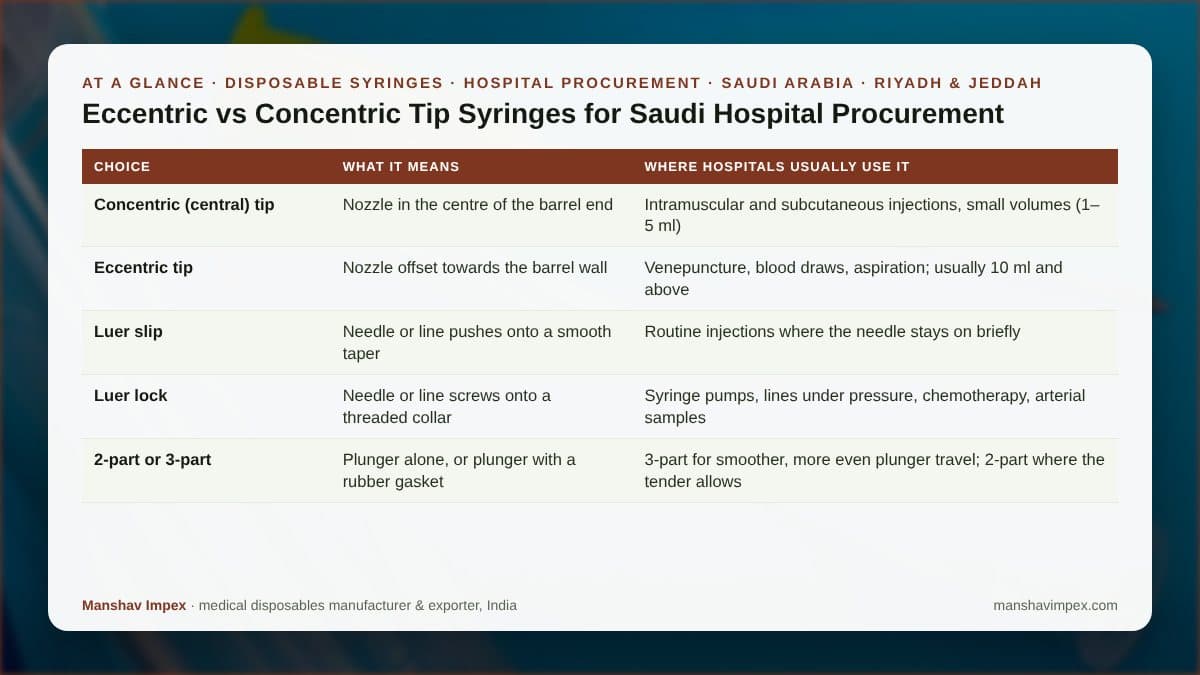
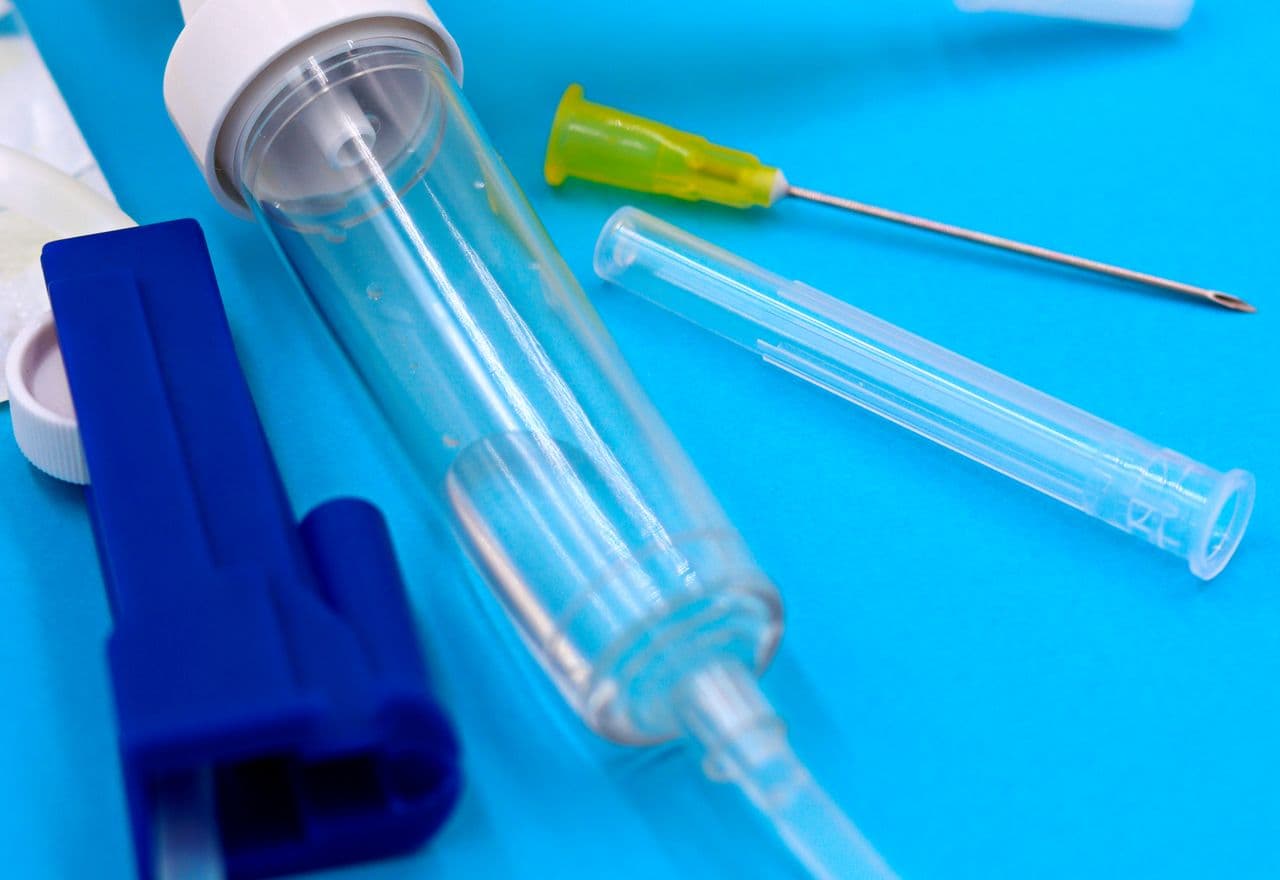
Most syringe lines in a hospital order look alike until a ward sends them back. The tip position, eccentric or concentric, and the Luer type decide whether a syringe suits venepuncture, injection or a pump. Here is how procurement teams in Saudi Arabia write it down.
Every disposable syringe has a nozzle, or tip, where the needle or line attaches. On a concentric (central) tip the nozzle sits in the middle of the barrel's end. On an eccentric tip it sits off-centre, close to the barrel wall. That small difference changes how the syringe lies against the patient's arm, and so which clinical task it suits.
A concentric tip syringe has the nozzle in the centre of the barrel and is the usual choice for small-volume injections. An eccentric tip syringe has the nozzle offset towards the edge, so the needle can run almost parallel to the skin, which helps when drawing blood or aspirating from a superficial vein. Eccentric tips are usually found on larger syringes, from about 10 ml upwards.
| Choice | What it means | Where hospitals usually use it |
|---|---|---|
| Concentric (central) tip | Nozzle in the centre of the barrel end | Intramuscular and subcutaneous injections, small volumes (1–5 ml) |
| Eccentric tip | Nozzle offset towards the barrel wall | Venepuncture, blood draws, aspiration; usually 10 ml and above |
| Luer slip | Needle or line pushes onto a smooth taper | Routine injections where the needle stays on briefly |
| Luer lock | Needle or line screws onto a threaded collar | Syringe pumps, lines under pressure, chemotherapy, arterial samples |
| 2-part or 3-part | Plunger alone, or plunger with a rubber gasket | 3-part for smoother, more even plunger travel; 2-part where the tender allows |
Before you renew the syringe contract, ask the phlebotomy lead, the ICU charge nurse and the oncology pharmacist which tip and Luer type they actually reach for, and how many they used last quarter. The answer is usually three different syringes, not one. Writing those three lines separately costs nothing at tender stage and saves months of ward returns.
A tender line that says "disposable syringe 10 ml" lets the supplier choose the tip, the Luer type, the number of parts and the needle. Write each of these per line, with the department that will use it. Suppliers can then quote the same product, and the evaluation compares like with like.
We had one syringe line for the whole hospital. Phlebotomy wanted the tip at the edge, the ICU wanted it to screw onto the pump, and the clinics wanted it cheap. Now it is three lines, and the returns stopped.
Medical devices in Saudi Arabia are regulated by the Saudi Food and Drug Authority (SFDA), and public hospitals often buy through central procurement. Registration, listing and labelling requirements apply to syringes and change over time, so confirm current guidance with the SFDA and your local authorised representative before the first order. For the exporter, the checks are practical: does the manufacturer make every tip and Luer combination you listed, can it show test reports to ISO 7886-1 for each volume, and will it send samples of each line from current production for the wards to try.
Ask for the tip position to be printed on the pack or the technical data sheet, not only on the quotation. When a ward opens a carton, the label is what they check, and a carton that does not say "eccentric" will be treated as the wrong product.
Syringe prices move with polypropylene costs, volume and construction, so request a current quotation and compare manufacturers line by line: the same volume, tip, Luer type, parts, needle and packing, on the same Incoterm to Dammam or Jeddah. An eccentric 20 ml Luer lock syringe and a concentric 20 ml slip syringe are different products, and a lower price on the wrong one is no saving.
High-precision sterile single-use disposable syringes with Luer-Lock and Luer-Slip options, clear graduation barrel, smooth gliding medical-grade plunger, and mounted ultra-sharp hypodermic needles. Container consignments dispatched from Port Mundra & Port Nhava Sheva, with certificates and test reports shared with every quotation.
An eccentric tip syringe has its nozzle offset to the edge of the barrel, so the needle can lie almost flat against the skin. It is mainly used for venepuncture, drawing blood and aspirating from superficial veins, and is usually supplied in 10 ml and larger sizes.
Yes. Concentric and central tip mean the same thing: the nozzle sits in the middle of the barrel's end. It is the standard design for small-volume intramuscular and subcutaneous injections.
Both, for different departments. Luer lock syringes screw onto the needle or line and are used with syringe pumps, pressurised lines and hazardous drugs; Luer slip syringes are used for routine injections. Write them as separate tender lines rather than one generic syringe.
Shortlist disposable syringes manufacturers in India that make every volume, tip and Luer combination on your list, hold ISO 13485 and test reports to ISO 7886-1, name the factory on the certificates and send samples of each line from current production. Then compare quotations line by line on the same Incoterm and port.
Our minimum is 100,000 pieces per line, packed 100 per box and 16 boxes per carton, with volumes mixed across lines. Send your sizes, tips and quantities and we will confirm what fits a 20-foot or 40-foot container to Dammam or Jeddah.
Regulator, registration steps, import duty by HS code and sea freight for the markets in this article.
Every Indian syringe offer looks the same on paper. Kenyan distributors who stay in stock compare the same six things before price - here they are.
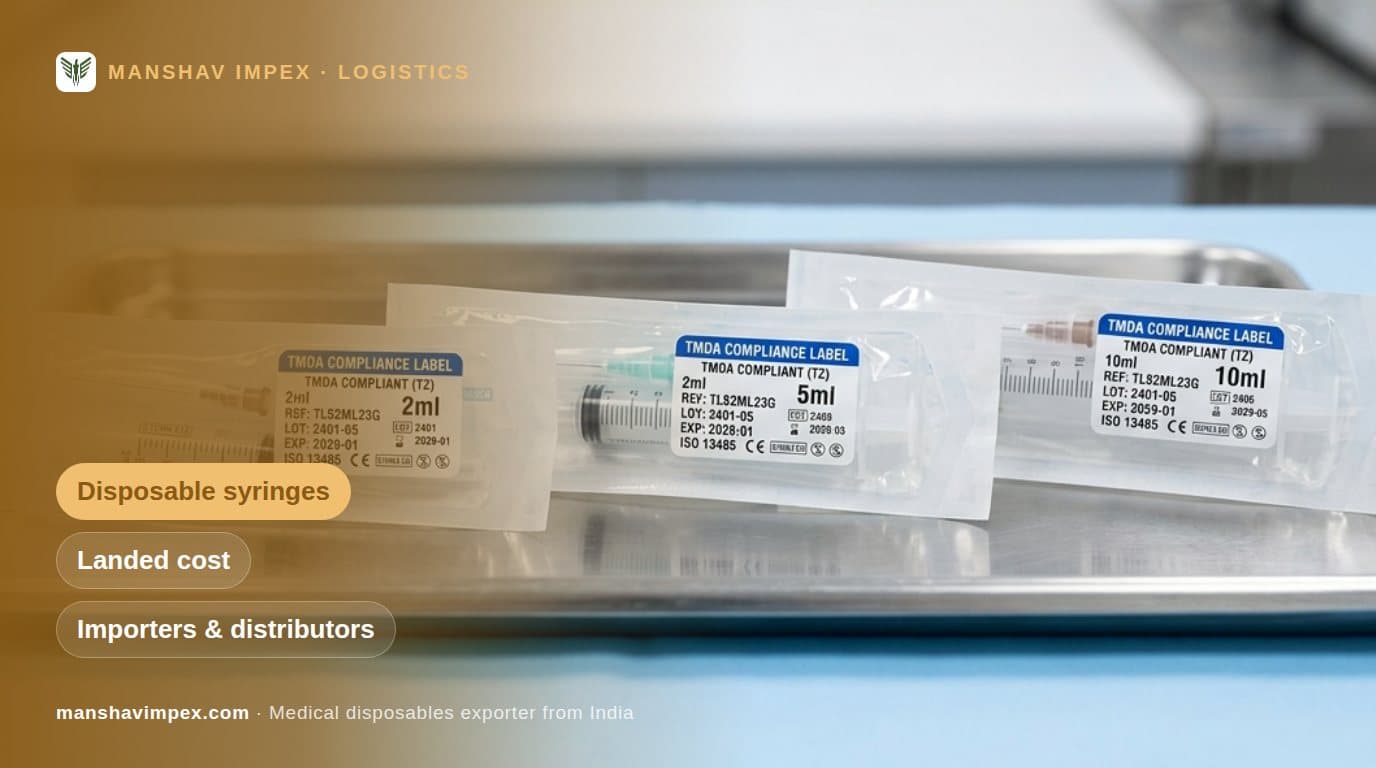
Two quotations for the same 5 ml syringe can be 8% apart on FOB and land at the same warehouse cost - packing density, freight base and duty treatment decide the real number.
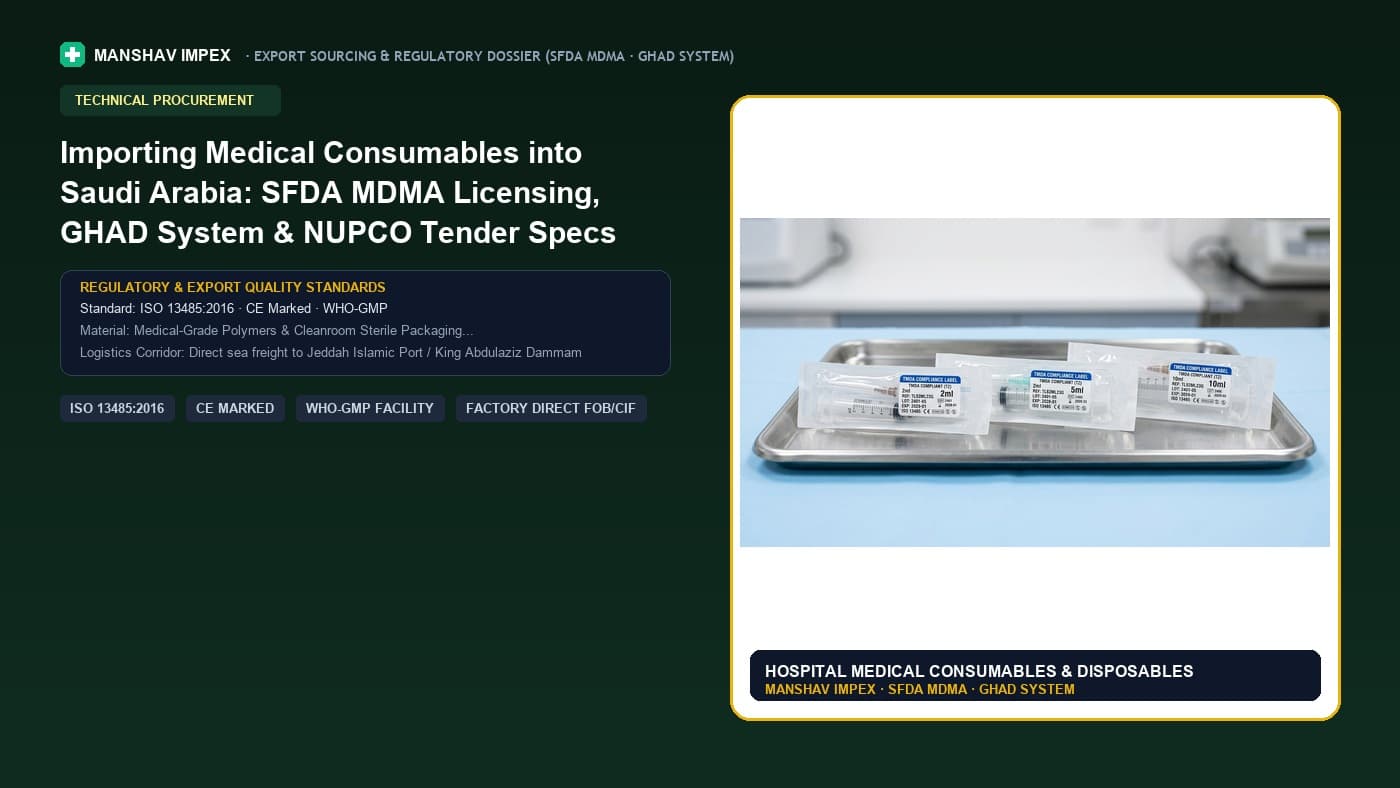
Supplying Saudi Arabia's healthcare sector requires navigating the SFDA's unified GHAD portal, mandatory Saudi-DI serialization, and NUPCO centralized hospital tenders. Here is the step-by-step regulatory and logistics roadmap for medical importers.