AAMI PB70 Level 3 vs Level 4 Impervious Surgical Gowns: Hydrostatic Pressure Standards and South Africa SAHPRA Sourcing
Compare AAMI Level 3 and Level 4 surgical gowns for South African hospitals. SAHPRA compliance, viral penetration standards, and Durban port shipping.
Sharmil Mangukiya (Founder & MD) 12 min read September 19, 2026
Key Summary & AI Takeaways
Compare AAMI Level 3 and Level 4 surgical gowns for South African hospitals. SAHPRA compliance, viral penetration standards, and Durban port shipping.
Quick Sourcing Summary: The Fluid Barrier Threshold
AAMI Level 3 surgical gowns require water resistance under hydrostatic head pressure (AATCC 127 >= 50 cmH2O) and impact penetration (AATCC 42 <= 1.0g). They are suitable for general laparoscopy, routine obstetrics, and ENT procedures. AAMI Level 4 gowns require total viral penetration resistance under mechanical pressure (ASTM F1671 using Phi-X174 bacteriophage). Level 4 gowns are mandatory for fluid-heavy orthopedic joint replacements, vascular trauma, and emergency Caesarean sections.
Barrier Performance & Testing Standards Compared
The difference between Level 3 and Level 4 lies in the physical construction of the Critical Zones: the gown chest (from clavicle to mid-thigh) and the sleeves (from cuff to above the elbow).
Performance Metric
AAMI PB70 Level 3 Surgical Gown
AAMI PB70 Level 4 Impervious Gown
Base Material
Multi-layer SMMS Polypropylene (50–60 gsm)
Breathable SMS + Impervious Polyethylene Membrane Film
Water Impact Penetration (AATCC 42)
Blotter weight gain <= 1.0 gram
Blotter weight gain <= 1.0 gram
Hydrostatic Resistance (AATCC 127)
>= 50 cmH2O pressure resistance
Complete fluid barrier (> 100 cmH2O)
Viral Penetration Challenge (ASTM F1671)
Not Tested / Not Claimed
Pass: Zero viral penetration at 13.8 kPa (2 psi)
Comfort & Thermal Breathability
High air-permeability; cool during long wear
Balanced: Breathable back panel with impervious front/sleeves
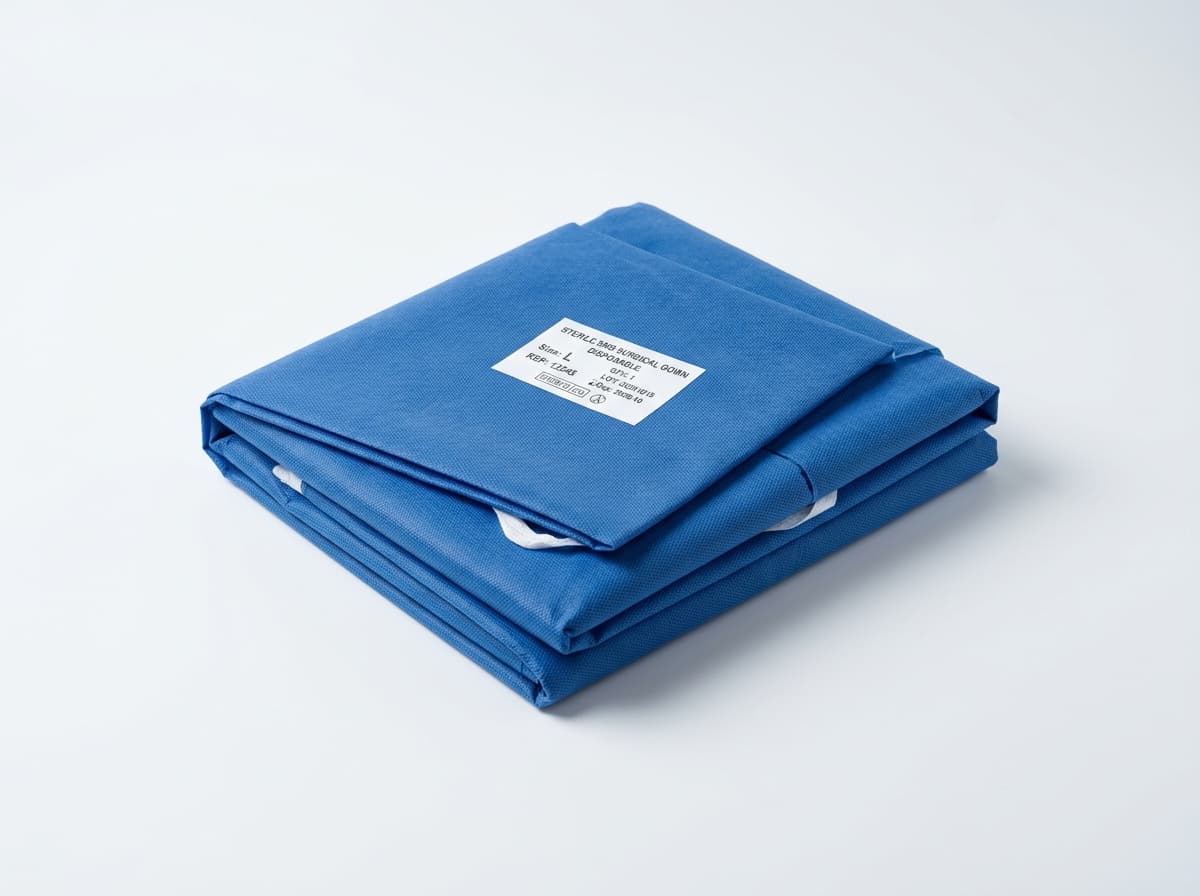
Technical specification and quality compliance inspection matrix for AAMI PB70 Level 3 vs Level 4 Impervious Surgical Gowns.
Ultrasonic Seam Sealing vs Stitched Needle Holes
A surgical gown is only as strong as its weakest seam. In standard Level 2 and Level 3 utility gowns, sleeve attachments and side seams are often assembled using traditional needle stitching.
While suitable for low-fluid environments, stitched seams create thousands of microscopic needle holes. During long procedures where a surgeon leans against the operating table, fluid can wick through these needle perforations via capillary action.
Manshav Impex AAMI Level 4 gowns eliminate needle holes by using ultrasonic thermal welding and heat-sealed seam taping:
This seamless bonding creates an airtight, watertight viral barrier across all critical sleeve and chest junctions.
SAHPRA Import Licensing Formalities for South Africa
The South African Health Products Regulatory Authority (SAHPRA) regulates sterile surgical drapes, gowns, and barrier apparel under Class A and Class B medical device controls.
To import surgical gowns through the Port of Durban or Cape Town:
1. Medical Device Establishment License: The South African distributor must hold an active SAHPRA Medical Device Wholesaler/Distributor License.
2. ISO 13485:2016 Certification: The Indian manufacturer must provide an audited ISO 13485 quality system certificate.
3. ASTM F1671 Laboratory Reports: Tenders require accredited third-party test reports (e.g., Nelson Laboratories or Centexbel) verifying viral penetration resistance on the critical zones.
4. SABS / SANS 53795 Alignment: Materials must align with European EN 13795 (surgical drapes, gowns, and clean air suits) performance metrics adopted by the South African Bureau of Standards.
Practical Sourcing Insight
Procurement Note
In regional tenders, avoid buying "fully coated" impervious gowns that cover the entire back. Full front-to-back coating creates a greenhouse effect, causing surgeons to sweat heavily during procedures. Always specify breathable back panels made of air-permeable SMMS, combined with impervious AAMI Level 4 reinforcement across the front chest and sleeves.
"In a high-risk surgical theatre, a gown’s fluid resistance is not just personal protective equipment—it is the barrier between patient blood and clinical health."
---
Frequently asked questions
What is the difference between SMS and SMMS non-woven fabrics?
SMS consists of Spunbond-Meltblown-Spunbond layers, where meltblown fibers provide filtration and spunbond provides tensile strength. SMMS adds a second meltblown layer, increasing hydrostatic pressure resistance and creating a softer, more flexible fabric with lower lint shedding.
Why is knitted polyester preferred for gown cuffs?
Knitted cuffs fit snugly around the wrist, preventing fluid from rolling backward under surgical gloves, and eliminate lint fibers that could fall into the operative field.
What transit time applies for ocean freight from India to Durban?
Direct container services from Port Mundra (INMUN1) or Nhava Sheva (INNSA1) sail across the Indian Ocean to the Port of Durban (ZADUR) in **12 to 16 days**, making South Africa one of India's fastest ocean export trade corridors.
Are Manshav Impex surgical gowns latex-free and lint-free?
Yes. Our gowns are manufactured from 100% virgin polypropylene polymers and are completely latex-free. They are classified as ultra-low linting (Index < 2.0 under EN 13795 testing).
How are sterile surgical gowns packaged for the operating room?
Each gown is packaged with two absorbent hand towels in an aseptic book-fold configuration, sealed inside a medical-grade paper-film peel pouch with integrated Ethylene Oxide (EtO) chemical process indicator strips. ---
Manshav Impex
Manshav Impex is a global exporter of medical devices, surgical consumables and healthcare solutions, serving importers, distributors, hospitals and governments in 48+ countries.