Blood Collection Tube Colors Explained: SST, Heparin, EDTA and ESR
Every cap colour is a different additive and a different test. A working map of SST, heparin, EDTA, citrate and ESR tubes - and the import checks that matter.

A lab in Cairo can run out of purple-top EDTA tubes in a week and still have red-tops for a year. Ordering blood collection tubes for Egypt is mostly about getting that mix right, and getting the paperwork right the first time.
Egyptian laboratories run on a handful of tube types in very large numbers, and the public sector buys them through central tenders with strict files. This guide is for hospital procurement officers and lab distributors in Egypt: which tubes to order, what the EDA and factory registration need, how tender files are judged and how to plan shipments into Alexandria.
Our full specification, packing and MOQ are on the vacuum blood collection tubes product page. This guide is written for hospital procurement officers, laboratory managers and medical distributors in Egypt who buy blood collection tubes for public hospitals, university hospitals and private lab chains, and who need a supplier whose tubes, documents and shipping fit the way Egypt buys.
A blood collection tube supplier for Egypt should provide the exact tube types and draw volumes your analysers use, made to ISO 6710, with the documents an Egyptian Drug Authority (EDA) registration and a public tender ask for. The exporting factory also needs to be registered for export to Egypt, separately from the product registration. Confirm the current requirements with the EDA and your importer before the first order.
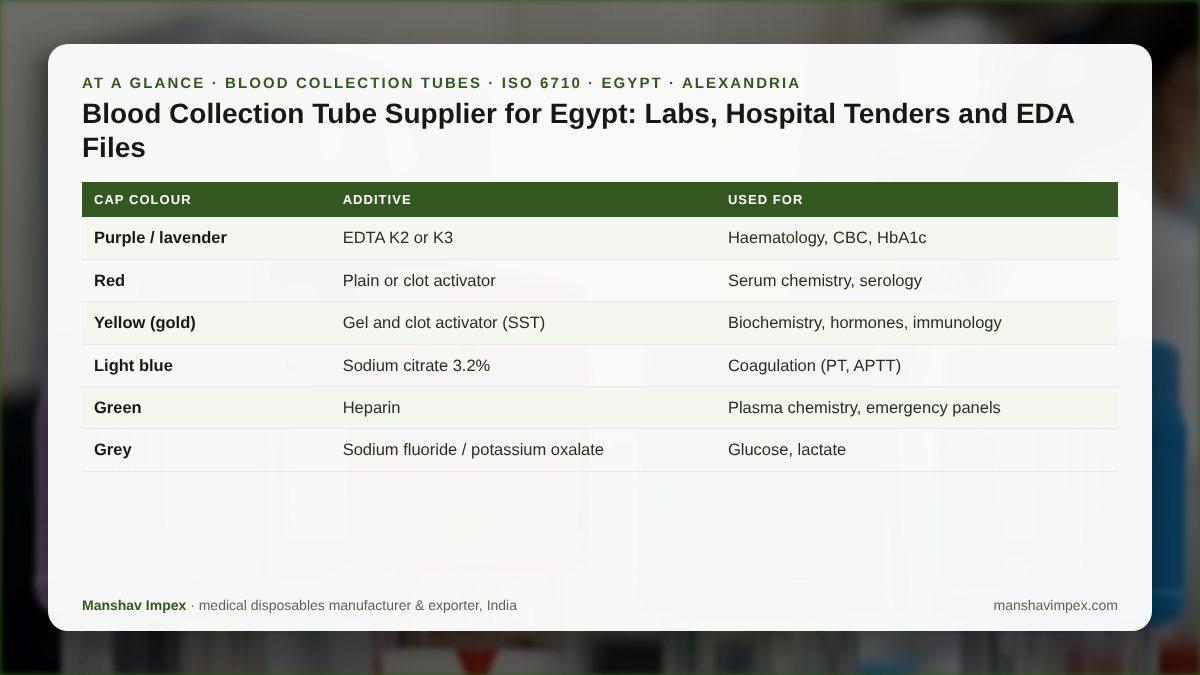
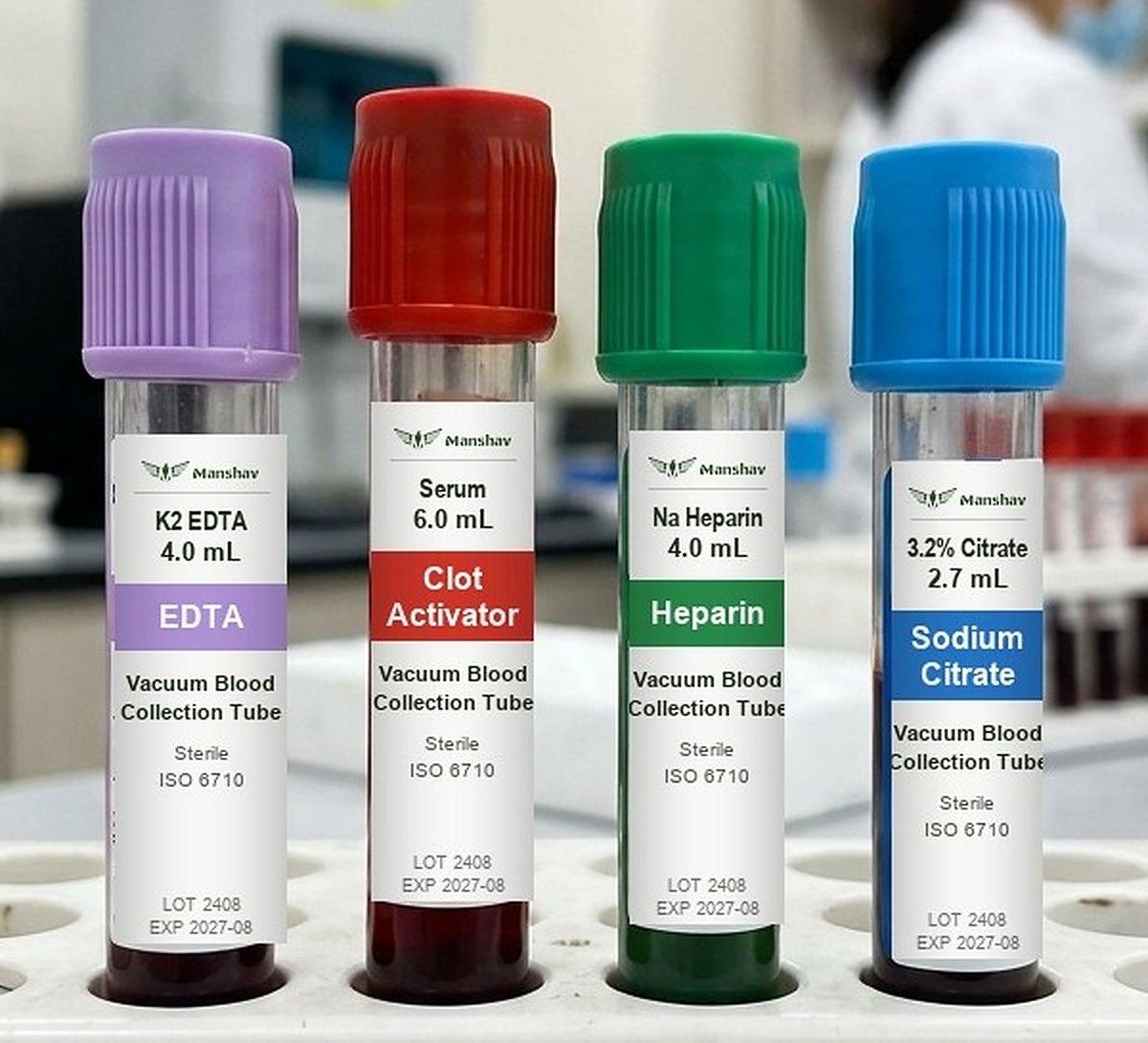
Most orders are a mix rather than one item. The table shows the tubes we make, what each is used for and the draw volumes usually requested, so the first order follows what the lab actually consumes.
| Cap colour | Additive | Used for | Common draw volume |
|---|---|---|---|
| Purple / lavender | EDTA K2 or K3 | Haematology, CBC, HbA1c | 2 ml, 3 ml |
| Red | Plain or clot activator | Serum chemistry, serology | 4 ml, 5 ml, 6 ml |
| Yellow (gold) | Gel and clot activator (SST) | Biochemistry, hormones, immunology | 4 ml, 5 ml |
| Light blue | Sodium citrate 3.2% | Coagulation (PT, APTT) | 2.7 ml (fill line matters) |
| Green | Heparin | Plasma chemistry, emergency panels | 4 ml |
| Grey | Sodium fluoride / potassium oxalate | Glucose, lactate | 2 ml |
Tubes come in 13 × 75 mm, 13 × 100 mm and 16 × 100 mm, in medical-grade PET or glass, gamma-sterilised, with draw volumes from 1 ml to 10 ml. Match the tube size to the racks and sample carriers of the analysers in the lab; a tube that is 2 mm off will jam an automated line, whatever the price.
In Egypt, medical devices are registered with the Egyptian Drug Authority through an Egyptian importer or agent who holds the registration. Separately, the factory that makes the goods must be on the approved register for exports to Egypt. A product registration alone does not let a factory ship, and a container from an unregistered factory can be refused at the port. Ask your importer to confirm both before the order is placed.
Ask for a draw-volume test on samples from the actual production lot, not from a showroom box. Draw 20 tubes of each type with a calibrated syringe or water method and check the fill against the label. Vacuum drops slowly over the shelf life, so a lot that fills short in the first month will fill shorter in month twelve — and short citrate tubes give wrong coagulation results.
Public buying in Egypt is centralised through the unified procurement authority, which tenders medical supplies for public hospitals; university hospitals and some large private groups run their own tenders. Files are usually judged first on technical compliance and documents, and only then on price.
| Tender requirement | What to have ready | Common reason a bid fails |
|---|---|---|
| Valid EDA registration | Registration number held by the Egyptian importer | Registration in another product's name or expired |
| Technical compliance | Spec sheet per tube type matching the tender list | Draw volume or tube size not exactly as listed |
| Samples | Samples from a current lot, labelled as tendered | Samples differ from the offered product |
| Shelf life | Manufacturing date and remaining shelf life on delivery | Short-dated stock at delivery |
| Delivery schedule | Split deliveries the factory can actually meet | One large lot promised and delivered late |
In tubes the tender is won on the spec sheet, but the contract is kept on the fill line.
Our minimum order for blood collection tubes is 100,000 pieces, which can usually be split across tube types; the current lead time is 14 to 20 days from order confirmation, before transit. Standard packing is 100 tubes per foam rack and 12 racks per master carton (1,200 tubes). Sea freight from Mundra or Nhava Sheva to Alexandria or Port Said typically takes 12 to 16 days; confirm the current sailing with each quotation.
Blood collection tubes are light but take space, and the vacuum is sensitive to heat. Ask for the cartons to be stowed away from the container doors and kept off the floor, and do not leave them in the sun at the port. Plan stock so a delayed vessel does not empty the lab's shelf.
Tube prices move with resin, additives and freight, so request a current quotation and compare offers on the same basis: the same tube types, volumes and sizes, PET or glass, the same packing, Incoterm and port, and the same documents included. A cheaper tube that fails the draw-volume check or arrives with half its shelf life gone costs more than it saves.
Sterile vacuum blood collection tubes engineered from crack-resistant PET plastic with precisely calibrated internal vacuum, hemogard color-coded safety caps, and uniform additive spray coatings for clinical diagnostics. Container consignments dispatched from Port Mundra & Port Nhava Sheva, with certificates and test reports shared with every quotation.
Medical devices are registered with the Egyptian Drug Authority (EDA) through an Egyptian importer or agent who holds the registration. The exporting factory must also be registered for export to Egypt. Check current requirements with the EDA and your importer.
Both prevent clotting for haematology. K2 EDTA is sprayed dry on the tube wall, K3 is usually liquid; many labs and guidelines prefer K2 for blood counts. Order the type your analyser's method specifies.
ISO 6710 covers single-use containers for venous blood collection, including vacuum, draw volume and additives. Ask for test reports to it, along with the ISO 13485 certificate of the manufacturing site.
The minimum order is 100,000 pieces, usually split across tube types. Standard packing is 100 tubes per rack and 12 racks per master carton.
Sea freight from Mundra or Nhava Sheva to Alexandria or Port Said typically takes 12 to 16 days. We confirm the vessel and transit time with each quotation.
Regulator, registration steps, import duty by HS code and sea freight for the markets in this article.
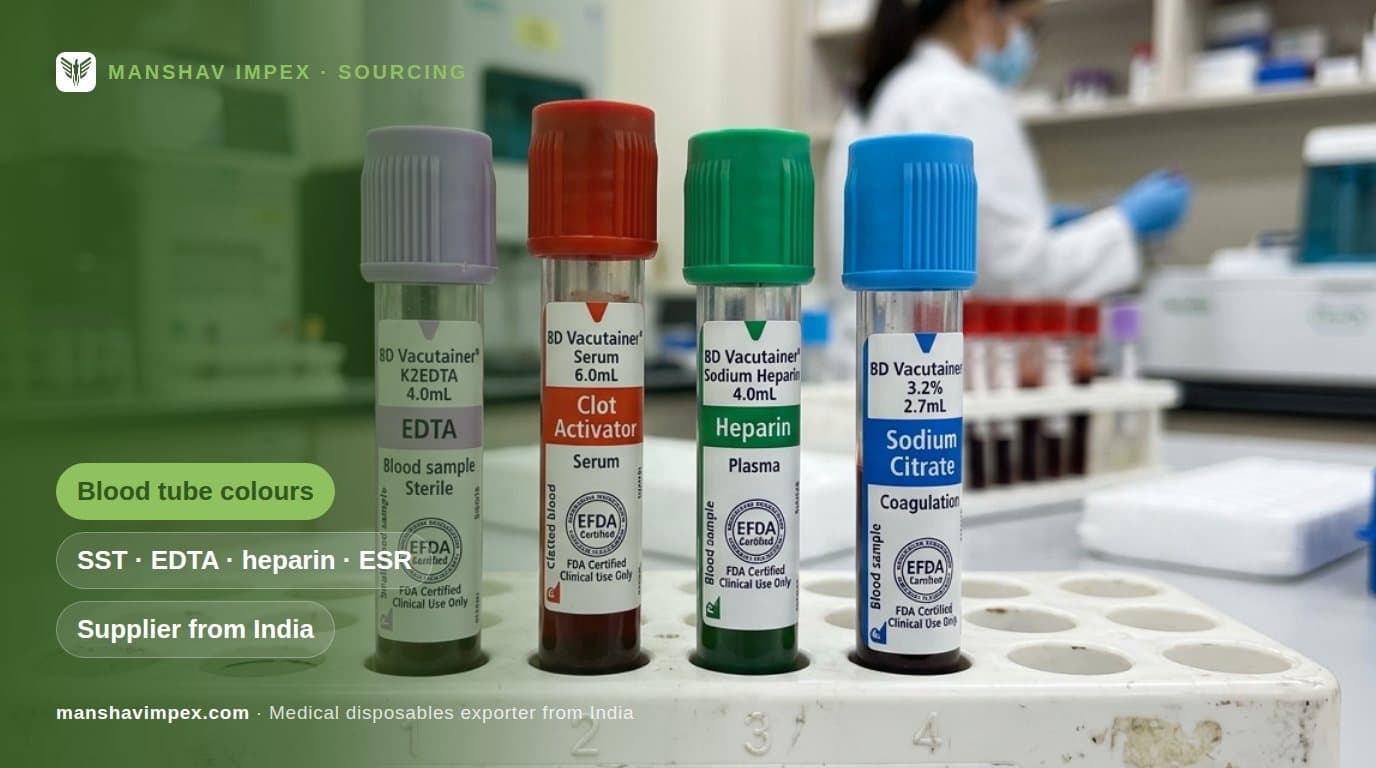
Every cap colour is a different additive and a different test. A working map of SST, heparin, EDTA, citrate and ESR tubes - and the import checks that matter.
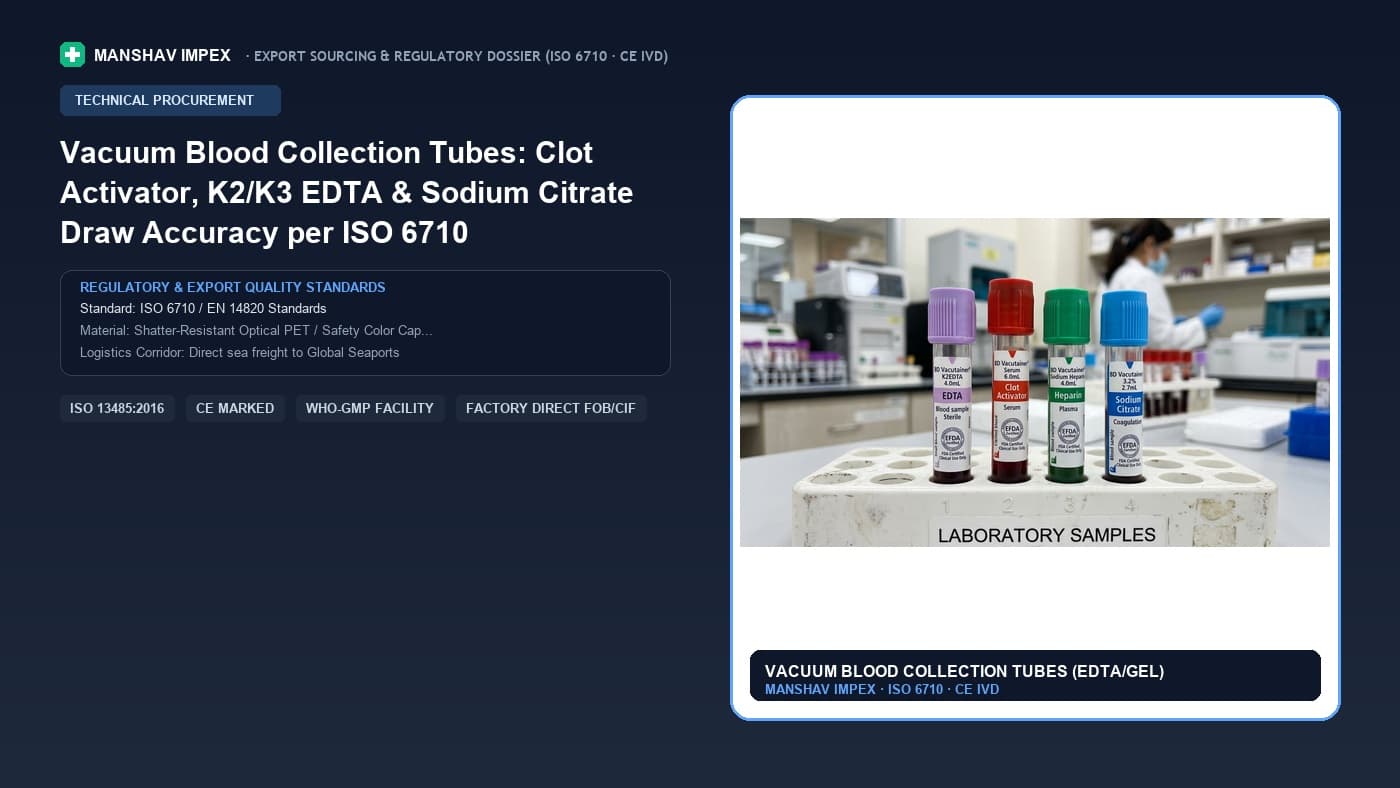
In clinical pathology, an incorrect anticoagulant-to-blood ratio skews CBC, coagulation, and biochemistry results. Here is the technical dossier on ISO 6710 vacuum draw tolerances, micronized spray coating uniformity, and diagnostic container export economics.
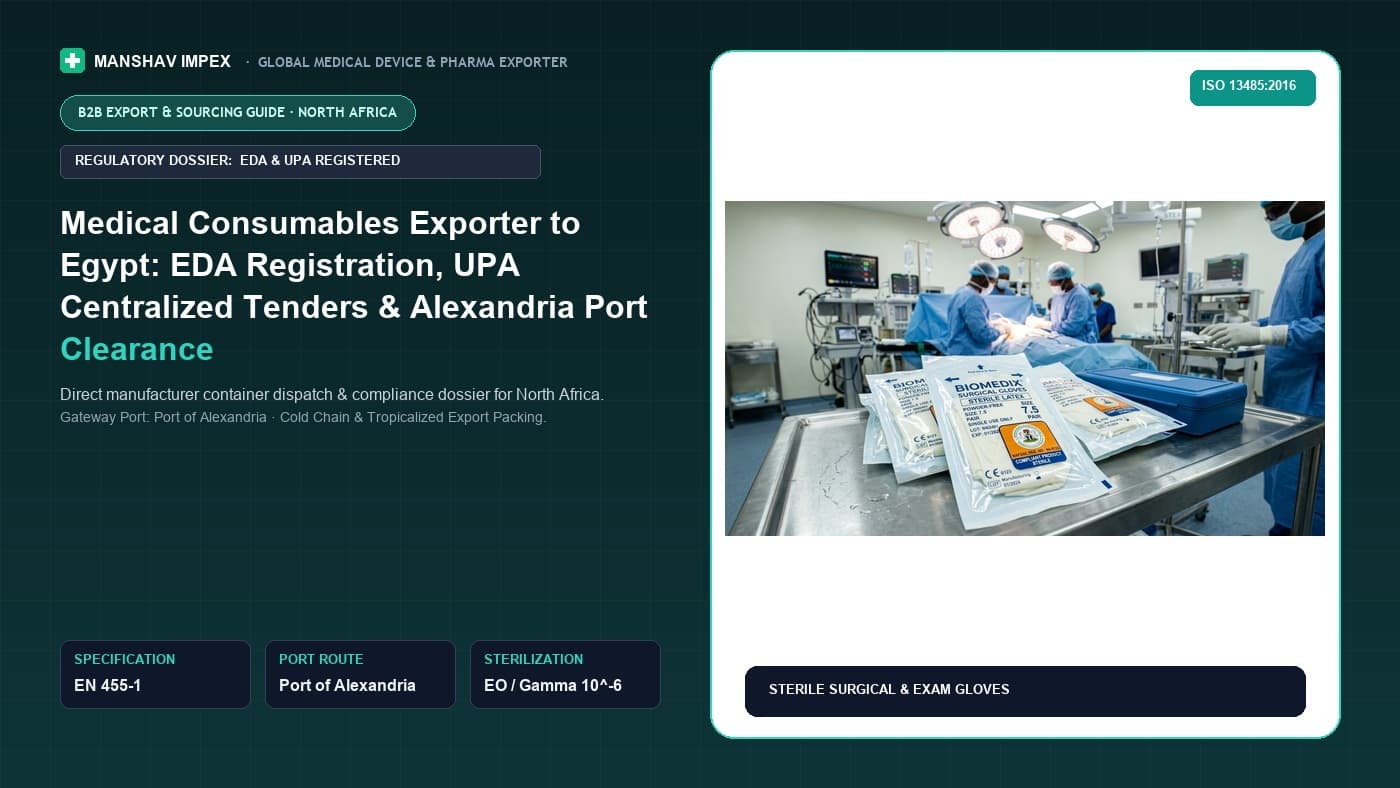
B2B procurement and regulatory guide for hospital groups, surgical importers, and medical distributors sourcing Indian medical consumables and single-use surgical devices into Egypt with full EDA / UPA compliance.