Sourcing

Blood Collection Tube Colors Explained: SST, Heparin, EDTA and ESR

Laboratories order vacuum blood collection tubes by cap colour, and one mixed-up pallet can spoil a month of results. Here is what each colour actually contains, the order of draw, and what to verify before you import them by the container.

Blood Collection Tube Colors Explained: SST, Heparin, EDTA and ESR
Key Summary & AI Takeaways

Every cap colour is a different additive and a different test. A working map of SST, heparin, EDTA, citrate and ESR tubes - and the import checks that matter.

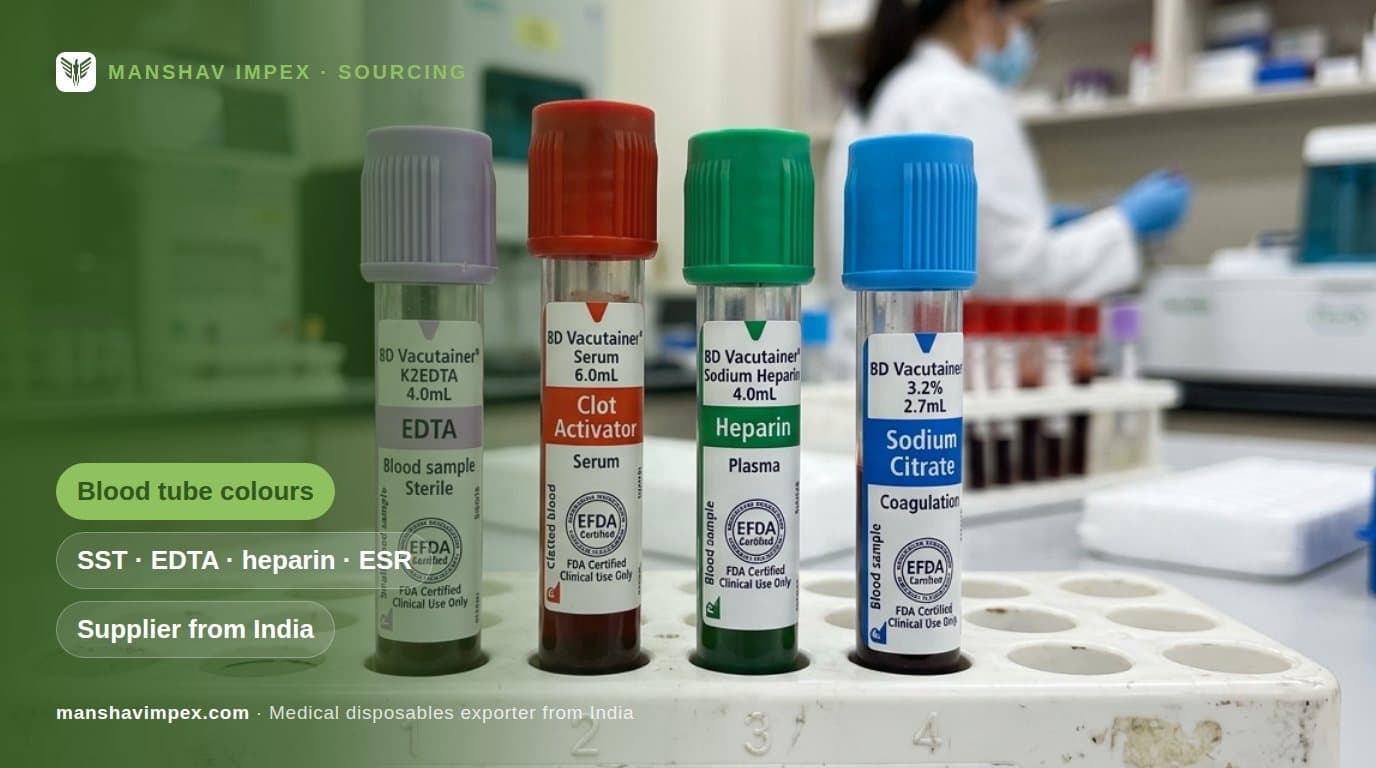
A vacuum blood collection tube is pre-filled with a measured vacuum and, usually, an additive. The cap colour is a worldwide convention for which additive - and therefore which tests - the tube serves.

The colour map

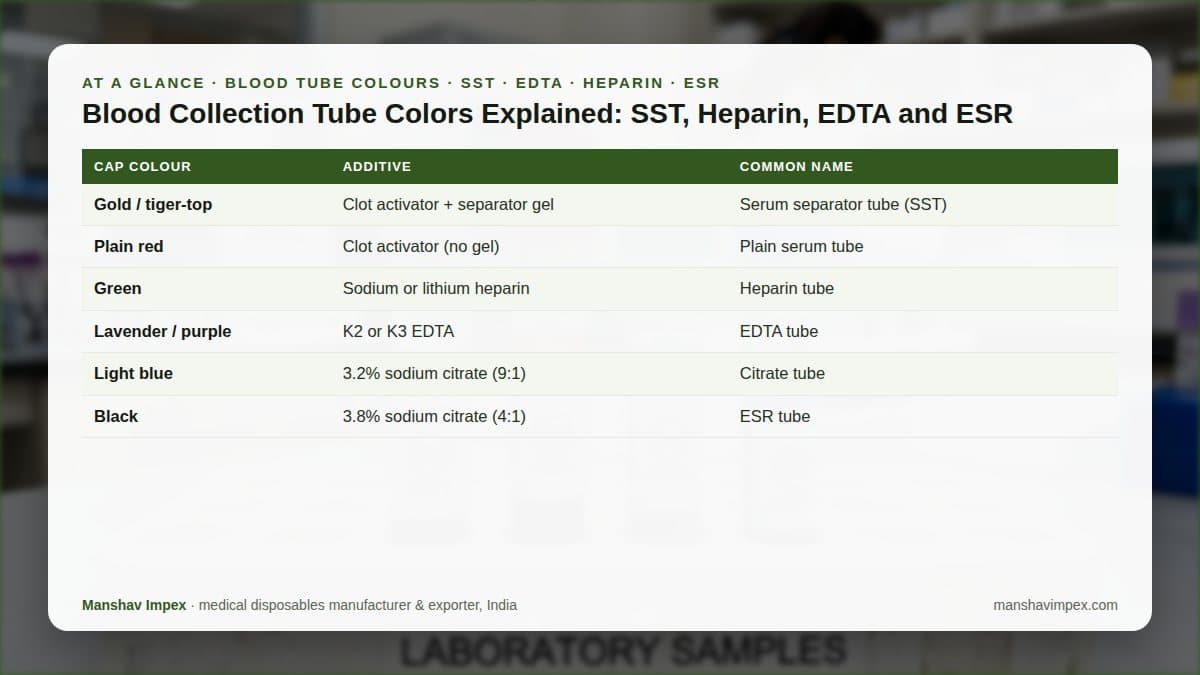
Cap colourAdditiveCommon nameUsed for
Gold / tiger-topClot activator + separator gelSerum separator tube (SST)Routine chemistry, serology, hormones
Plain redClot activator (no gel)Plain serum tubeSerology, blood bank where gel interferes
GreenSodium or lithium heparinHeparin tubePlasma chemistry, blood gases, trace elements (sodium heparin)
Lavender / purpleK2 or K3 EDTAEDTA tubeCBC and haematology
Light blue3.2% sodium citrate (9:1)Citrate tubeCoagulation - PT, APTT, INR
Black3.8% sodium citrate (4:1)ESR tubeErythrocyte sedimentation rate (Westergren)
GreySodium fluoride + oxalateGlucose tubeGlucose and lactate

Two frequent mix-ups: the ESR tube is black-capped with a 4:1 citrate ratio - not the light-blue coagulation tube - and sodium heparin (not lithium) is required for trace-element work, because lithium heparin contaminates lithium assays and some metals panels.

Order of draw

Blood cultures first, then citrate (light blue), serum tubes (red/gold), heparin (green), EDTA (lavender), and fluoride (grey) last. The order prevents additive carry-over between tubes - labs audit suppliers whose tubes force deviations, so print it on your cartons.

What lab buyers should check before importing

  1. Draw accuracy - stated volume plus/minus 10% through shelf life; a weak vacuum under-fills citrate tubes and invalidates coagulation ratios.
  2. Additive quality - spray-dried EDTA/heparin coverage, gel that holds a stable barrier after centrifugation in tropical transit temperatures.
  3. Tube material - PET for chemistry and gel tubes, siliconised glass where required; cap security against aerosols.
  4. Shelf life of at least 12-18 months on arrival - vacuum decays with time, so ask for fresh production, not stock.
  5. CE IVD documentation and ISO 13485 manufacturing for your registration file; lot-wise QC certificates.
  6. Carton labelling with colour, additive, volume and expiry visible without opening - what tender inspectors actually look at first.
At-a-glance checklist: Blood Collection Tube Colors Explained: SST, Heparin, EDTA and ESR
The key checks from this guide at a glance.
Sourcing note

Tubes travel best by sea in temperature-stable containers; air freight pressure cycles can disturb weak vacuums. Specify ISTA-tested export cartons and ask your supplier for transit validation data.

Building a lab consumables order - tubes, needles, holders?
Request a bulk quotation
🏭 Export Sourcing DeskIndian Manufacturer & Exporter — Vetted Factory Network
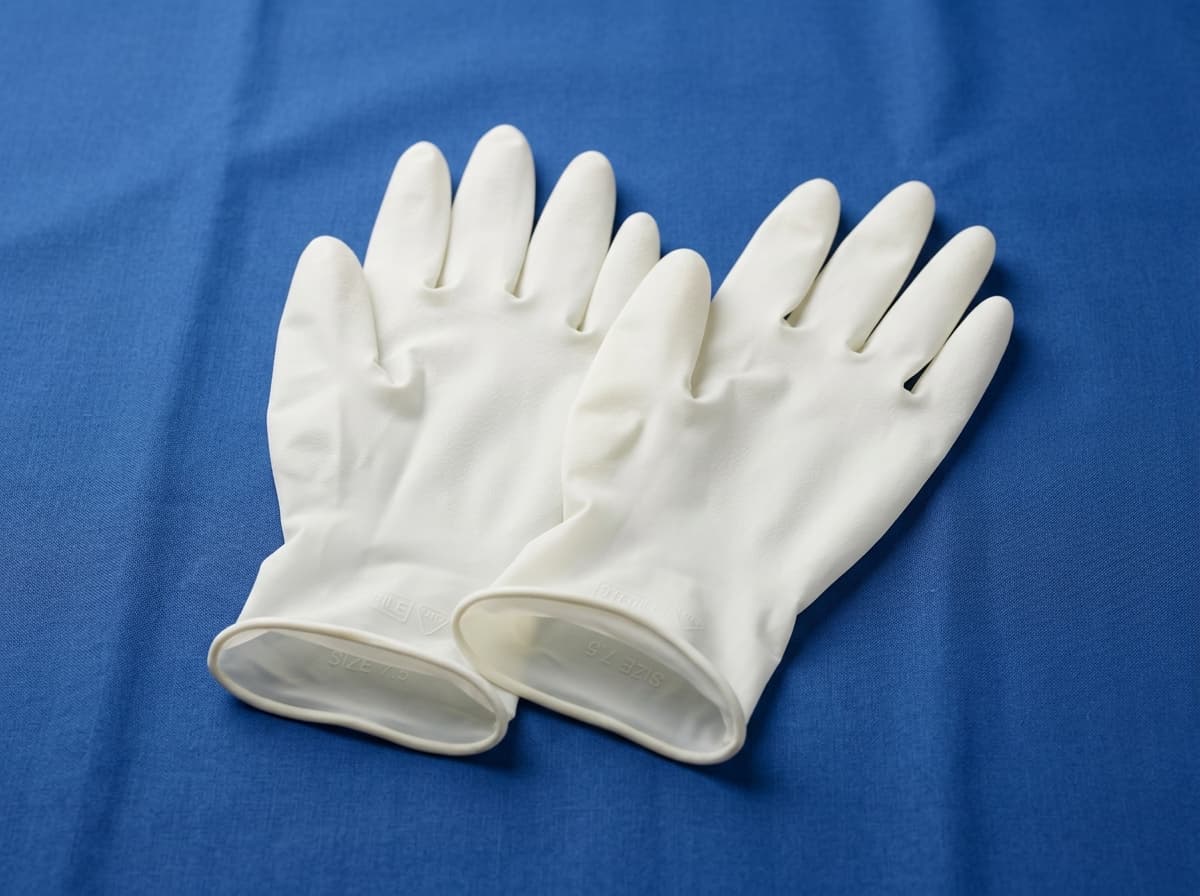
Sterile Latex Surgical Gloves (Powdered & Powder-Free) manufacturer India

Sterile Latex Surgical Gloves (Powdered & Powder-Free)

Pre-donned sterile natural latex surgical gloves with curved anatomical fingers, micro-textured anti-slip finish, beaded cuff, available in powdered and powder-free polymer coated grades. Container consignments dispatched from Port Mundra & Port Nhava Sheva, with certificates and test reports shared with every quotation.

Made to CE MDRMade to ISO 13485Made to EN 455Made to ASTM D3577MOQ: 50,000 pairs

Frequently asked questions

What is a serum separator tube (SST)?

A gold or tiger-top tube containing a clot activator and an inert separator gel. After centrifugation the gel forms a barrier between serum and cells, keeping the sample stable for chemistry, serology and hormone testing.

What is a sodium heparin tube used for?

Green-capped sodium heparin tubes give plasma for chemistry, blood gases and especially trace-element testing, where lithium heparin would contaminate lithium and some metal assays.

What colour is the ESR tube?

Black. ESR (Westergren) tubes contain 3.8% sodium citrate at a 4:1 blood-to-additive ratio - different from the light-blue 9:1 citrate tube used for coagulation tests.

What is the correct order of draw for blood collection tubes?

Blood cultures, then light blue (citrate), red/gold (serum), green (heparin), lavender (EDTA) and grey (fluoride) last, to prevent additive carry-over between tubes.

Sharmil Mangukiya (Founder & MD)

Sharmil Mangukiya is the founder and managing director of Manshav Impex, an Indian manufacturer & exporter of medical disposables serving importers, distributors, hospitals and governments in 48+ countries since 2019.

Chat with us