Blood Collection Tube Colors Explained: SST, Heparin, EDTA and ESR
Every cap colour is a different additive and a different test. A working map of SST, heparin, EDTA, citrate and ESR tubes - and the import checks that matter.

A procurement officer at a diagnostic centre in Dhaka asks three suppliers for purple-top EDTA tubes and gets three very different prices. The tubes in the samples look alike on the bench. The difference sits in the details the quote left out: whether the tube draws its own volume, what it is made of, how the additive is applied and how the lot is tested.
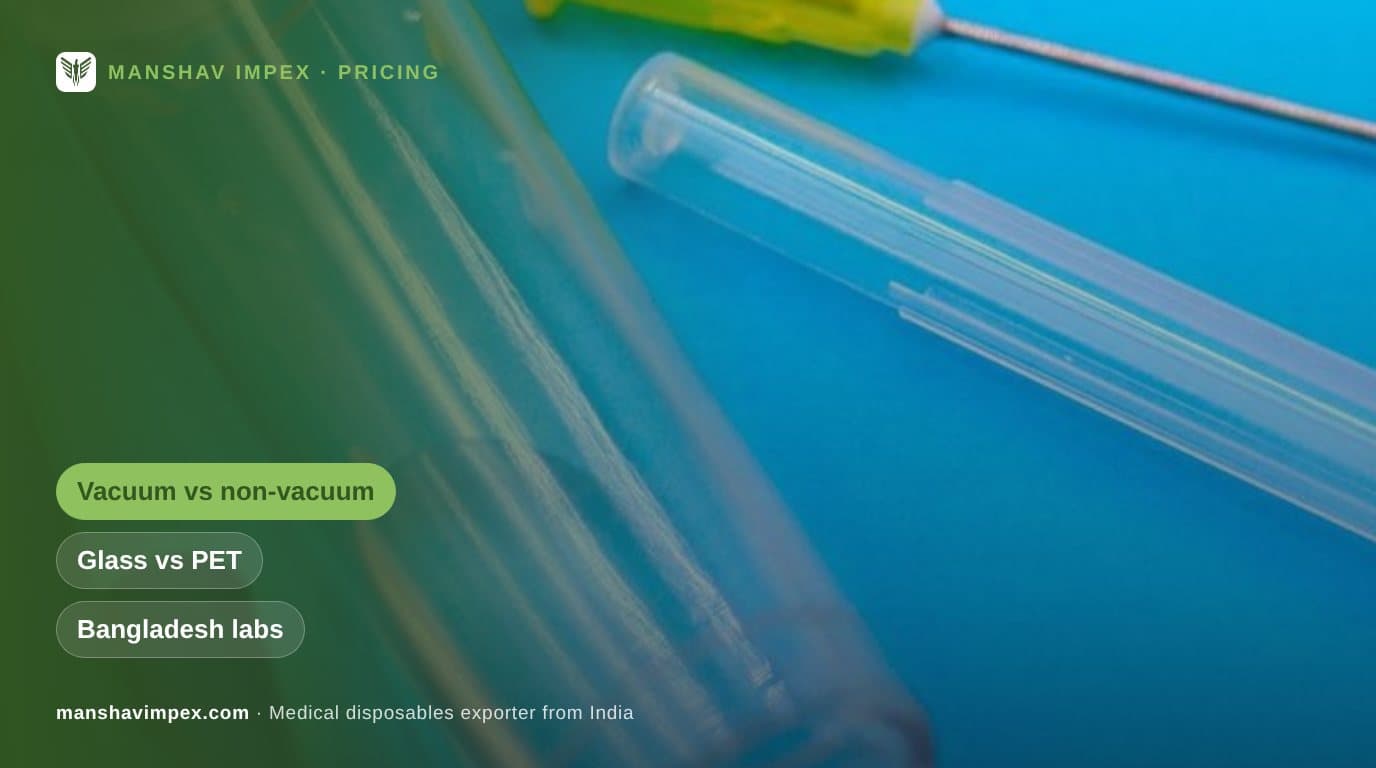
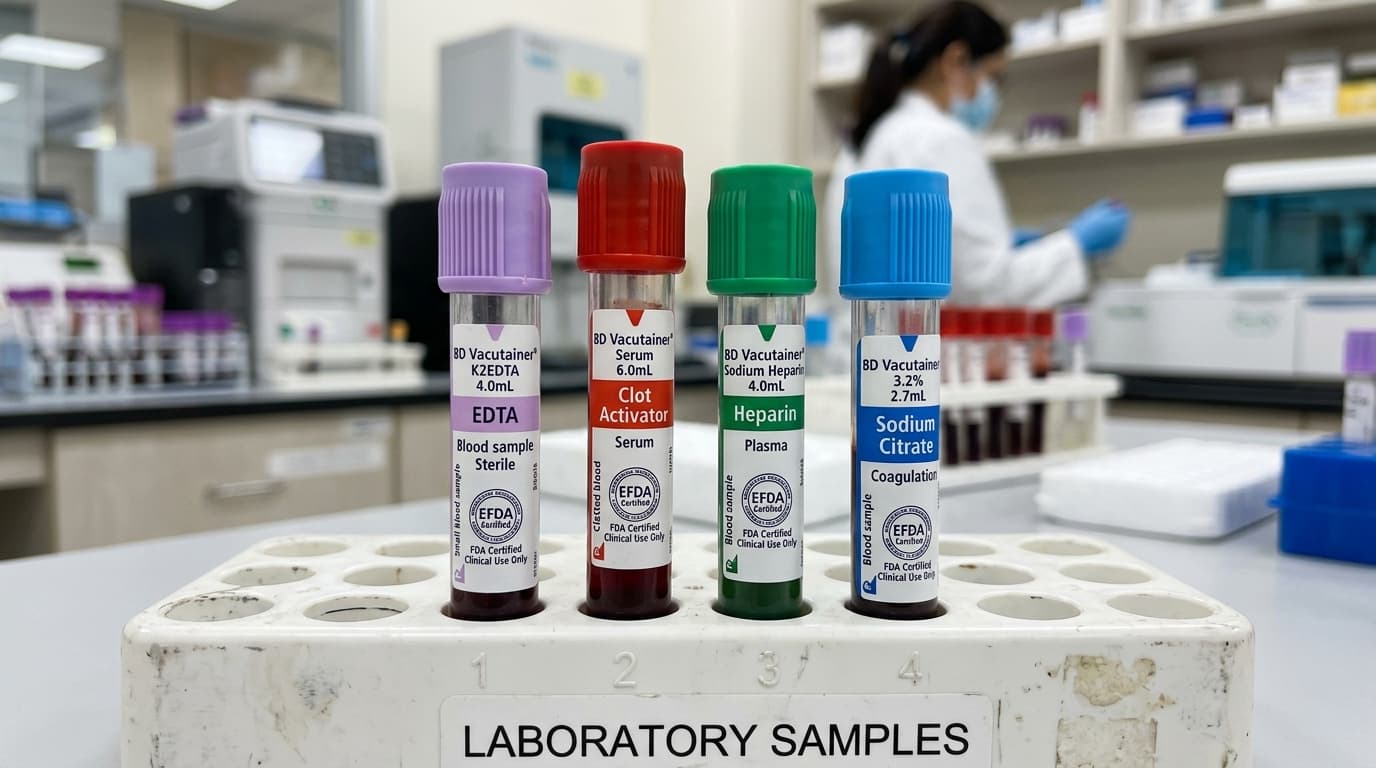
Two quotes for "EDTA tubes, 3 ml" can be for different products: vacuum or open, PET or glass, K2 or K3, a safety cap or a plain stopper. Here is what moves the blood collection tube price, and how a diagnostic centre or distributor in Bangladesh lines up quotes before it orders.
For specifications, packing and MOQ, see our blood collection tubes manufacturer & exporter in India page. This guide is for diagnostic centres, hospital laboratories and distributors in Bangladesh who need to compare tube quotes on the same footing before they place an order or answer a tender.
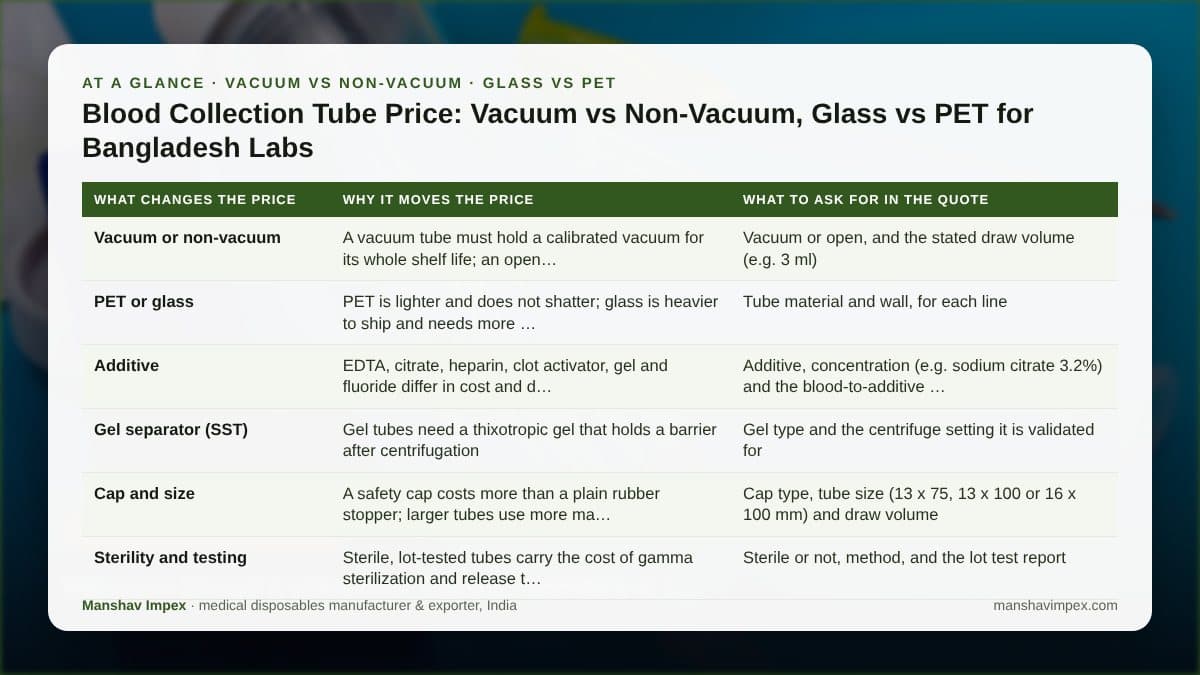
The blood collection tube price moves mainly with five things: whether the tube is a vacuum tube that draws a set volume or an open (non-vacuum) tube, the tube material (PET plastic or glass), the additive and how precisely it is dosed, the cap design and the draw volume and size. Packing, order quantity and the Incoterm then decide what the price per tube means once it lands in Chattogram.
| What changes the price | Why it moves the price | What to ask for in the quote |
|---|---|---|
| Vacuum or non-vacuum | A vacuum tube must hold a calibrated vacuum for its whole shelf life; an open tube does not | Vacuum or open, and the stated draw volume (e.g. 3 ml) |
| PET or glass | PET is lighter and does not shatter; glass is heavier to ship and needs more packing | Tube material and wall, for each line |
| Additive | EDTA, citrate, heparin, clot activator, gel and fluoride differ in cost and dosing accuracy | Additive, concentration (e.g. sodium citrate 3.2%) and the blood-to-additive ratio |
| Gel separator (SST) | Gel tubes need a thixotropic gel that holds a barrier after centrifugation | Gel type and the centrifuge setting it is validated for |
| Cap and size | A safety cap costs more than a plain rubber stopper; larger tubes use more material | Cap type, tube size (13 x 75, 13 x 100 or 16 x 100 mm) and draw volume |
| Sterility and testing | Sterile, lot-tested tubes carry the cost of gamma sterilization and release testing | Sterile or not, method, and the lot test report |
| Packing, quantity and Incoterm | Rack and carton count drive freight per tube; FOB and CIF are different prices | Pieces per rack and carton, MOQ, and the same Incoterm and port on every quote |
A vacuum tube pulls a fixed volume of blood through a closed needle and holder system, so the blood-to-additive ratio comes out right every time. That accuracy is what a coagulation test on a citrate tube or a full blood count on an EDTA tube depends on. An open tube is filled by syringe or by pouring, so the volume depends on whoever fills it. Open tubes cost less to make, but a quote for open tubes cannot be compared with a quote for vacuum tubes, even when the cap colour and additive match.
Ask every supplier to state the draw volume and the tolerance it is tested to. ISO 6710 is the international standard for single-use venous blood specimen containers, and our tubes are made to it. Our draw accuracy and ISO 6710 guide explains what the draw-volume test checks and how to run a simple check on samples yourself.
Our tubes are made in medical-grade virgin PET, with glass available for specific requirements. If a tender asks for glass and you are offered PET, or the other way round, flag it before you compare prices.
Put three sample tubes from each supplier in the same centrifuge run and check them the next morning. A gel tube whose barrier has not set cleanly, or a citrate tube that drew visibly less than its fill line, tells you more about the price gap than any spec sheet will. Keep the tubes with their lot numbers so the result can be traced to the batch that would ship.
Build one sheet with a row per tube type, not per supplier: EDTA K2 or K3, sodium citrate 3.2%, clot activator, SST gel, heparin and fluoride. For each row, fill in the draw volume, size, material, cap, sterility and the price per tube on one Incoterm. Then check each line against your analysers and your tender, not against the other quotes:
Medical devices and in-vitro diagnostic products imported into Bangladesh are overseen by the Directorate General of Drug Administration (DGDA), and hospital tenders often ask for registration or import permission and the manufacturer's documents. Requirements and timelines change, so verify current guidance with the DGDA or your registration agent before you price a tender. A supplier should be able to send the free sale certificate, ISO 13485 certificate, CE documentation, test reports and labels you need for that file.
We stopped buying on the price per tube. We buy on the price per correct result, and the cheap citrate tubes were costing us repeat draws.
Resin, additive and freight costs change between production runs, so request a current quotation for each order rather than reusing an old figure. Our minimum order for blood collection tubes is 100,000 pieces, which can be split across tube types and volumes. Tubes are packed 100 per rack in a foam tray and 12 racks per master carton, so 1,200 tubes per carton, which makes freight per tube easy to work out once you know the carton count.
Sea cargo for Bangladesh usually arrives through Chattogram port, with Dhaka-based buyers then trucking inland; urgent top-up orders can go by air to Dhaka. Agree early who handles customs clearance and the inland leg, because a CIF Chattogram price and a delivered Dhaka price are different numbers. Ask for the quote in the Incoterm you will actually use, and compare every supplier on that same basis.
Sterile vacuum blood collection tubes engineered from crack-resistant PET plastic with precisely calibrated internal vacuum, hemogard color-coded safety caps, and uniform additive spray coatings for clinical diagnostics. Container consignments dispatched from Port Mundra & Port Nhava Sheva, with certificates and test reports shared with every quotation.
It depends on whether the tube is vacuum or non-vacuum, PET or glass, the additive, the draw volume and size, the cap, sterility, packing and order size, and costs change between production runs, so request a current quotation. Compare quotes per tube on the same Incoterm and port.
A vacuum tube has to hold a calibrated vacuum until its expiry date so it draws the stated volume and keeps the blood-to-additive ratio right. An open tube has no vacuum to make or test, so it costs less, but the fill volume then depends on the person filling it.
PET tubes do not shatter and weigh much less, which lowers breakage and freight. Glass holds a vacuum very well and activates clotting naturally, so PET serum tubes use a clot activator coating. Check the shelf life and test reports for either material.
Shortlist blood collection tubes manufacturers in India that make tubes to ISO 6710, hold ISO 13485 in the factory's own name and can send lot test reports and the documents DGDA registration asks for. Test samples in your own centrifuge and analysers, then compare quotes per tube on the same Incoterm.
Our minimum is 100,000 pieces, which can be split across tube types and volumes, packed 100 per rack and 1,200 per master carton. Other exporters set their own minimums, so check each quote.
Regulator, registration steps, import duty by HS code and sea freight for the markets in this article.
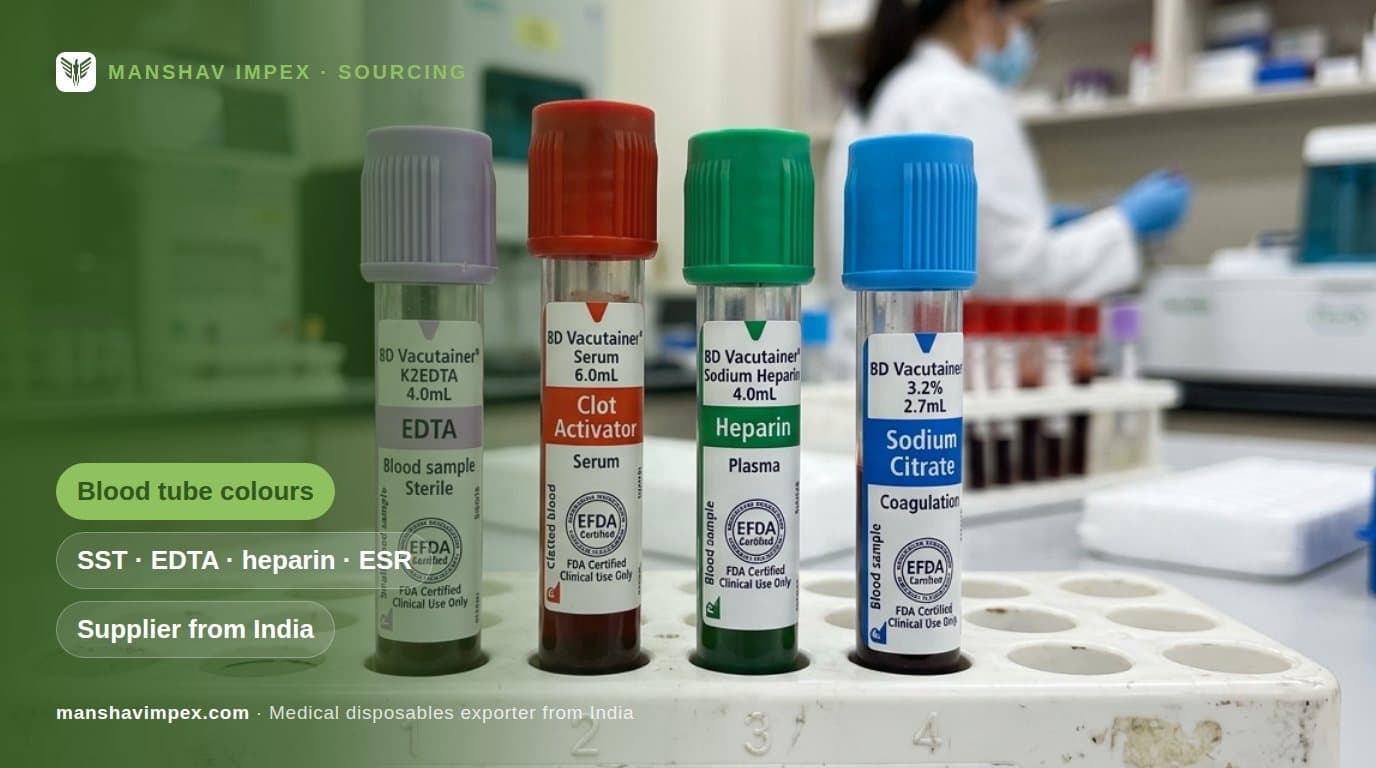
Every cap colour is a different additive and a different test. A working map of SST, heparin, EDTA, citrate and ESR tubes - and the import checks that matter.
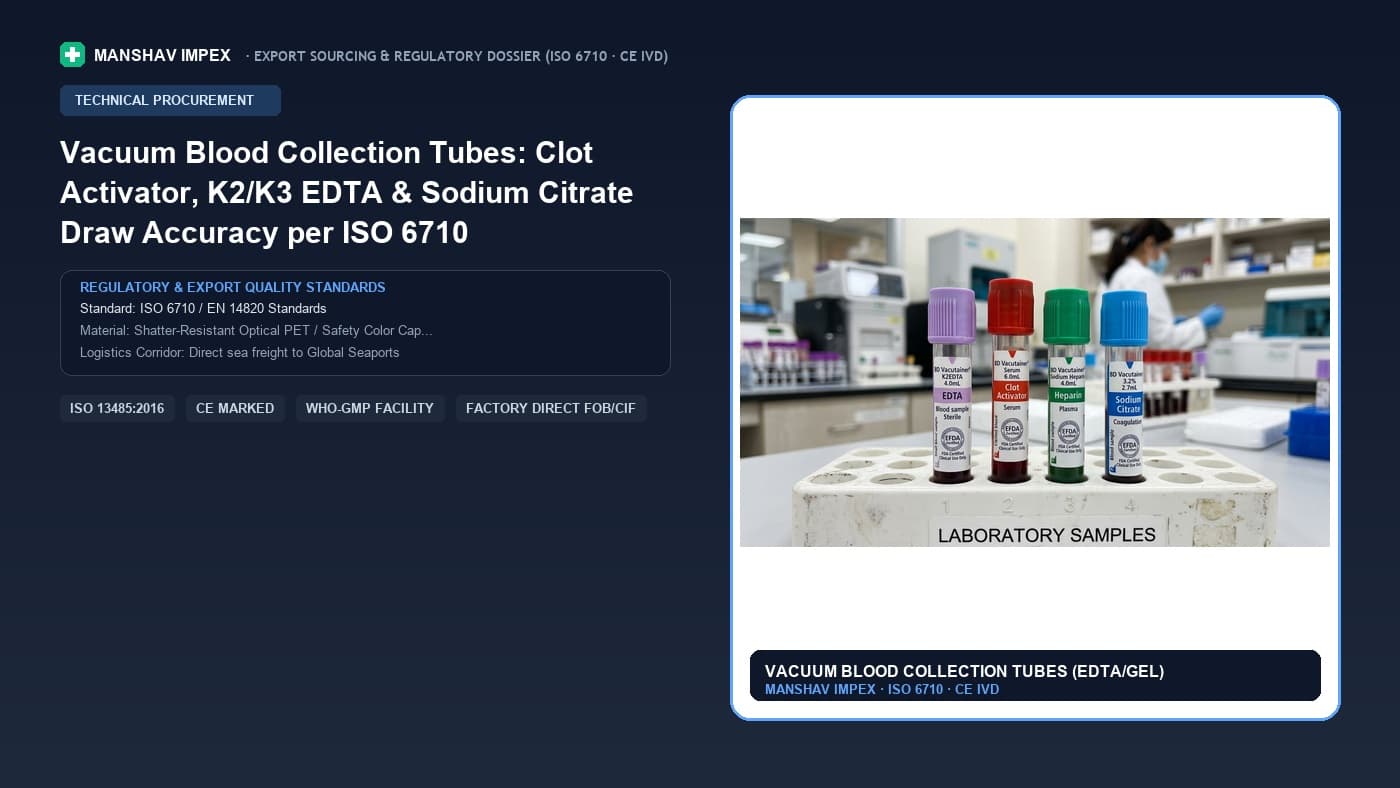
In clinical pathology, an incorrect anticoagulant-to-blood ratio skews CBC, coagulation, and biochemistry results. Here is the technical dossier on ISO 6710 vacuum draw tolerances, micronized spray coating uniformity, and diagnostic container export economics.
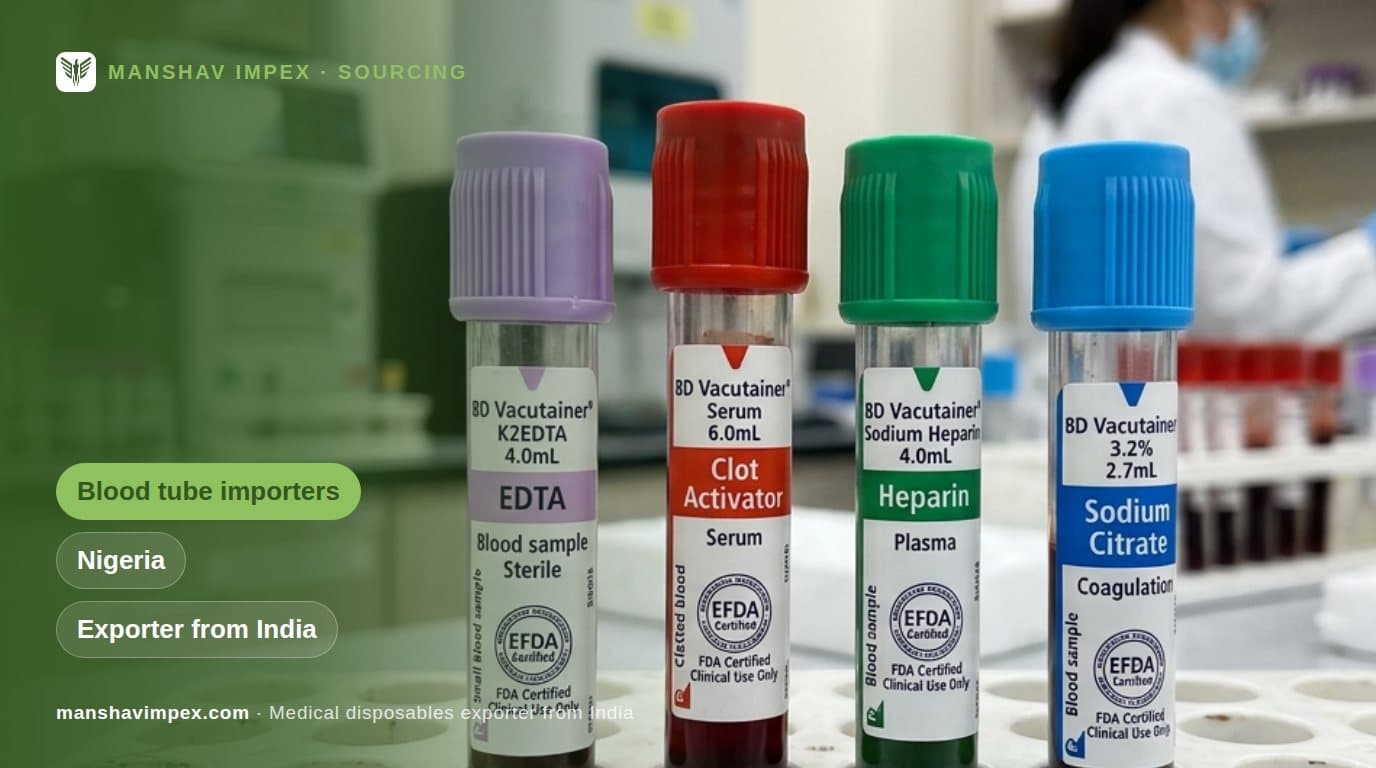
Nigeria's private labs and hospital groups burn through vacuum tubes daily, and nearly all of it is imported - which makes tube importing one of the steadiest lab-consumables businesses in the country, for the distributor who gets the mix and the paperwork right.