Blood Collection Tube Colors Explained: SST, Heparin, EDTA and ESR
Every cap colour is a different additive and a different test. A working map of SST, heparin, EDTA, citrate and ESR tubes - and the import checks that matter.

For a hospital laboratory in Dubai, Abu Dhabi, Riyadh or Jeddah, a blood collection tube is judged in the analyser room. A short draw dilutes the EDTA ratio, a weak gel barrier lets cells drift into serum, and a carton cooked in a 48°C warehouse loses vacuum months before its printed expiry. This is the checklist lab and procurement teams in the UAE and Saudi Arabia use when they evaluate a new tube supplier - including one in India.
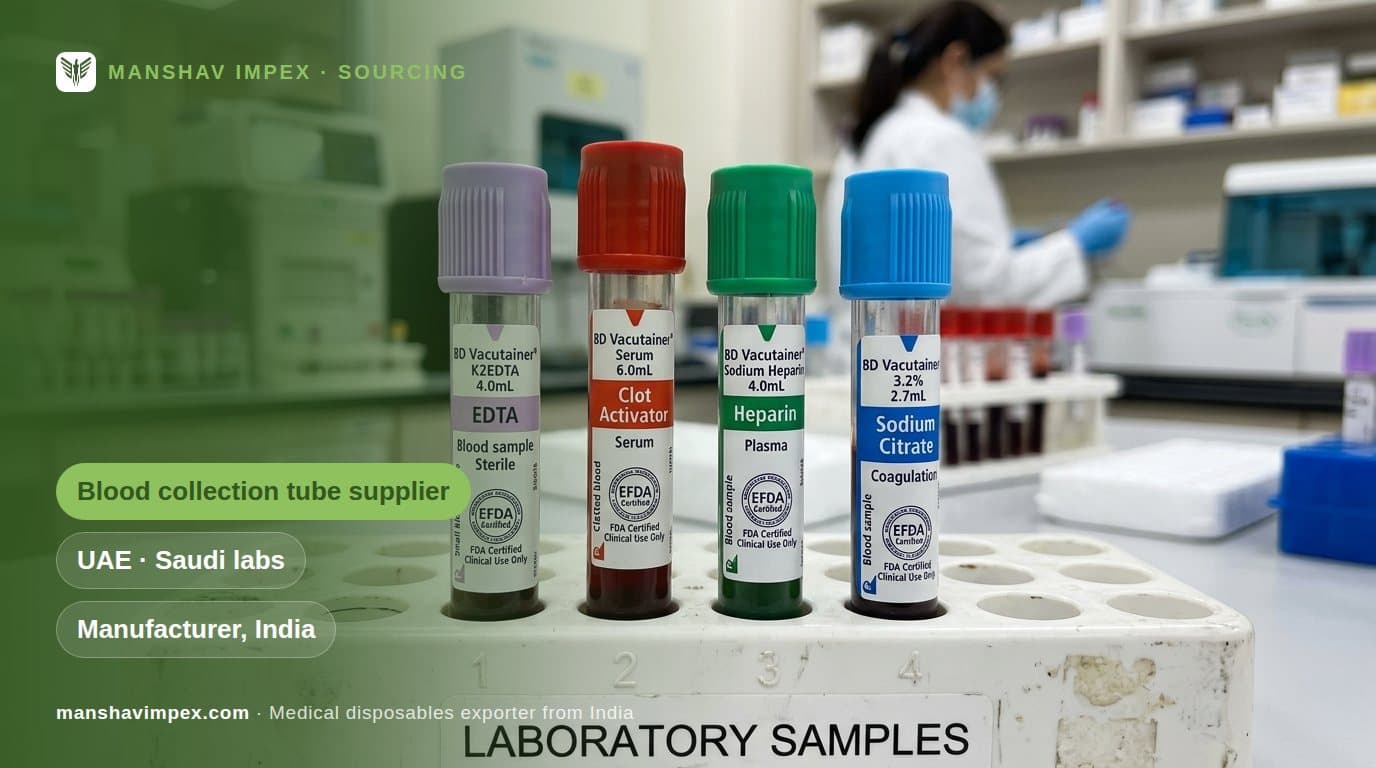
A Gulf hospital lab rejects tubes for short draws, haemolysed samples and labels it cannot read - not for price. Here is what procurement officers in the UAE and Saudi Arabia check before they award a tube contract.
Gulf labs mostly run high-throughput automated lines, so tubes have to fit the analyser racks, uncap cleanly and give the same fill every time. That makes the tube contract less forgiving than many other disposables: a supplier who wins on price but drifts on draw volume costs the lab redraws, complaints from wards and, in a tender market, the next award.
They start with documents and fit, then test. A shortlisted supplier has to show ISO 13485 manufacturing, tubes made to ISO 6710, a registration route through MOHAP (or DHA/DoH) in the UAE or SFDA in Saudi Arabia, and tube sizes that fit the lab's analysers. Only then does an evaluation lot go through draw-volume, haemolysis and gel-separation checks against the incumbent brand.
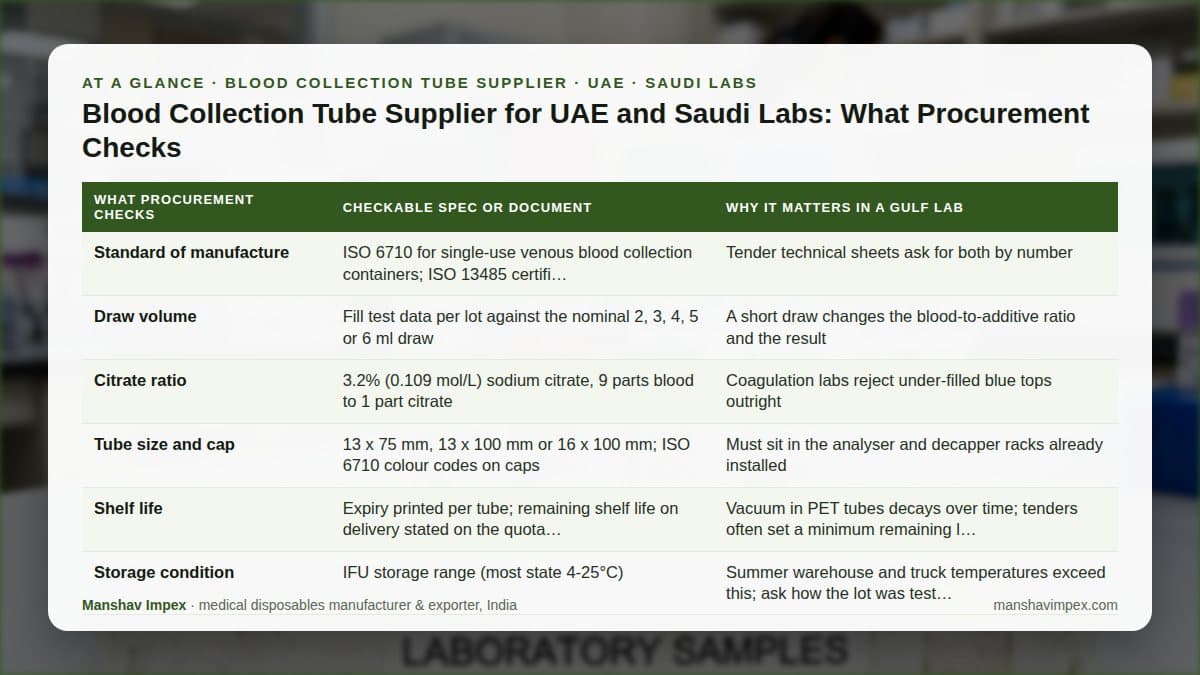
| What procurement checks | Checkable spec or document | Why it matters in a Gulf lab |
|---|---|---|
| Standard of manufacture | ISO 6710 for single-use venous blood collection containers; ISO 13485 certificate with matching legal name | Tender technical sheets ask for both by number |
| Draw volume | Fill test data per lot against the nominal 2, 3, 4, 5 or 6 ml draw | A short draw changes the blood-to-additive ratio and the result |
| Citrate ratio | 3.2% (0.109 mol/L) sodium citrate, 9 parts blood to 1 part citrate | Coagulation labs reject under-filled blue tops outright |
| Tube size and cap | 13 x 75 mm, 13 x 100 mm or 16 x 100 mm; ISO 6710 colour codes on caps | Must sit in the analyser and decapper racks already installed |
| Shelf life | Expiry printed per tube; remaining shelf life on delivery stated on the quotation | Vacuum in PET tubes decays over time; tenders often set a minimum remaining life |
| Storage condition | IFU storage range (most state 4-25°C) | Summer warehouse and truck temperatures exceed this; ask how the lot was tested |
| Labelling | Lot, expiry, additive and draw volume on every tube; Arabic/English expectations for the Saudi market | Unreadable or English-only outer labels can hold up registration or acceptance |
In the UAE, the federal product route runs through the Ministry of Health and Prevention, with Dubai Health Authority and the Department of Health Abu Dhabi setting their own procurement and facility rules. In Saudi Arabia, medical devices need SFDA marketing authorisation through a local authorised representative, and government hospital demand is largely bought through NUPCO tenders. In both countries the importer of record usually holds the registration, so the supplier's job is to deliver a complete technical file: ISO certificates, test reports, labels, IFU and declarations of conformity.
Requirements, fees and timelines change. Treat this section as orientation only and verify current guidance with MOHAP, DHA, DoH Abu Dhabi or SFDA before you commit to a tender timeline.
Ask for the evaluation lot to arrive in the same carton and pallet configuration as the commercial shipment, not in a courier envelope. Then leave one carton in your own warehouse through a summer month before you run the draw-volume test. A tube that still draws full after a Gulf August is the tube you want on a two-year contract.
We never lost a tube tender on price. We lost one on twenty short draws in the first week, and the ward sisters remembered it for a year.
Most UAE and Saudi labs already run a global brand on their main analyser line. Indian manufacturers are usually added as a second source: for private hospital groups and clinic chains that need a competitive price on routine EDTA and gel tubes, for distributors supplying smaller labs, and for tender bidders who want a supplier able to ship tubes in the same container as syringes, needles, IV cannulas and gloves. Transit from Mundra or Nhava Sheva to Jebel Ali or Dammam is short compared with Far East origins, which keeps more of the shelf life for the customer.
For the colour codes and additive chemistry behind each tube, see our blood collection tube colour guide; for the fill and vacuum numbers to put on a purchase order, see the ISO 6710 draw-accuracy guide linked below.
Pre-donned sterile natural latex surgical gloves with curved anatomical fingers, micro-textured anti-slip finish, beaded cuff, available in powdered and powder-free polymer coated grades. Container consignments dispatched from Port Mundra & Port Nhava Sheva, with certificates and test reports shared with every quotation.
There is no official ranking. The best supplier for your lab is one with ISO 13485 manufacturing, tubes made to ISO 6710, a working registration route through your importer, tube sizes that fit your analysers, and lot test data showing consistent draw volume. Run a paired evaluation before you switch.
Blood collection tubes are regulated as medical devices in Saudi Arabia and generally need SFDA marketing authorisation through a local authorised representative before they are sold. The exact classification and file requirements should be confirmed with the SFDA or your authorised representative.
Common draws are 2, 3, 4, 5 and 6 ml in 13 x 75 mm, 13 x 100 mm and 16 x 100 mm tubes. The size must match the racks on the lab's automation line, so procurement usually specifies it from the analyser manual.
Heat speeds up vacuum loss and can affect additives and gel. Most tube IFUs state a storage range of about 4-25°C, so ask how the supplier ships and stores tubes, and test draw volume on cartons that have spent time in your own warehouse.
Yes. Indian manufacturers commonly supply tubes under the importer's label and carton. Cap colours stay on the ISO 6710 code; your brand, address and registration details go on the tube label and outer carton, and the registration is made in the brand owner's name.
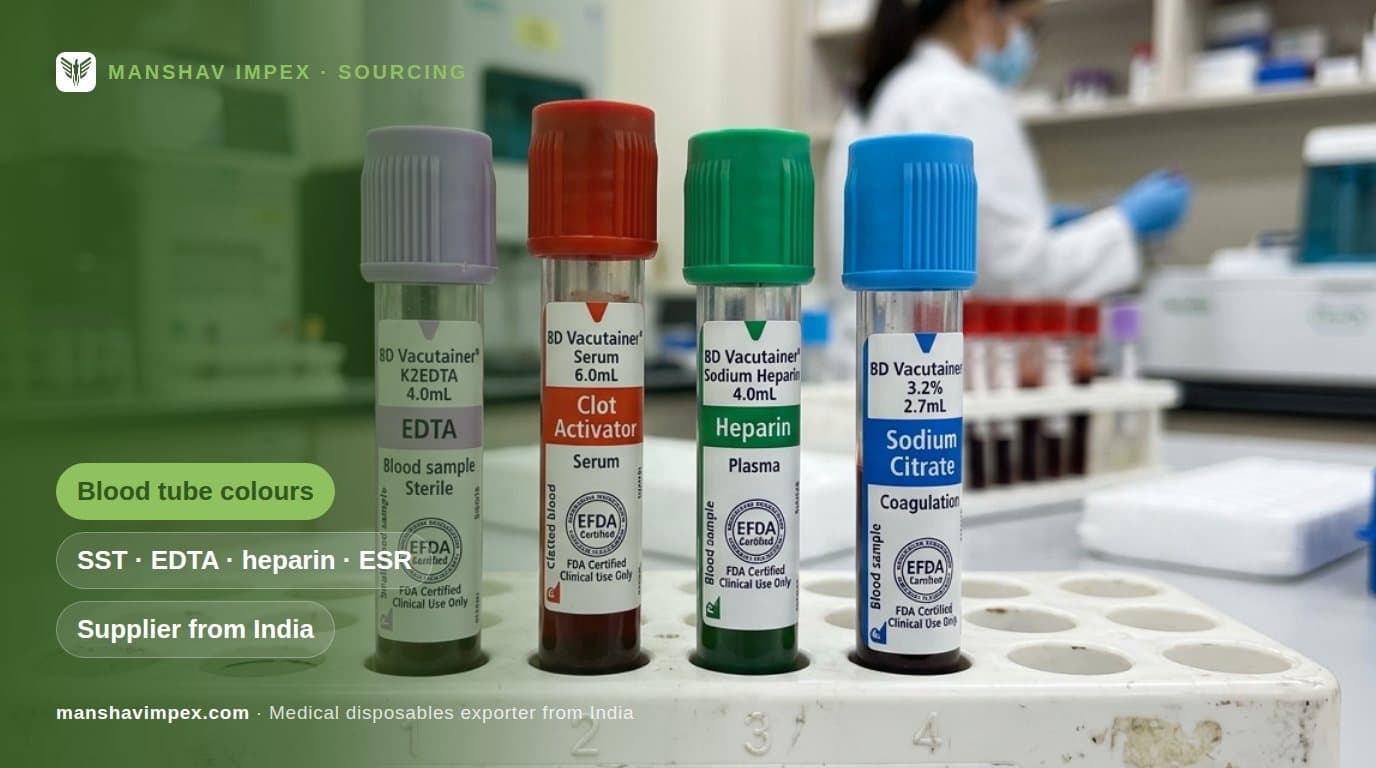
Every cap colour is a different additive and a different test. A working map of SST, heparin, EDTA, citrate and ESR tubes - and the import checks that matter.
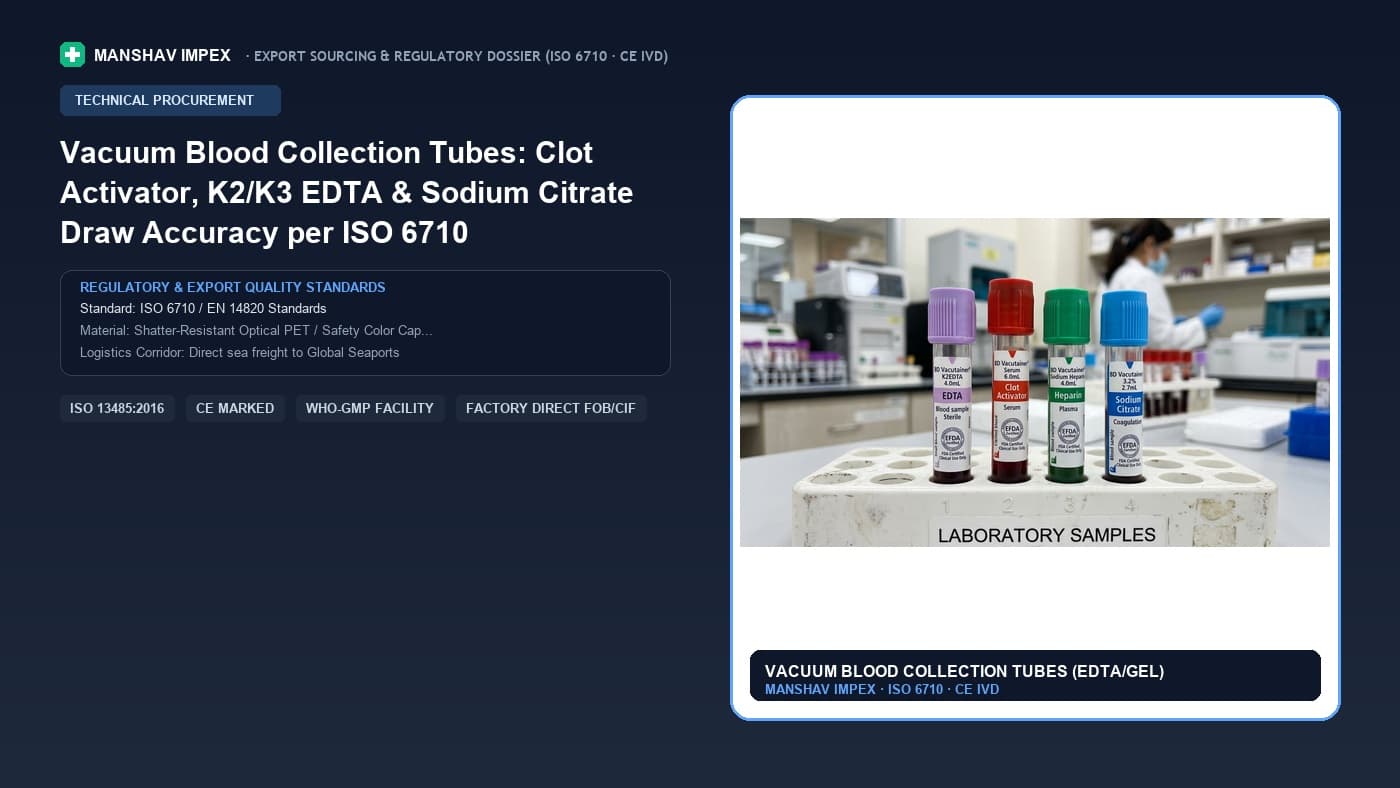
In clinical pathology, an incorrect anticoagulant-to-blood ratio skews CBC, coagulation, and biochemistry results. Here is the technical dossier on ISO 6710 vacuum draw tolerances, micronized spray coating uniformity, and diagnostic container export economics.
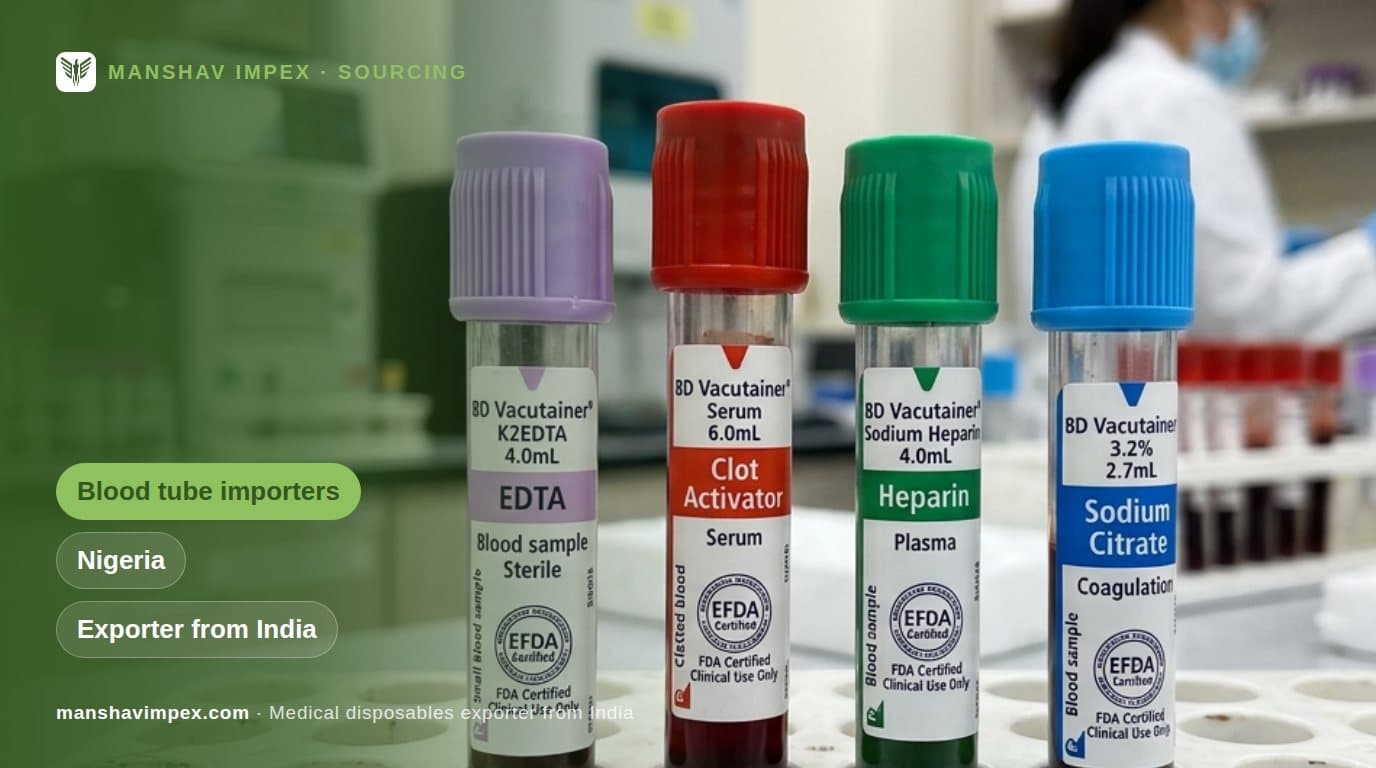
Nigeria's private labs and hospital groups burn through vacuum tubes daily, and nearly all of it is imported - which makes tube importing one of the steadiest lab-consumables businesses in the country, for the distributor who gets the mix and the paperwork right.