Importing Medical Disposables into Australia: TGA Regulations, ARTG Inclusion & Indian Sourcing Guide (2026)
Australia operates one of the most sophisticated and highly regulated healthcare markets in the world, with over $220 billion in annual healthcare expenditure spanning public state hospital networks and leading private healthcare operators (Ramsay Health Care, Healthscope, St John of God). However, Australian medical distributors and procurement committees face severe margin compression due to legacy European brand markups, prolonged shipping times from Europe, and rising local hospital supply costs. Following the landmark Australia-India Economic Cooperation and Trade Agreement (AI-ECTA)—which eliminates import tariffs on certified Indian medical goods—Australian distributors can import identical CE MDR, ISO 13485, and ASTM-compliant surgical consumables directly from India, securing 45% to 65% lower landed costs while satisfying all Therapeutic Goods Administration (TGA) standards.
Sharmil Mangukiya (Founder & MD) 4 min read September 7, 2026 · Updated September 7, 2026
In short
A complete operational blueprint for Australian medical distributors navigating TGA regulations, ARTG inclusion, AI-ECTA duty-free tariffs, and replacing overpriced European surgical consumables with certified Indian manufacturing.
Medical devices and single-use surgical consumables imported into Australia are strictly regulated by the Therapeutic Goods Administration (TGA) under the Therapeutic Goods Act 1989 and the Therapeutic Goods (Medical Devices) Regulations 2002.
Before any medical consumable can be legally supplied in Australia, it must be included in the Australian Register of Therapeutic Goods (ARTG). The TGA categorizes devices into five distinct risk classes:
Under Australian law, an overseas manufacturer must be represented by an Australian Sponsor (a legally registered Australian business entity or distributor). The Sponsor submits the ARTG application, holds the legal ARTG entry, and acts as the official liaison with the TGA for post-market vigilance and adverse event reporting.
2. AI-ECTA Trade Agreement: 0% Import Duties into Australia
Under the Australia-India Economic Cooperation and Trade Agreement (AI-ECTA), 100% of Indian medical devices, surgical consumables, and hospital equipment enter Australia with 0% customs duty:
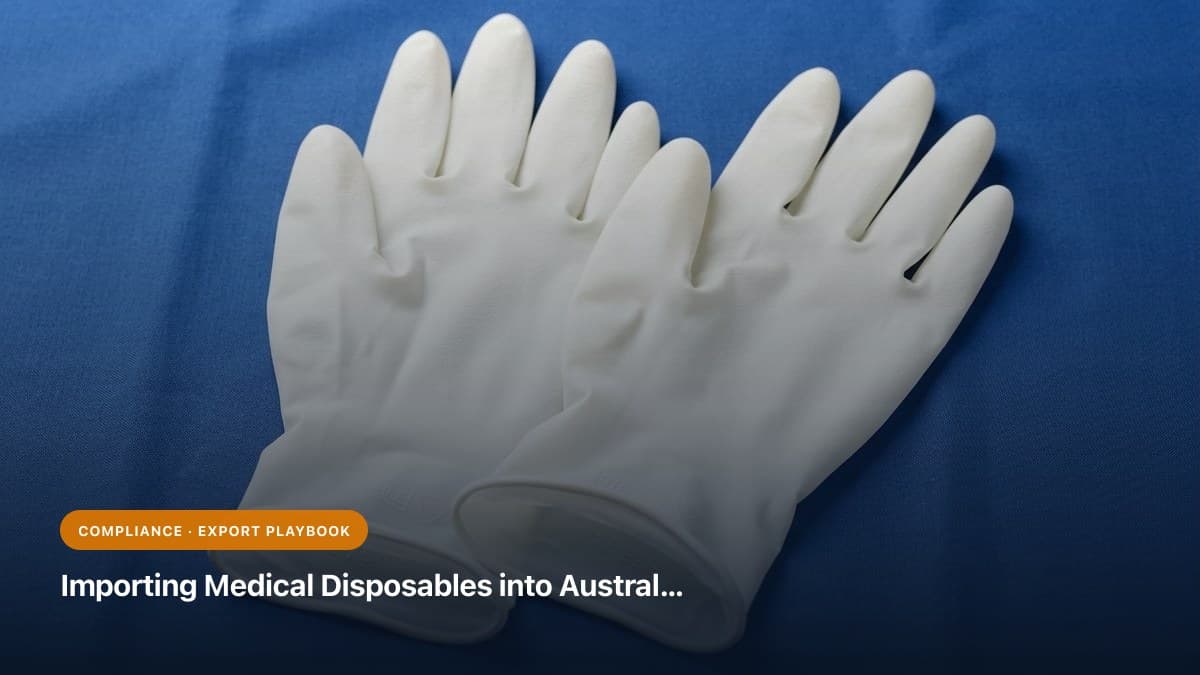
Zero Customs Duty (0% Tariff): Preferential tariff treatment across Chapter 90 (surgical blades, medical devices) and Chapter 40 (latex and nitrile surgical gloves) with a valid Certificate of Origin (COO) issued under AI-ECTA.
GST Treatment (10%): Standard Goods and Services Tax (GST) applies at customs clearance but is fully creditable as an Input Tax Credit (ITC) for registered Australian businesses.
Strict Packaging Standards: Packaging must display the Australian Sponsor's name and address, TGA-compliant GMDN/EMDN nomenclature, sterility method, batch number, and expiry date.
3. European Brand vs. Certified Indian Quality: Landed Cost in Australia (AUD)
Australian healthcare providers (such as state procurement bodies HealthShare NSW, Health Services Daily, and private hospital consortiums) achieve dramatic procurement cost reductions by sourcing directly from certified Indian manufacturers:
Surgical Blades (100k Pcs) - European Brand30000 $
Surgical Blades (100k Pcs) - Manshav Impex6300 $
Save $23,700 AUD per order
4. Maritime Logistics: Direct Routes to Sydney, Melbourne, Brisbane & Fremantle
Direct and expedited transshipment ocean services connect India's western deep-water container terminals (Nhava Sheva, Mundra, and Hazira) to all major Australian ports:
Port of Fremantle (Perth, Western Australia): 14 to 18 days direct transit time.
Port of Melbourne & Port Botany (Sydney): 18 to 22 days scheduled transit time.
Port of Brisbane: 20 to 24 days transit time.
FCL Mixed Container Shipments: Australian distributors can consolidate surgical gloves, scalpel blades, trauma plates, sutures, and hospital furniture in a single 40ft High Cube container, optimizing cash flow and warehouse intake.
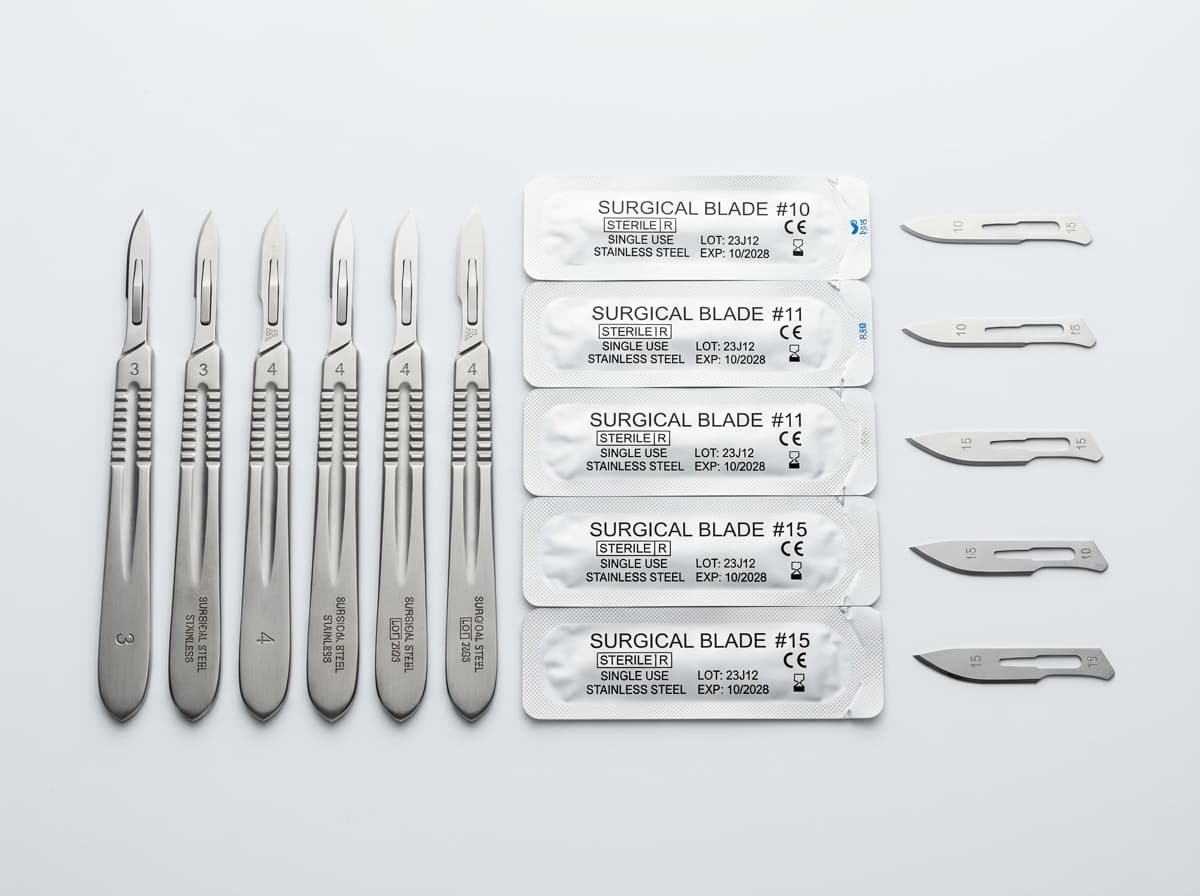
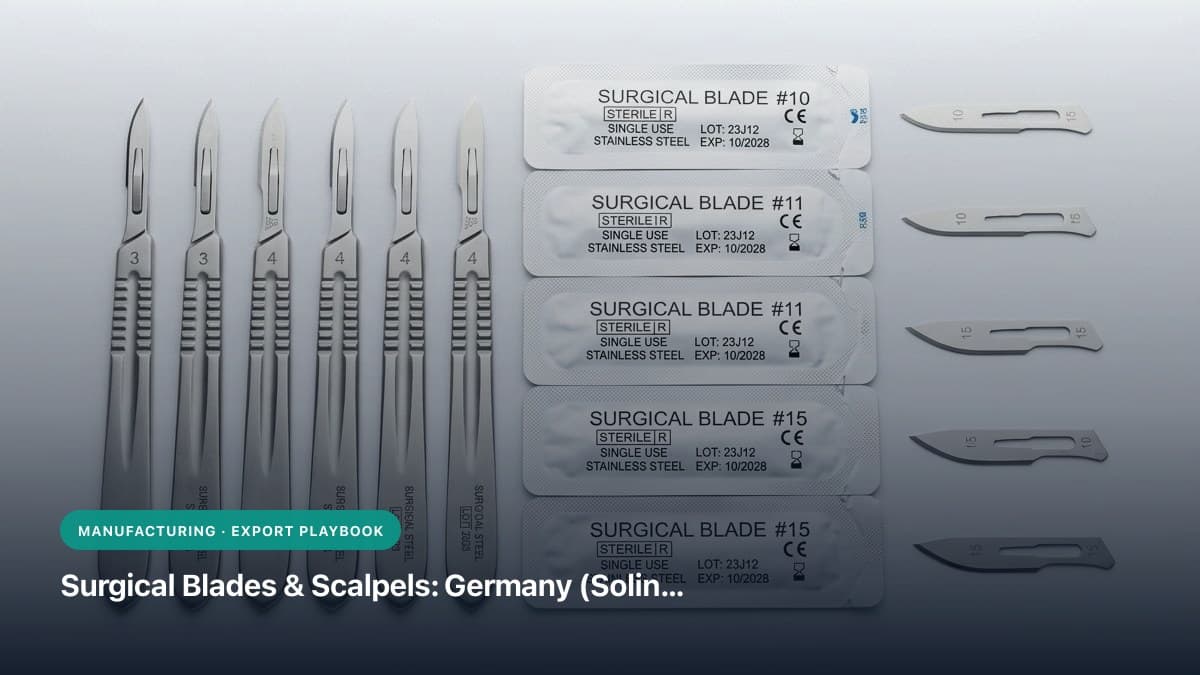
Ultra-sharp sterile surgical blades crafted from premium surgical steel with precision-ground edges and matching ergonomic scalpel handles for OR use. Container consignments dispatched from Port Mundra & Port Nhava Sheva, with certificates and test reports shared with every quotation.
Made to CE MDRMade to ISO 13485Made to ISO 7740MOQ: 100,000 pcs
Can Manshav Impex provide CE MDR and ISO 13485 certificates for TGA ARTG inclusion?
Yes. We supply complete CE MDR certificates issued by European Notified Bodies, ISO 13485:2016 certificates, biocompatibility reports (ISO 10993), and sterilization validation data required by Australian Sponsors for smooth ARTG submission.
Do Indian medical supplies enter Australia duty-free under AI-ECTA?
Yes. Under the Australia-India Economic Cooperation and Trade Agreement (AI-ECTA), all certified Indian medical devices and surgical consumables qualify for 0% customs duty upon presentation of an AI-ECTA Certificate of Origin.
Can Australian distributors request private label OEM branding?
Yes. We offer complete OEM packaging with your Australian company branding, Sponsor details, ARTG listing numbers, barcodes, and custom inner box designs.
Sharmil Mangukiya (Founder & MD)
Sharmil Mangukiya is the founder and managing director of Manshav Impex, an Indian manufacturer & exporter of medical disposables serving importers, distributors, hospitals and governments in 48+ countries since 2019.