Surgical Blades Exporter from India for Kenya: What Tender Bidders Check
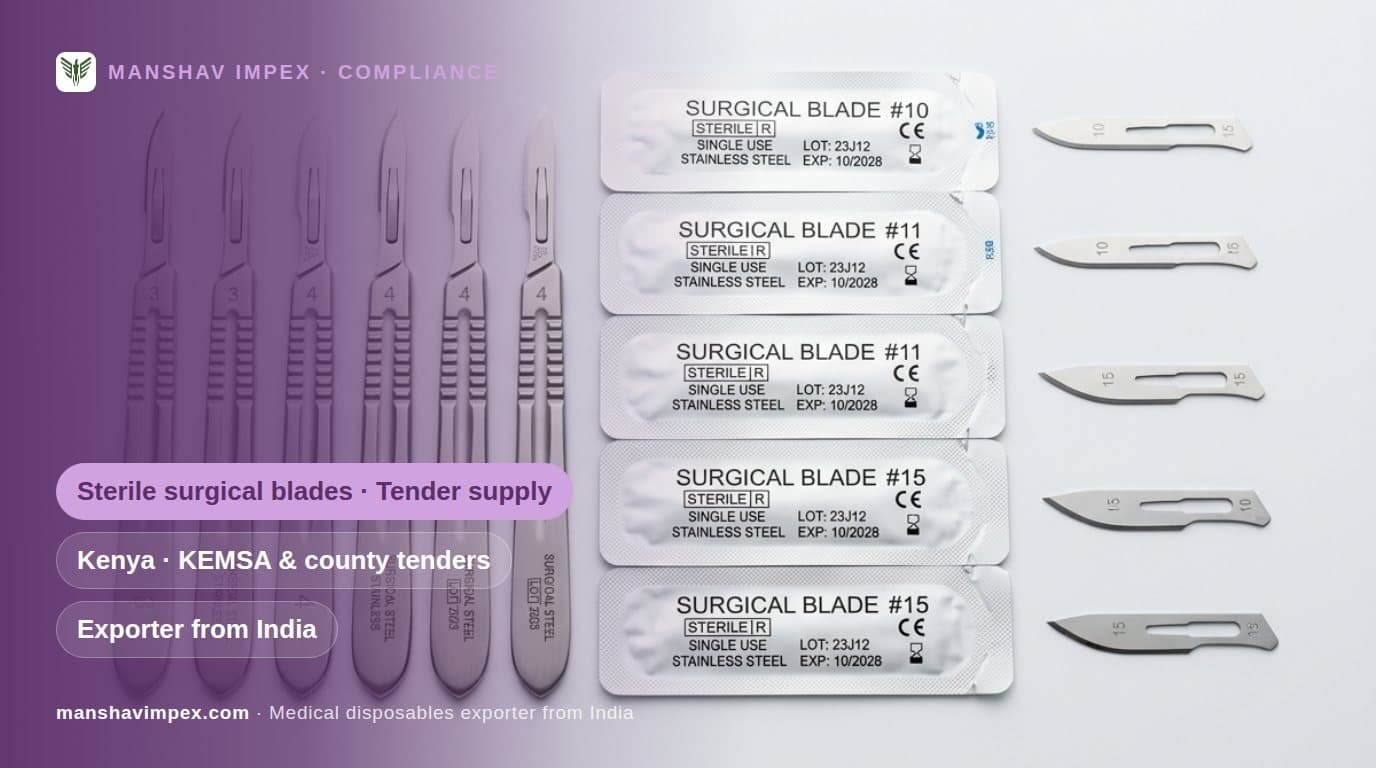
Sterile surgical blades appear on almost every theatre-consumables tender in Kenya, from KEMSA framework contracts to county referral hospitals in Nakuru, Kisumu and Mombasa. The line is small, the quantities are large, and the evaluation is strict. Distributors in Nairobi who win these lines repeatedly do most of the work before the tender opens: they agree the specification, the documents and the landed cost with one surgical blades exporter from India, so the bid goes in complete.
Sharmil Mangukiya (Founder & MD) 4 min read October 23, 2026
In short
A blade line on a Kenyan tender is rarely lost on price. It is lost on a missing authorisation letter, a sample that does not match, or a proforma that does not follow the schedule. Here is what bidders settle with their Indian exporter first.
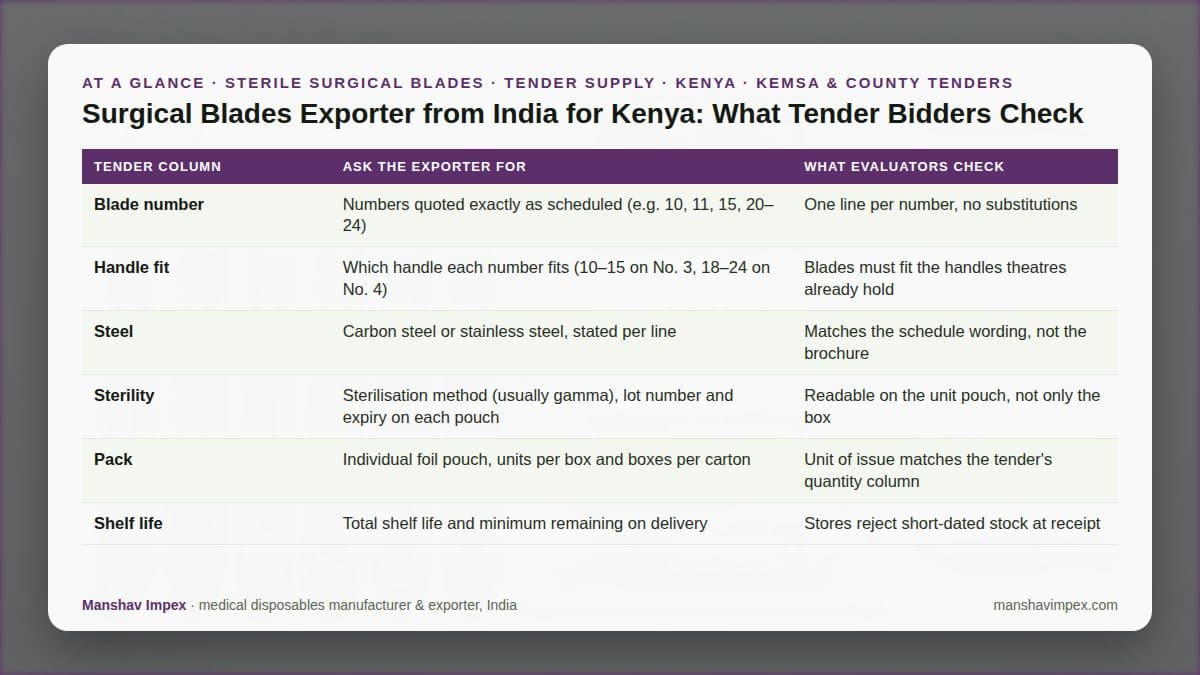
A blade tender reads like a short list — blade numbers, steel, sterility, pack — but the evaluation committee scores every line against the schedule and every document against the bidder's name. Most rejected bids fail on paperwork that the manufacturer could have supplied weeks earlier. The checks below are the ones experienced bidders run with their exporter before they buy the tender document.
What do Kenyan tender bidders need from a surgical blades exporter in India?
Bidders need three things from the exporter: a technical sheet that answers every column of the tender schedule, a document set issued in the manufacturer's legal name with an authorisation letter naming the bidder, and samples from the same production that will be supplied. With those in hand, the bidder can price the line; without them, a low price does not get past technical evaluation.
Tender column
Ask the exporter for
What evaluators check
Blade number
Numbers quoted exactly as scheduled (e.g. 10, 11, 15, 20–24)
One line per number, no substitutions
Handle fit
Which handle each number fits (10–15 on No. 3, 18–24 on No. 4)
Blades must fit the handles theatres already hold
Steel
Carbon steel or stainless steel, stated per line
Matches the schedule wording, not the brochure
Sterility
Sterilisation method (usually gamma), lot number and expiry on each pouch
Readable on the unit pouch, not only the box
Pack
Individual foil pouch, units per box and boxes per carton
Unit of issue matches the tender's quantity column
Shelf life
Total shelf life and minimum remaining on delivery
Stores reject short-dated stock at receipt
The tender file: documents Kenyan evaluators look for
Medical devices imported into Kenya fall under the Pharmacy and Poisons Board (PPB), and many consignments also need a certificate of conformity under the Kenya Bureau of Standards (KEBS) pre-export verification programme. Tender documents set their own list on top of that. Ask the exporter for the set below before you price, and check that every certificate carries the same legal name. Requirements change — verify current guidance with PPB, KEBS and the procuring entity before you submit.
Manufacturer's authorisation letter naming your company and the tender number — most Kenyan tenders ask for one.
ISO 13485 certificate for the manufacturing site, in the manufacturer's legal name.
CE certificate or declaration for the blade family, and a free sale certificate from India.
Product registration or listing status with PPB for the blades you will supply.
Technical data sheet per blade number, sterilisation certificate and lot-wise test reports.
Two sample boxes per blade number, from current production, with the lot printed on every pouch.
The key checks from this guide at a glance.
Buyer tip
Send the exporter the tender schedule itself and ask for the proforma invoice in the same order, with the tender item number on every line. Evaluation committees work down the schedule line by line; a proforma that follows the catalogue instead makes them hunt for each number, and a bid that is hard to read is easy to mark non-responsive.
Pricing the bid: landed cost to Mombasa and delivery to Nairobi
Blade prices move with steel grade, pack and quantity, so request a current quotation and compare exporters on the same basis. Most Kenyan tenders are priced delivered to the procuring entity's store, so work each offer from FOB India through sea freight to Mombasa, insurance, clearance, import levies and inland transport to Nairobi or the county store. Confirm current levy rates with your clearing agent before you fix the bid price.
Compare on
Typical trap
Fix before you bid
Same steel per number
Stainless quoted against a carbon-steel line
Steel stated on every proforma line
Same unit of issue
Box of 100 against a schedule in pieces
Price per piece and per box
Delivery terms
FOB offer compared with a delivered tender price
Every offer worked to delivered-store cost
Shelf life on arrival
Older lots at a low price
Minimum remaining shelf life written into the order
Delivery schedule
One shipment against staggered call-offs
Production and shipment dates matched to call-offs
The tender gives you a quantity and a date. The exporter has to give you both, and the documents to prove it, before you sign.
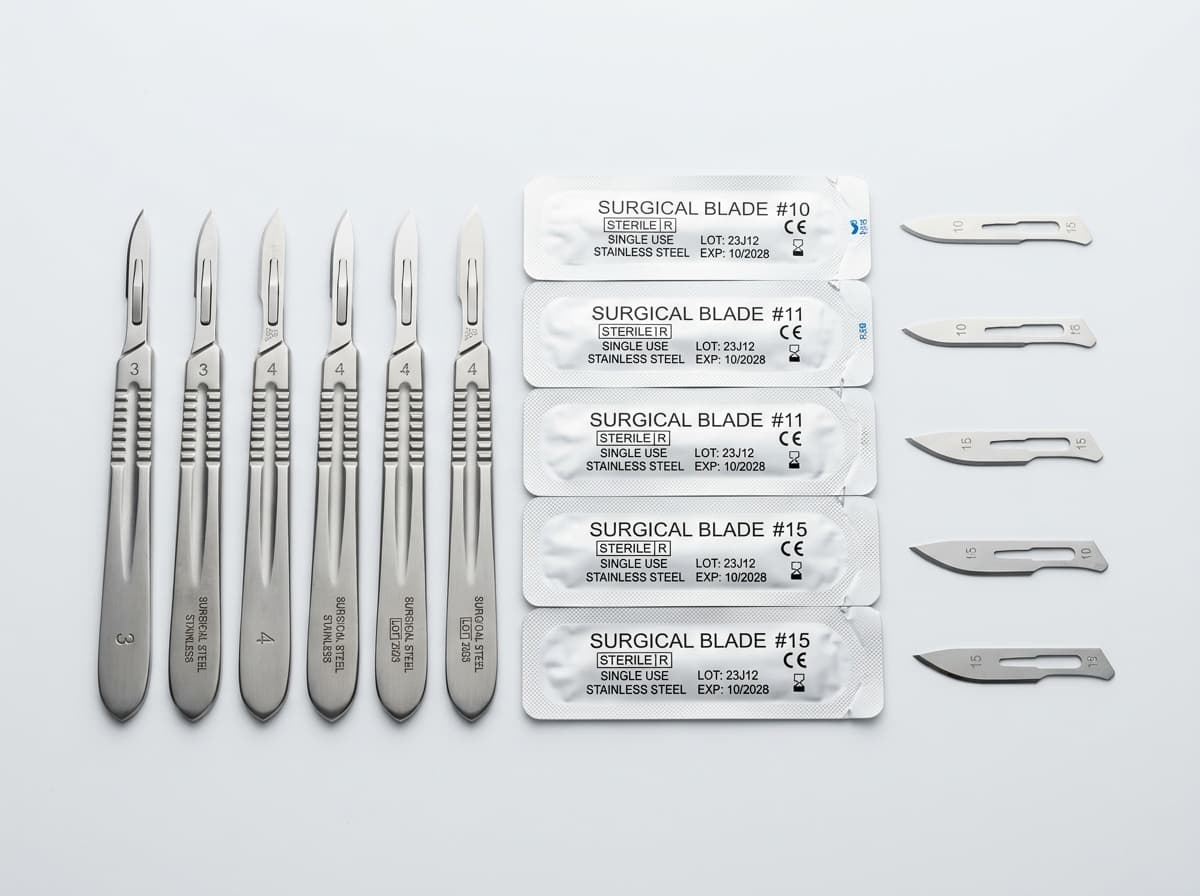
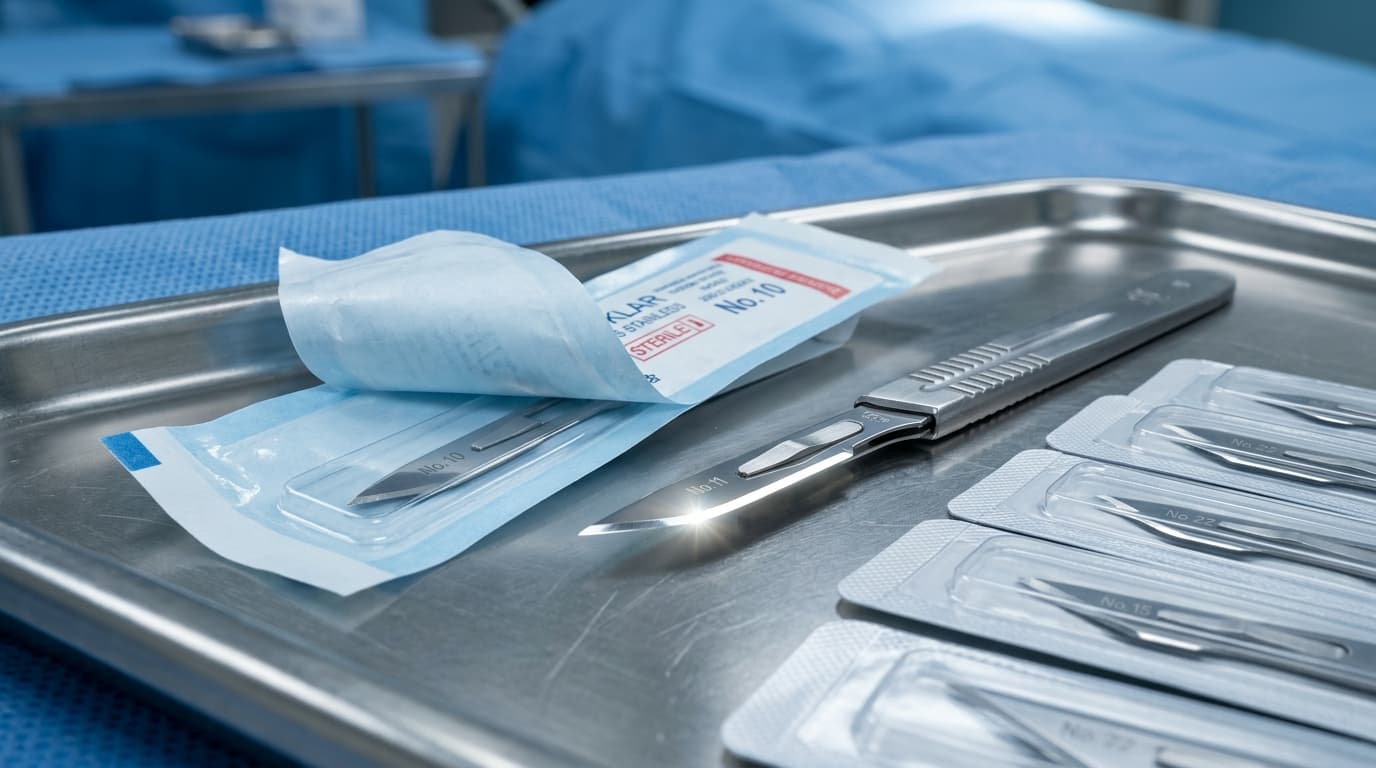
We manufacture sterile surgical blades No. 10 to 24 in carbon and stainless steel, individually foil-packed with lot and expiry on every pouch.
Why distributors in Nairobi keep one blade manufacturer between tenders
Importers and distributors that bid every year tend to stay with one manufacturer in India once a blade line has passed evaluation. The registration, the authorisation letter and the samples are already accepted, and the next tender becomes an update rather than a new file. The same exporter can usually add disposable scalpels and handles, so a county that asks for the full theatre set is quoted from one source and one shipment.
Preparing a KEMSA or county hospital tender for surgical blades or scalpels?
Ultra-sharp sterile surgical blades crafted from premium surgical steel with precision-ground edges and matching ergonomic scalpel handles for OR use. Container consignments dispatched from Port Mundra & Port Nhava Sheva, with certificates and test reports shared with every quotation.
Made to CE MDRMade to ISO 13485Made to ISO 7740MOQ: 100,000 pcs
How do I choose a surgical blades exporter from India for a Kenyan tender?
Choose a manufacturer that answers every column of the tender schedule in a technical sheet, issues an authorisation letter naming your company, supplies samples from current production and holds ISO 13485 and CE documents in the same legal name. Compare price only between exporters that pass all of these.
Which surgical blade numbers do Kenyan hospitals order most?
Theatre tenders usually include No. 10, 11, 15, 22 and 23, with 20, 21 and 24 for larger incisions. Numbers 10 to 15 fit a No. 3 handle and 18 to 24 a No. 4 handle. Base the bid on the tender schedule, not a generic list.
Who regulates surgical blades imported into Kenya?
Medical devices fall under the Pharmacy and Poisons Board, and many consignments need a certificate of conformity under KEBS's pre-export verification programme. Confirm current requirements with both, and with the procuring entity, before submitting a bid.
What do surgical blades cost from manufacturers in India?
It depends on steel grade, blade number, pack and quantity, so request a current quotation on the tender's own item list and compare offers as delivered cost to the procuring entity's store, not as FOB line prices.
Can surgical blades importers in Kenya get scalpels and handles from the same manufacturer?
Often yes. Many Indian blade manufacturers also make disposable scalpels and stainless-steel handles. Ask which items are made in-house and make sure each one appears on the certificates you submit with the tender.
Sharmil Mangukiya (Founder & MD)
Sharmil Mangukiya is the founder and managing director of Manshav Impex, an Indian manufacturer & exporter of medical disposables serving importers, distributors, hospitals and governments in 48+ countries since 2019.