Hypodermic Syringes & IV Cannulas: Luer Lock vs Luer Slip, Siliconization & Needle Penetration Force Standards
A clinical engineering guide on selecting high-grade disposable hypodermic syringes, needles, and IV cannulas for hospital supply chains.

Ventilator-Associated Pneumonia (VAP) is among the most lethal and costly hospital-acquired infections (HAIs) in intensive care units across the United Arab Emirates and Saudi Arabia. For private and government tertiary hospitals accredited by Joint Commission International (JCI)—such as Cleveland Clinic Abu Dhabi, Mediclinic, and Dubai Health Authority (DHA) facilities—instituting evidence-based VAP prevention bundles is a mandatory patient safety benchmark. A cornerstone of this protocol is the continuous or intermittent aspiration of subglottic secretions (CASS) using specialized endotracheal tubes (ETTs) equipped with an integrated dorsal suction lumen.
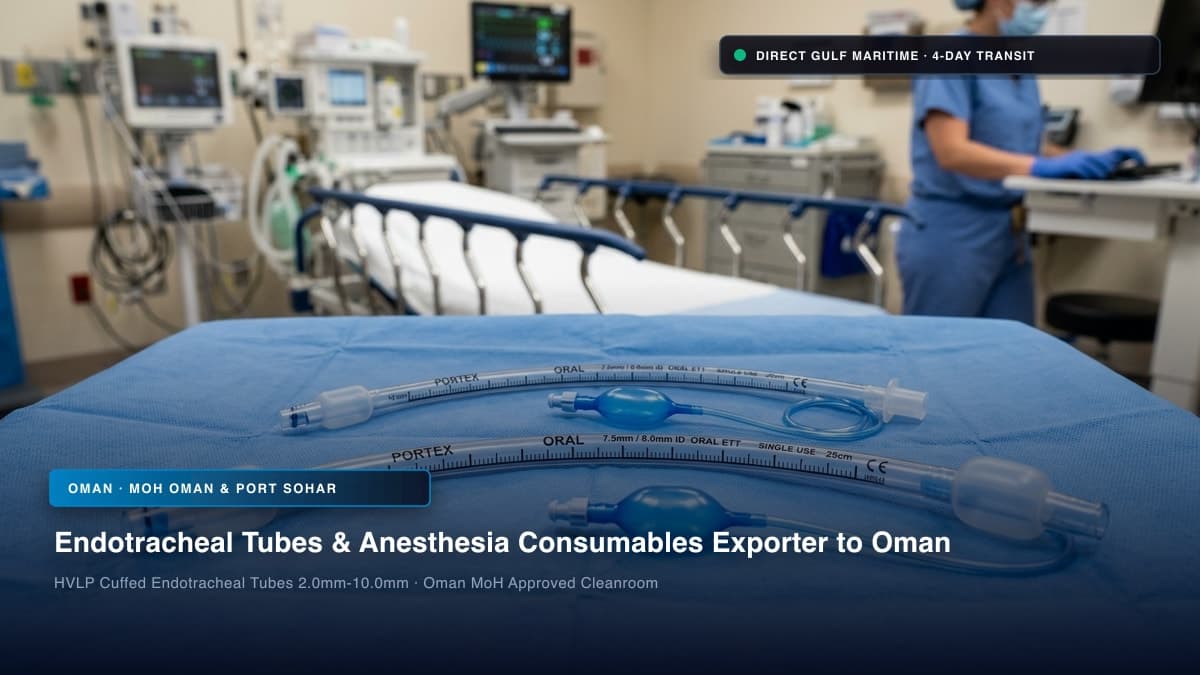
Ventilator-Associated Pneumonia is among the most lethal and costly hospital-acquired infections in intensive care units across the UAE and GCC.
Standard cuffed endotracheal tubes trap pooled, pathogen-laden oral secretions in the subglottic space directly above the inflated cuff. Over 48 to 72 hours of mechanical ventilation, micro-aspiration of this infected fluid past the cuff folds into the lower respiratory tract triggers VAP. ETTs with an integrated subglottic suction lumen actively evacuate these secretions, slashing VAP incidence by 45% to 50%.
The tube integrates a dorsal suction aperture located 1 to 2 mm above the cuff shoulder, connected to an extruded micro-lumen within the tube wall. It terminates in an external evacuation line with a yellow color-coded cap and universal vacuum valve, while the High-Volume Low-Pressure (HVLP) cuff forms an airtight seal at 20-30 cmH2O without mucosal ischemia.
| Clinical Parameter | Subglottic Suction ET Tube | Standard Cuffed ET Tube | ICU Sourcing Impact |
|---|---|---|---|
| Secretions Clearance | Active evacuation above cuff | Manual swab / none | Directly eliminates VAP bacterial breeding pool |
| Average ICU Stay (VAP) | Reduced by 1.5 – 3.0 days | Baseline | Saves hospitals over $3,500 in bed-day costs |
| Lumen Wall Structure | Dual-lumen co-extrusion | Single-lumen extrusion | Requires precision extrusion to prevent kinking |
| External Lines | Dual (Inflation pilot + Suction) | Single (Inflation pilot only) | Clear color coding prevents misconnection errors |
| Unit Sourcing Premium | 2.5x – 3.2x over standard | Baseline | Offset by massive reduction in antibiotic & ICU spend |
ICU infection control audits across GCC hospitals routinely target the VAP bundle. Sourcing subglottic suction ETTs allows clinical directors to satisfy JCI standards while delivering demonstrable clinical cost savings.
Medical devices require UAE Ministry of Health and Prevention (MOHAP) marketing authorization and ISO 5356-1 compliant 15 mm machine connectors. Direct ocean freight from JNPT or Mundra to Jebel Ali Port delivers in just 3 to 5 days.
Yes. ICU protocols recommend flushing the suction lumen periodically with 2–5 ml of sterile saline followed by low-pressure vacuum aspiration (80–120 mmHg) to maintain lumen patency.
Both can be utilized. Continuous low-pressure suction (20–30 mmHg) or intermittent suction (100–120 mmHg for 15 seconds every 2 hours) are clinically validated depending on ICU ventilator bundle guidelines.
The suction hole is flame-polished and slightly recessed within the dorsal curvature of the tube, preventing direct suction trauma to the sensitive tracheal mucosa.
Ocean freight from JNPT or Mundra to Jebel Ali is among the fastest maritime routes globally, typically taking only 3 to 5 days port-to-port.
Yes. The tube is 100% metal-free, utilizing medical-grade radio-opaque barium sulfate stripes and non-metallic pilot balloon check valves, making it MRI safe.

A clinical engineering guide on selecting high-grade disposable hypodermic syringes, needles, and IV cannulas for hospital supply chains.
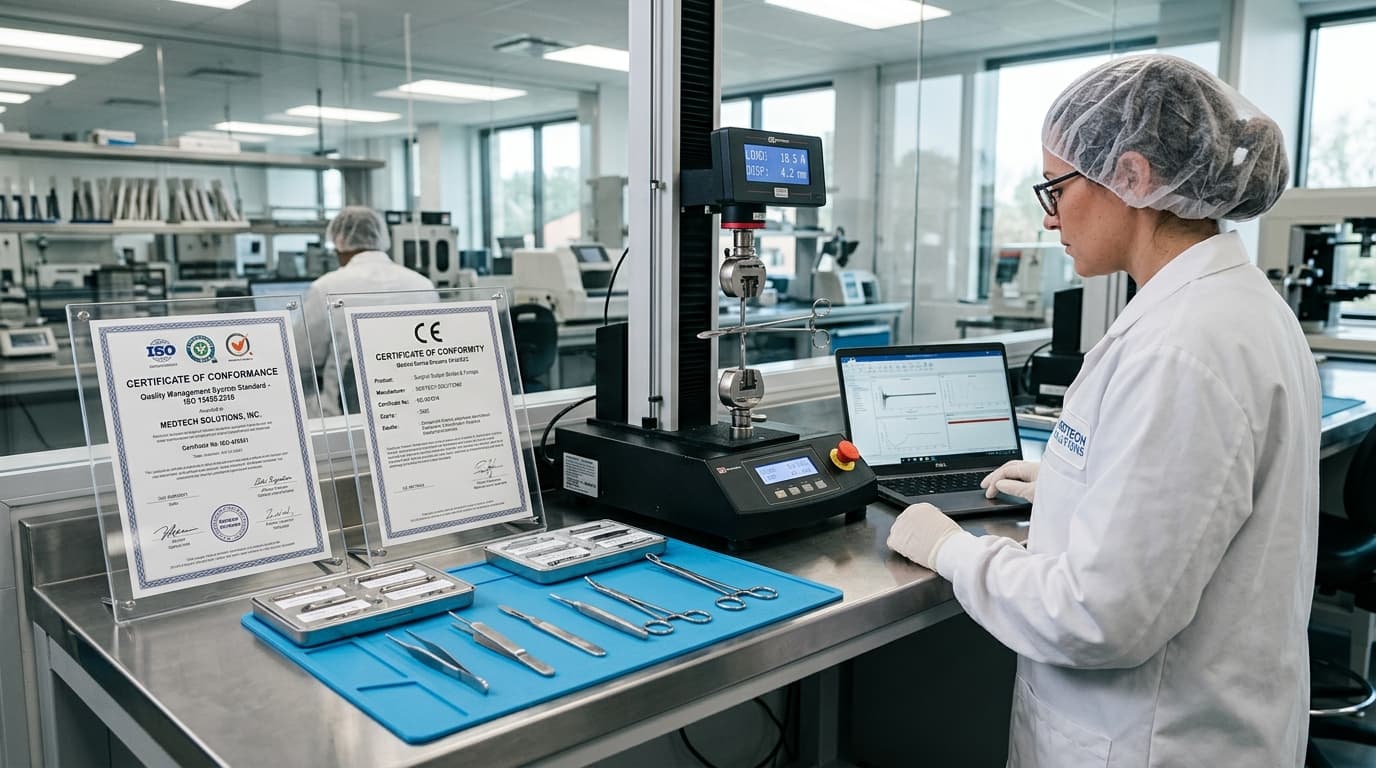
A plain-language guide to the standards that matter when sourcing healthcare products — and how to check them.

Balancing cost, speed and product type when choosing how to ship your order.