Surgical Blades and Scalpels Supplier for Ethiopia: What EPSS Tender Bidders Check
Surgical blades and disposable scalpels sit on almost every Ethiopian Pharmaceutical Supply Service (EPSS) and regional health bureau tender for theatre consumables. The line looks simple — a blade number and a quantity — but bids fail on mismatched blade sizes, missing sterility evidence and delivery promises that ignore the road from Djibouti to Addis Ababa. This is the checklist bidders run with their supplier before the bid goes in.
Sharmil Mangukiya (Founder & MD) 3 min read October 18, 2026
Key Summary & AI Takeaways
A blade tender in Ethiopia is won on the technical sheet and lost at the Djibouti corridor. Here is what bidders line up with their Indian supplier before they submit.
Most blade lines in Ethiopian tenders are written by number: No. 10, 11, 15, 20, 21, 22, 23 and 24, sometimes with the handle size and sometimes as a complete disposable scalpel. A bidder who quotes the right blade on the wrong handle fit, or carbon steel where stainless was asked for, scores zero on that line however good the price.
How do tender bidders choose a surgical blades supplier for Ethiopia?
They check four things before price: that every blade number on the schedule is in the supplier's range with the correct handle fit, that sterility and material are stated per line, that the technical file matches what EFDA and the tender ask for, and that the supplier can deliver to Djibouti early enough to clear and truck inland before the delivery deadline.
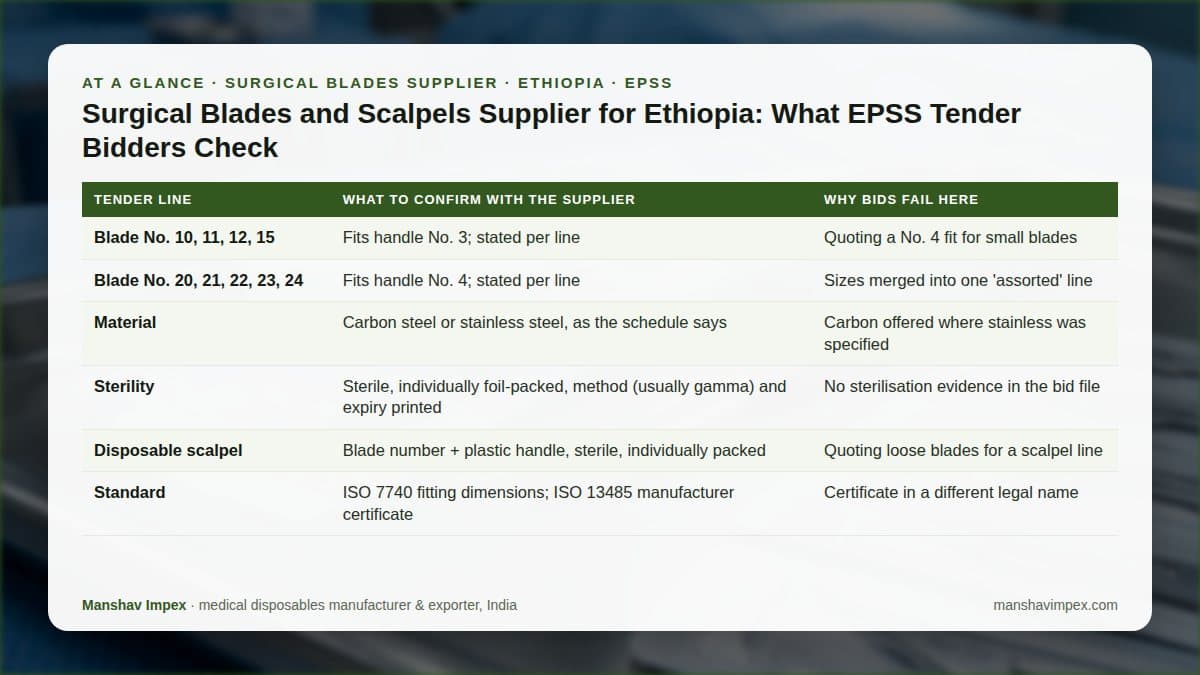
Tender line
What to confirm with the supplier
Why bids fail here
Blade No. 10, 11, 12, 15
Fits handle No. 3; stated per line
Quoting a No. 4 fit for small blades
Blade No. 20, 21, 22, 23, 24
Fits handle No. 4; stated per line
Sizes merged into one 'assorted' line
Material
Carbon steel or stainless steel, as the schedule says
Carbon offered where stainless was specified
Sterility
Sterile, individually foil-packed, method (usually gamma) and expiry printed
No sterilisation evidence in the bid file
Disposable scalpel
Blade number + plastic handle, sterile, individually packed
Quoting loose blades for a scalpel line
Standard
ISO 7740 fitting dimensions; ISO 13485 manufacturer certificate
Certificate in a different legal name
Documents an Ethiopian blade bid usually needs
Manufacturer's ISO 13485 certificate and the product's conformity evidence, in matching legal names.
Product catalogue or technical data sheet showing each blade number, material and handle fit.
Sterilisation validation summary or certificate and a sample label showing lot, expiry and sterile symbol.
Manufacturer's authorisation letter to the bidder, where the tender asks for one.
EFDA registration or import permit status for the product — confirm current requirements with EFDA and the tender document.
Requirements change between tenders and over time. Read the bid document line by line and verify current EFDA guidance before you rely on any list, including this one.
The key checks from this guide at a glance.
Procurement note
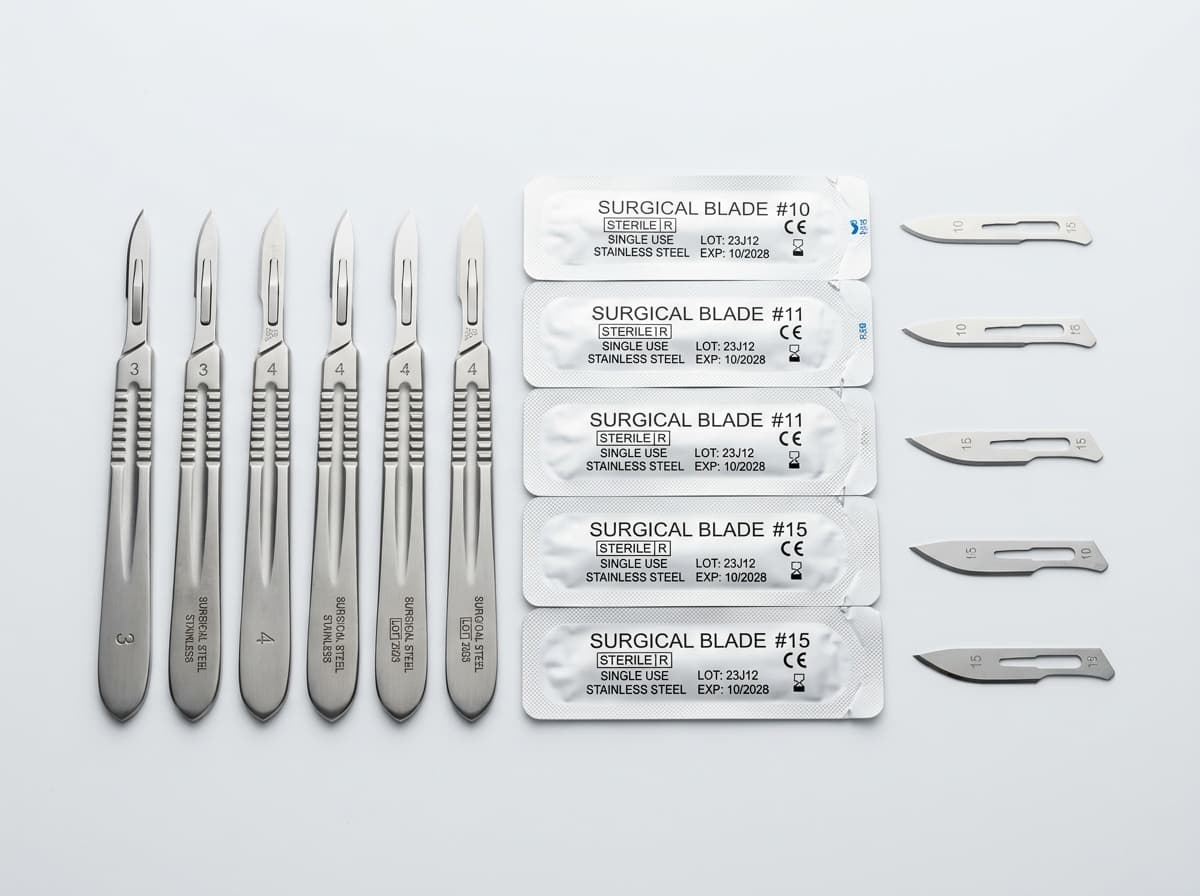
Ask the supplier for a sample card with one blade of every number on the schedule, each still in its sterile foil, and attach a photo of it to the technical file. Evaluators compare blade shapes against the schedule faster from one picture than from ten catalogue pages, and a missing number shows up before submission instead of at evaluation.
Planning the Djibouti corridor into the delivery date
Ethiopia is landlocked, so sea cargo from India normally lands at Djibouti and moves inland by road or on the Addis Ababa–Djibouti railway. Blades are small and light, so they rarely fill a container on their own; bidders usually consolidate them with gloves, syringes, sutures and cannulas in one shipment. Build port handling, inland transit and clearance into the delivery promise — a tender deadline counts the day goods reach the stated warehouse, not the day they leave India.
The cheapest blade on the schedule is worthless if the No. 15s are missing when the theatre opens the box.
We export sterile surgical blades No. 10–24 in carbon and stainless steel, and disposable scalpels, with per-line technical sheets for tender files.
Why bidders pair blades with the rest of the order from India
Ethiopian theatre-consumables tenders seldom stop at blades. An Indian supplier who can quote blades together with sutures, gloves and syringes lets a bidder submit one technical file and ship one consolidated consignment through Djibouti, which keeps freight and clearance cost per line down. For prices, request a current quotation and compare like for like: blade number, material, sterility, packing per box, Incoterm and destination.
Need the complete theatre list quoted together — blades, sutures, gloves, syringes?
Ultra-sharp sterile surgical blades crafted from premium surgical steel with precision-ground edges and matching ergonomic scalpel handles for OR use. Container consignments dispatched from Port Mundra & Port Nhava Sheva, with certificates and test reports shared with every quotation.
Made to CE MDRMade to ISO 13485Made to ISO 7740MOQ: 100,000 pcs
Blade numbers 10 to 15 (including 11 and 12) fit a No. 3 handle; numbers 20 to 25 fit a No. 4 handle. Tender lines should state both, and the supplier's sheet should show the fit for each blade number.
Should Ethiopian tenders specify carbon or stainless steel blades?
Both are used. Carbon steel blades are typically sharper and cheaper; stainless steel blades resist corrosion better. Quote exactly what the schedule asks for — offering the other material usually fails the technical evaluation.
Who regulates surgical blade imports in Ethiopia?
The Ethiopian Food and Drug Authority (EFDA) regulates medical devices, and public procurement is largely run through EPSS and regional bodies. Confirm the current registration and import permit requirements with EFDA and the tender document before bidding.
How are medical supplies shipped from India to Ethiopia?
Usually by sea to Djibouti, then by road or the Addis Ababa–Djibouti railway to Addis Ababa. Small, light items like blades are normally consolidated with other consumables to share container and clearance costs.
What does a surgical blade cost from India for an Ethiopian tender?
Prices move with steel, packing and quantity, so request a current quotation. Compare offers on the same blade numbers, material, sterility method, units per box, Incoterm and delivery point.
Sharmil Mangukiya (Founder & MD)
Sharmil Mangukiya is the founder and managing director of Manshav Impex, an Indian manufacturer & exporter of medical disposables serving importers, distributors, hospitals and governments in 48+ countries since 2019.